Content
A flavored milk batch that separates after a week on the shelf, a salad dressing with visible oil droplets, or a beverage base that refuses to wet out without lumps: these are the situations where a high shear emulsification mixing tank becomes the centerpiece of a liquid food line. Instead of relying on slow turbine agitation that leaves agglomerates intact, this tank uses a rotor-stator head mounted directly in the vessel to mechanically reduce droplet and particle size in place. The practical result is a more stable emulsion, a shorter processing time, and fewer product transfers between tanks.
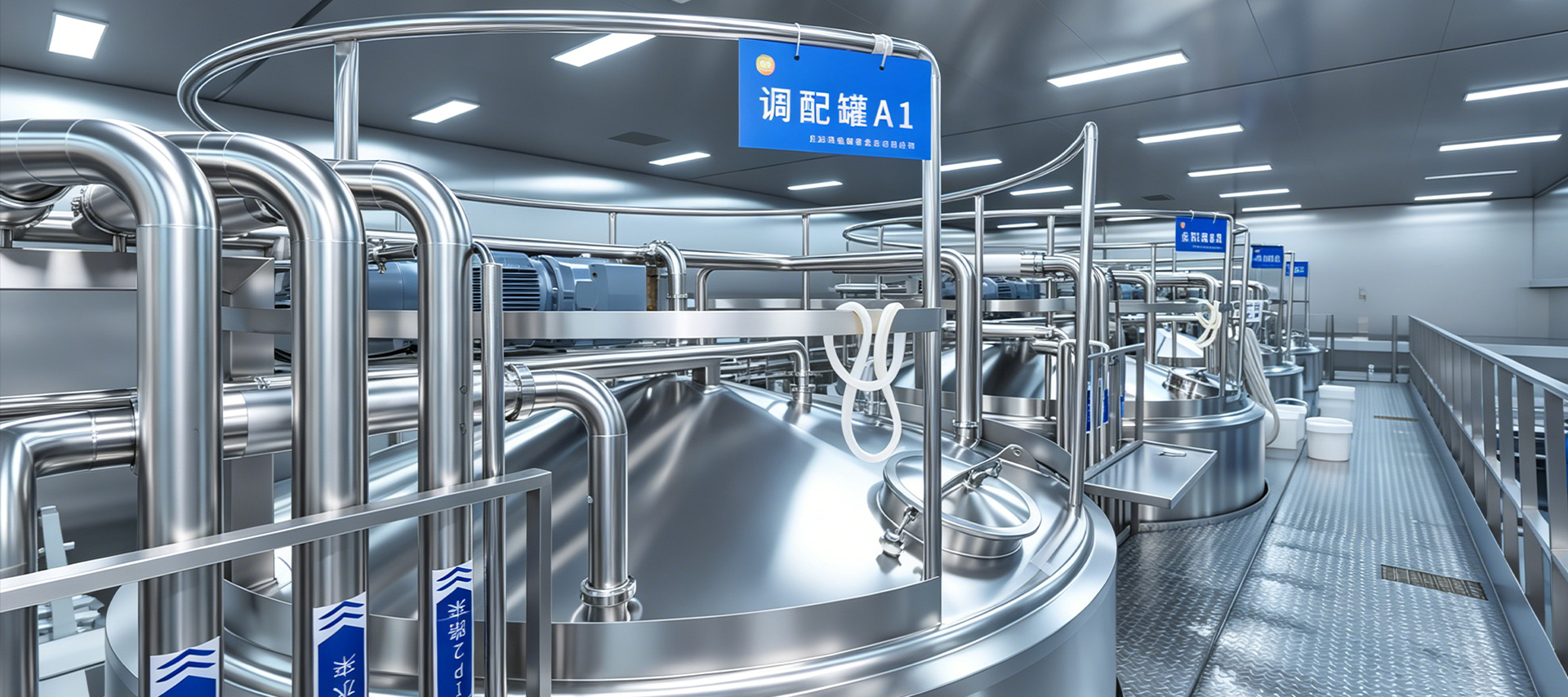
In simple terms, a high shear emulsification mixing tank is a process vessel with an integrated rotor-stator workhead. The rotor spins at high speed inside a stationary stator, draws product up from the bottom of the tank, and forces it through the narrow annular gap between the two elements. High tip speed, strong turbulence, and close radial clearance combine to break droplets and particles down to a fine, uniform size. The tank therefore performs two jobs at once: it holds the batch and it acts as the mixing machine.
A standard mixing agitator tank keeps a batch gently homogeneous, but the high shear configuration delivers much higher localized energy at the workhead. That energy is what breaks fat globules, disperses powders, and creates the fine emulsion that stays stable over time. In many dairy and beverage products, the difference between a stable shelf life and a separated batch is exactly this step.
When you evaluate a complete tank package for a dairy or beverage project, a high shear emulsification mixing tank with properly sized rotor-stator geometry is typically the first configuration to review, because it compresses several process functions into a single vessel and simplifies the rest of the line.
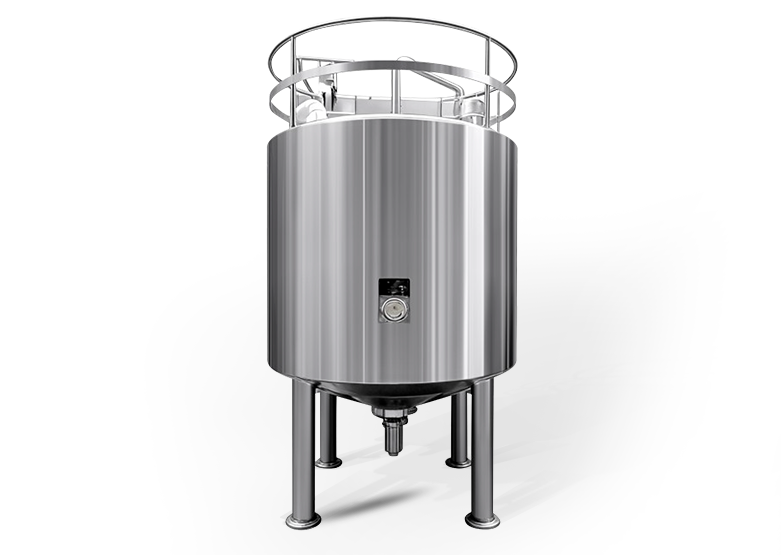
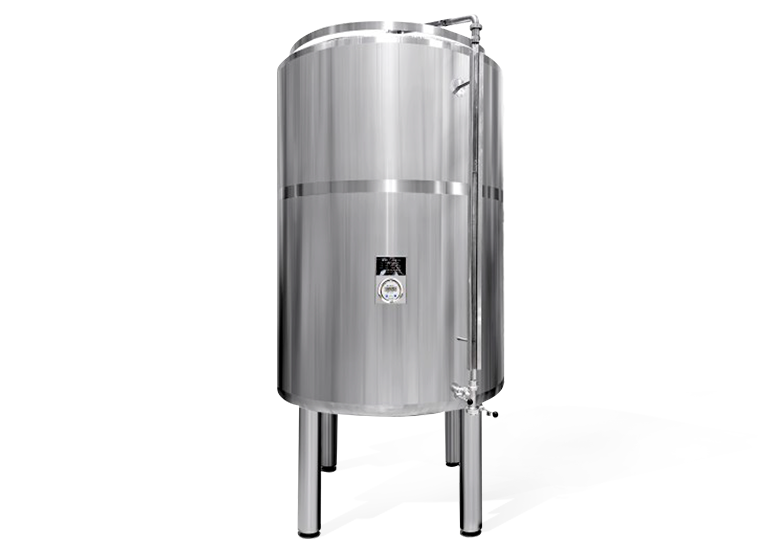
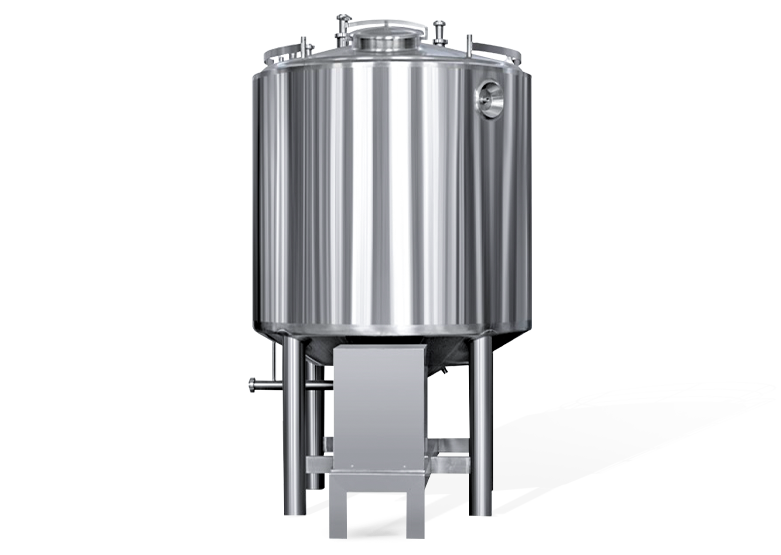 High Shear Emulsification Mixing Tank Suppliers, Custom Factory, Manufacturers -Yi Yang Fluid Tech is High Shear Emulsification Mixing Tank Suppliers, Customized High Shear Emulsification Mixing Tank Factory and Manuf...View Product →
In-tank high shear mixing is the right choice when a batch needs a defined endpoint and you want to avoid the piping, pumps, and recirculation loop that an inline mixer requires. It works well for batch sizes from a few hundred liters to several thousand liters, and it is especially suited to products where the emulsion needs time to develop, such as mayonnaise bases, cream liqueurs, recombined milk, and concentrated fruit mixes.
An inline high shear mixer wins when the product must be processed continuously, or when the vessel is so large that a single workhead cannot circulate the entire batch efficiently. For most medium-volume liquid food lines, however, the in-tank configuration is simpler, easier to clean, and lower in capital cost. The trade-off is that you give up the compact footprint of an inline unit and accept the tank itself as a permanent part of the line.
Emulsion stability is the main reason most plants buy this equipment. The droplet size produced during high shear emulsification directly affects shelf life, texture, and mouthfeel. A typical rotor-stator head reduces droplets to roughly 2 to 10 micrometers, depending on tip speed, clearance, and formulation viscosity. That is not as fine as a high-pressure homogenizer, which can reach sub-micron droplets, but it is sufficient for a wide range of dairy and beverage products.
The practical conclusion is simple: if your product needs sub-micron droplets for true physical stability, keep a homogenizer downstream. But if you need a consistent, fine emulsion without the capital cost and maintenance of high-pressure equipment, the emulsification tank is the more economical route.
Common product families handled by this tank include:
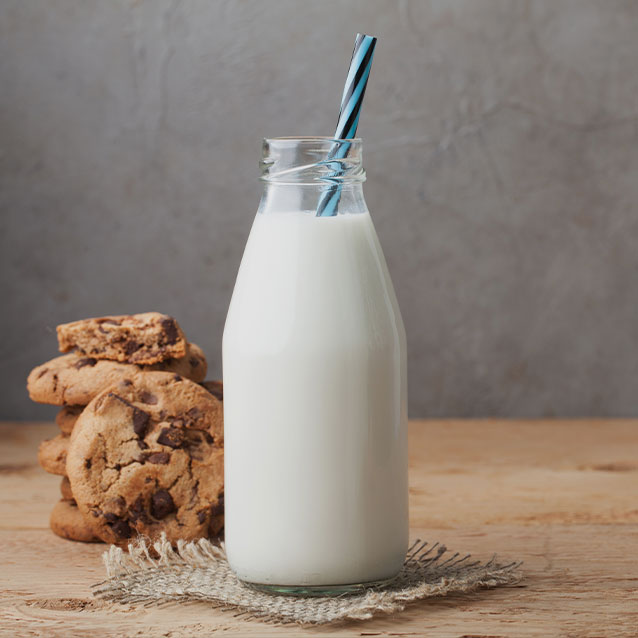
On a yogurt line, the tank is commonly used to rehydrate milk powder and shear the mix before fermentation, producing a smooth, lump-free base. The same preparation step appears in pasteurized milk lines where recombined milk is prepared before UHT treatment, and in flavored milk production where stabilizers must be fully hydrated. A full-automatic degassing machine is often placed after the emulsification tank to remove entrained air before filling, which prevents foam and improves fill-weight accuracy.
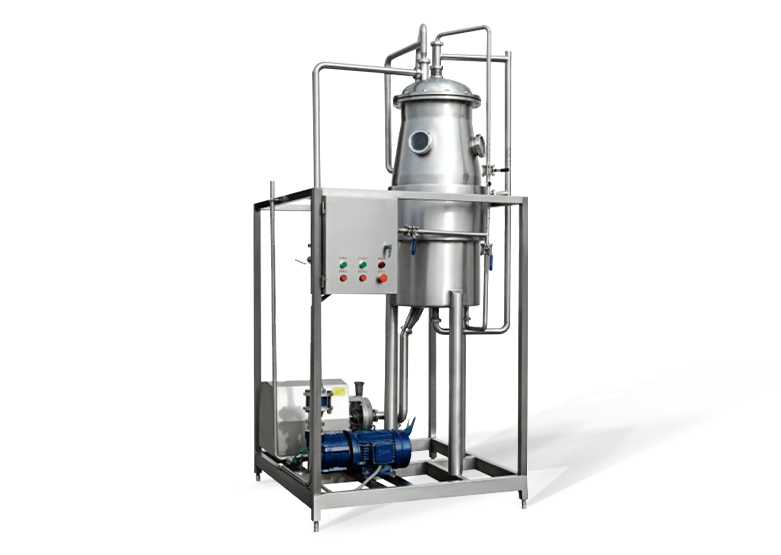 Full-Automatic Degassing Machine Suppliers, Custom Factory, Manufacturers - ShanYi Yang Fluid Tech is Full-Automatic Degassing Machine Suppliers, Customized Full-Automatic Degassing Machine Factory and Manufacturers i...View Product →
For the complete process sequence, a yogurt fermentation production line that includes this preparation stage helps ensure that the sheared base enters the fermentation tanks at a consistent viscosity and temperature.
Not all high shear emulsification mixing tanks perform the same way. The parameters in the table below make more difference to the final product than the tank volume alone.
| Parameter | Why It Matters | Business Impact |
|---|---|---|
| Rotor tip speed | Determines shear intensity and final droplet size | Higher tip speed gives finer droplets but increases motor load |
| Rotor-stator clearance | Smaller gap increases shear but reduces throughput | Match gap to viscosity and desired droplet range |
| Tank geometry | Affects mixing pattern and vortex behavior | Baffles or a counter-rotating anchor improve draw-down |
| Heating and cooling jacket | Controls temperature-sensitive emulsions | Steam or chilled water jacket prevents overheating |
| Shaft seal design | Prevents contamination and product leakage | Double mechanical seal is the hygienic standard |
| Powder induction option | Handles milk powder and stabilizers without lumping | Vacuum inlet or eductor hopper reduces manual work |
| CIP compatibility | Reduces cleaning time and contamination risk | Spray ball coverage and drainable bottom are essential |
If the process only requires gentle blending after the emulsion is established, a mixing agitator tank is sufficient for holding and buffer duties at a lower energy cost, leaving the high shear tank to handle only the steps that truly need shear.
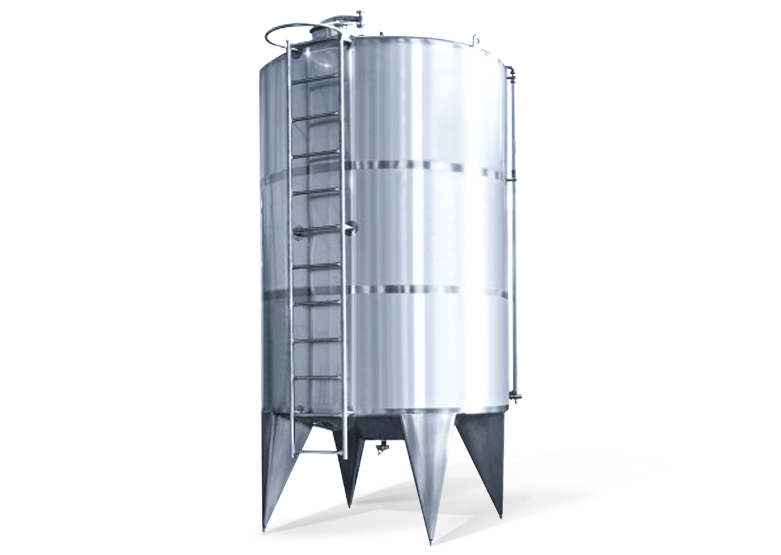
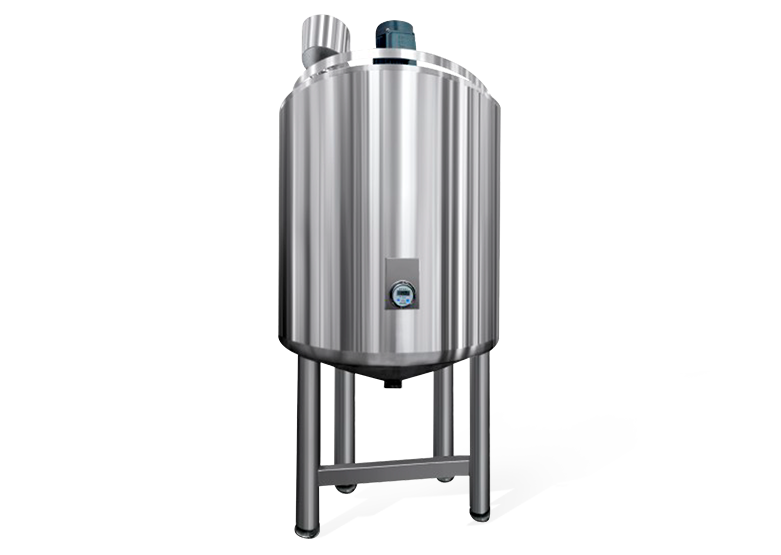
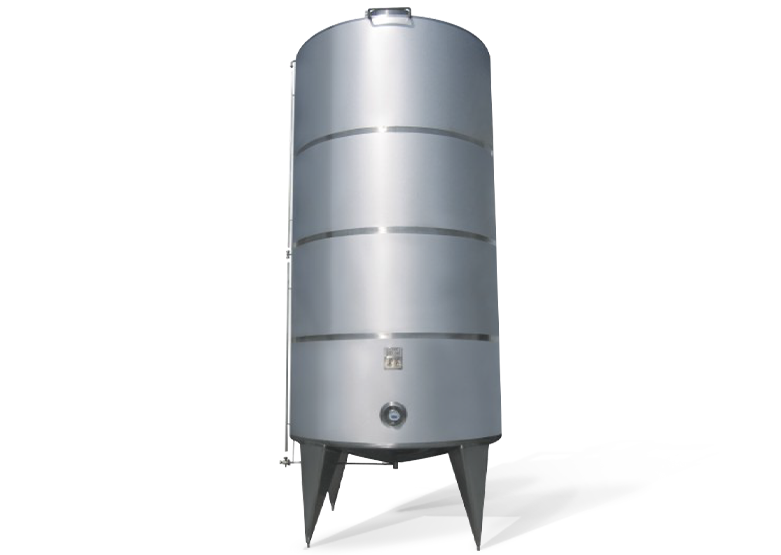 Mixing Agitator Tank Suppliers, Custom Factory, Manufacturers - Shanghai Yi YangYi Yang Fluid Tech is Mixing Agitator Tank Suppliers, Customized Mixing Agitator Tank Factory and Manufacturers in China, Function and Ap...View Product →
Material of construction is the first procurement risk to manage. Wetted parts should be stainless steel 316L for most liquid food applications, with a surface finish of 0.8 μm Ra or better on contact surfaces and a fully drainable vessel bottom. Welds must be ground smooth. If a supplier cannot guarantee these basics, cleaning and product safety issues are almost certain to appear later.
Motor power deserves more attention than tank volume. The workhead needs a motor sized for the viscosity of the actual product, not the water-like viscosity assumed during early planning. If you process both low-viscosity beverage syrups and thicker dessert bases, a variable-frequency drive lets you adjust tip speed without changing rotor-stator geometry. It is also worth confirming the motor position and drive arrangement, because these components affect maintenance access and headroom in the plant.
Another common pitfall is underestimating the effect of tank geometry on the shear process. A tall, narrow tank requires a longer draw-down path than a short, wide tank, and the workhead position must be matched to the tank proportions. Review the vendor's previous installations and ask for the batch size, product type, and achieved droplet size before committing to a quoted configuration.
Because every formulation is slightly different, most tank packages need some degree of adaptation. A non-standard customization service is often involved in the final tank design when the vessel diameter, jacket arrangement, or workhead orientation must fit around existing plant layouts.
Choosing a high shear emulsification mixing tank comes down to matching the rotor-stator design, tank geometry, and utility connections to the actual product set. For dairy and beverage lines where a stable emulsion is the goal, this tank is often the most cost-effective first step, and it can be paired with degassing, gentle agitation, and downstream homogenization as the product specification requires. Focus on the parameters that affect droplet size, confirm the material and cleanability standards, and the tank will fit into the line without surprising the production team later.

Contact Details
Production Address: No. 9188 Chuannan Fenggong Road, Fengxian District, Shanghai
Office Address: Room 603, Building 57, No. 260 Maoyuan Road, Fengxian District, Shanghai
TEL: 86-18221904658
E-mail: [email protected]

Quick Link

Request Custom Quote Need Something Special? We're Here To Help.
 English
 русский
 Français
 Español
 عربى
 Indonesia