News
Sep 21, 2026
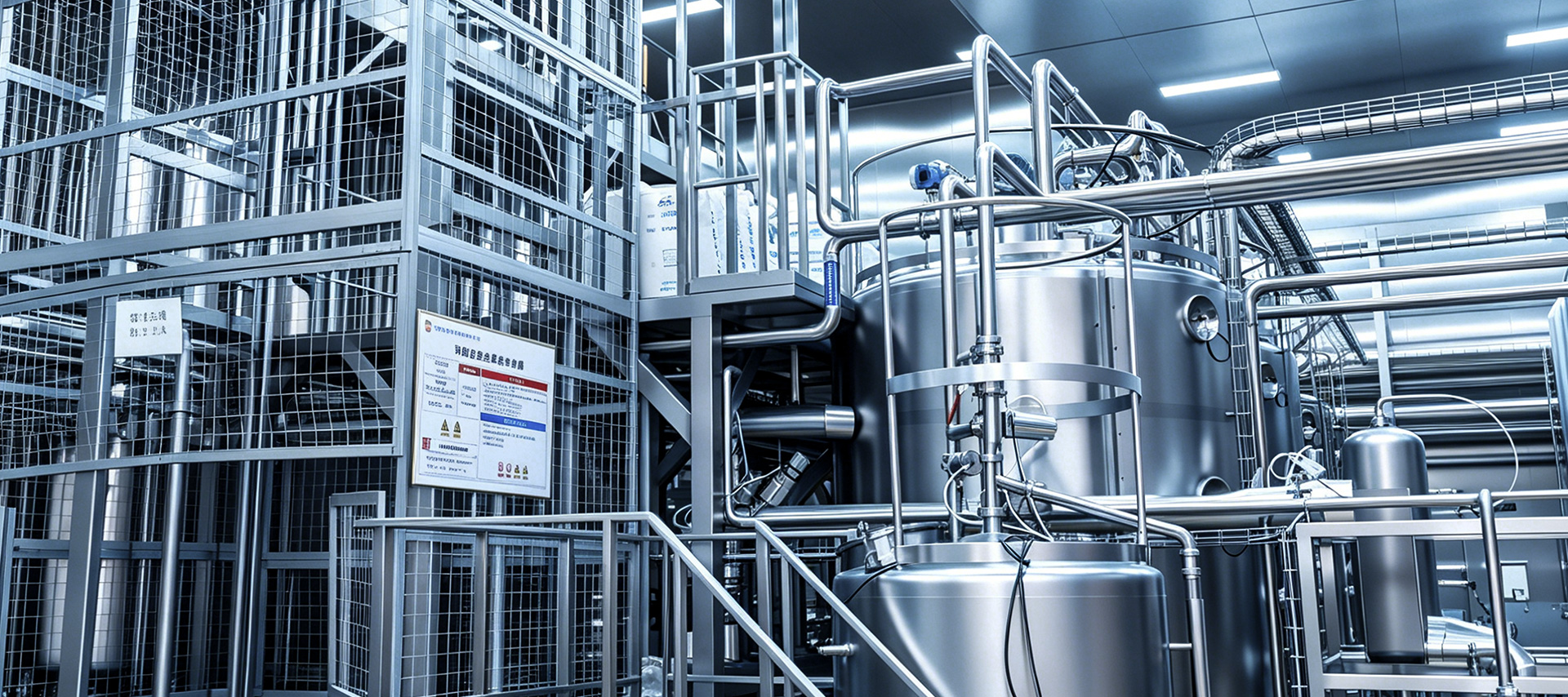
Why a Tea Beverage Processing Production Line Matters Clear bottled tea reveals every weakness in a beverage plant faster than almost any other liquid product. If extraction temperatures vary by even a few degrees, the liquor turns bitter. If dissolved oxygen is not controlled during transfer, polyphenols oxidize and the color drifts from golden to brown within weeks. If the sterilization step does not match the product's pH, a sealed bottle can still spoil on the shelf. These failures are not recipe problems. They are process design problems, and the most reliable way to solve them is with a dedicated tea beverage processing production line rather than a patchwork of generic tanks and filling units. A purpose-built line does three things at once. It standardizes extraction and formulation so flavor remains consistent from batch to batch. It limits oxygen exposure and microbial risk so the finished drink keeps clarity, color and taste through its shelf life. And it integrates cleaning and sterilization into the same automated sequence, reducing manual labor and human error. This article explains the main modules of such a line, the process flow behind them, and the purchasing considerations that separate a profitable investment from a costly one. What a Tea Beverage Processing Production Line Includes Tea beverage lines differ in capacity and automation level, but the module sequence is remarkably consistent. A typical line starts with storage tanks for treated water, tea liquor and syrup; continues through extraction, filtration, blending, degassing and sterilization; and ends at filling and capping. Supporting these main stages are utility systems: hot water generation, cooling water loops, CIP cleaning and, in most modern layouts, a PLC-based control platform that records batch data. For medium-volume producers, a semi-automatic line processing 3,000 to 10,000 liters per day may be sufficient, with operators handling weighing, valve switching and CIP initiation. For larger operations, fully integrated turnkey lines run at 20,000 liters per day or more, using automatic batching, automatic valve manifolds and sterile filling under a single control philosophy. Assembling storage tanks, extractors, sterilizers and fillers from different vendors often leads to interface problems: mismatched pipe sizes, inconsistent control signals and unclear responsibility during commissioning. Producers that want to avoid these risks typically choose a complete tea beverage processing production line from one engineering supplier. Shanghai Yi Yang Fluid Technology, for instance, packages the storage, processing, sterilization and cleaning stages into a single engineered system arranged around the customer's target capacity. Tea Beverage Processing Production Line Suppliers, Custom Factory, ManufacturersYi Yang Fluid Tech is Tea Beverage Processing Production Line Suppliers, Customized Tea Beverage Processing Production Line Factory and M...View Product → Core Process Flow of Tea Beverage Production Understanding the process flow helps buyers see why certain equipment is specified and where quality risks are concentrated. Although every recipe is different, most tea beverage lines follow the same sequence. Common process steps and typical operating windows for a tea beverage production line. Exact values depend on tea type, formula and target shelf life. Process step Primary function Typical operating window Tea extraction Leach soluble solids and flavor compounds from leaf, powder or concentrate 70–95°C for 10–30 minutes, depending on tea variety Filtration and clarification Remove leaf fines and haze-forming complexes 100–300 mesh screening followed by fine filtration Formulation and blending Mix sweeteners, flavors, acids and stabilizers in precise proportions Batch blending with high-shear mixing Degassing Remove dissolved oxygen to protect color and flavor Vacuum degassing to below 1 ppm dissolved oxygen Sterilization Destroy microorganisms for shelf stability UHT at 121–137°C for 3–8 seconds, or HTST at 85–95°C for refrigerated products Filling Package under hygienic or sterile conditions Hot fill, aseptic fill or cold fill depending on product pH Two details in this sequence deserve special attention. First, the extraction step determines how much of the leaf's soluble solids, and its bitterness, enters the liquid; temperature and time must be repeatable within narrow tolerances. Second, the sterilization step determines whether the product can be distributed chilled or at ambient temperature. Products with a pH above 4.6 are low-acid and must be treated accordingly, while products acidified below 4.2 allow milder heat treatment and a wider range of filling options. Critical Equipment Modules in a Tea Beverage Line Not all equipment in a tea line carries the same weight. In practice, three groups of machines determine most of the finished product's quality and the plant's operating cost. Process Vessels and Mixing Tanks Double-layer insulated tanks hold treated water and tea liquor at stable temperatures, preventing the flavor drift caused by uncontrolled cooling. A high-shear emulsification mixing tank is used when sugar, honey or stabilizers must be dissolved completely; undissolved particles later become sedimentation at the bottom of the bottle. For leaf-tea extraction, the same vessel can be equipped with a heating jacket and agitation, though larger lines usually install a dedicated extraction tank with its own temperature control loop. Degassing and Oxygen Control Dissolved oxygen accelerates the oxidation of tea polyphenols, which leads to browning and flavor loss. A full-automatic degassing machine removes dissolved air under vacuum before the liquid reaches the sterilizer. In most modern lines, the filling section also flushes bottles with nitrogen or relies on hot filling to reduce headspace oxygen. Keeping dissolved oxygen below approximately 1 ppm makes a measurable difference to color stability over a six-month shelf life. Sterilization and CIP Cleaning This is where the largest procurement mistakes happen. Sterilization system equipment must be matched to the product's pH, package type and required shelf life. For low-acid tea sold at ambient temperature, UHT treatment at 121–137°C for a few seconds, followed by aseptic or hot filling, is the standard approach; pasteurization alone is not enough. Sterilization System Equipment Suppliers, Custom Factory, Manufacturers - ShanghYi Yang Fluid Tech is Sterilization System Equipment Suppliers, Customized Sterilization System Equipment Factory and Manufacturers in Ch...View Product → Cleaning is just as critical. Tea leaves tannins and dark deposits on the inside of pipes and tanks, and if the line does not remove them completely, residues can harbor microorganisms and taint the next batch. CIP cleaning system equipment should therefore be sized and programmed together with the rest of the line, not added later. A typical CIP cycle includes pre-rinse, caustic wash, intermediate rinse, acid wash and final rinse, with conductivity and temperature logged for validation. CIP Cleaning System Equipments Suppliers, Custom Factory, Manufacturers - ShanghYi Yang Fluid Tech is CIP Cleaning System Equipments Suppliers, Customized CIP Cleaning System Equipments Factory and Manufacturers in Ch...View Product → Engineering Considerations That Decide Tea Quality Even with well-chosen equipment, tea quality depends on several engineering details that are easy to overlook during the planning phase. Extraction repeatability: temperature control within ±2°C and a fixed time cycle prevent over-extraction, which creates bitterness, and under-extraction, which produces weak flavor. Cold stability: tannin-protein complexes form when hot tea liquor is cooled too slowly. A rapid cooling step after extraction, followed by fine filtration, prevents haze in the finished drink. Oxygen management: vacuum degassing and inert gas blanketing are not optional extras; they are the difference between a stable golden color and progressive browning during distribution. Microbiological safety: the product's pH dictates the severity of the sterilization step, so decisions about acidification must be made before the line is designed, not during commissioning. Cleaning validation: CIP cycles need defined endpoint criteria, such as rinse water conductivity below a preset limit, before the next batch is allowed to start. What to Evaluate Before Buying a Tea Beverage Line Buying a tea beverage production line is a long-term investment, and the lowest quotation rarely produces the lowest operating cost. Before signing a contract, evaluate the supplier on the following points. Capacity and expansion margin: design around your actual daily output plus a 15–20 percent reserve for seasonal demand and new product introductions. Material and surface finish: product-contact parts should be 316L stainless steel with a surface finish of Ra ≤ 0.8 µm, while non-contact frames can be 304L. Automation and data recording: a PLC-controlled line with batch reports and alarm history makes it easier to validate production and trace quality issues. Product changeover: the line should handle more than one tea type, such as black, green, oolong or herbal tea, with reasonable cleaning and setup times between runs. Installation and after-sales capability: confirm that the supplier can commission the line, train operators and deliver spare parts without prolonged lead times. Turnkey Engineering, Customization and After-Sales Support Tea factories are not identical. Some brew leaf tea in-house, others start from tea powder or concentrate; some package in glass, others in PET or cans. A turnkey supplier should adapt extraction vessel geometry, filter sizing, sterilization temperatures and filling formats to the customer's actual products rather than forcing a standard layout onto every project. Engineering design should be completed before any equipment is fabricated, and it should include mass balance, heat balance and P&ID diagrams as formal deliverables. When standard modules cannot meet a specific requirement, such as an unusual tank size, a special valve arrangement or a unique cleaning protocol, non-standard customization support becomes decisive. After commissioning, a technical service plan should cover operator training, cleaning validation support and rapid access to spare parts so that unplanned downtime does not disrupt your supply schedule. Conclusion The tea beverage market rewards producers who deliver consistent flavor, bring new products to market quickly and keep operating costs under control. A tea beverage processing production line supports all three objectives: it automates extraction and formulation, controls oxygen and microbial risk, and integrates cleaning and sterilization into one system. The real decision is not whether to automate, but how carefully the line is designed around your products, and that question is best answered before the purchase order is placed. .article-section table{display: table!important;} .article-section thead{display: table-header-group!important;} .article-section tbody{display: table-row-group!important;} .article-section tr{display: table-row!important;} .article-section th{display: table-cell!important;} .article-section td{display: table-cell!important;} .article-section caption{caption-side:bottom;font-size:16px;margin-bottom:12px;font-style:italic;color:#808080;} .article-section th{font-weight:bold;border:1px solid #cccccc;padding:8px;} .article-section td{border:1px solid #cccccc;padding:8px;} .article-section ol{margin-bottom:12px;list-style-type:decimal;list-style-position:inside;padding-left:0;} .article-section ul{margin-bottom:12px;list-style-type:disc;list-style-position:inside;} .article-section li{list-style:inherit;font-size:16px;margin-bottom:6px;} .article-section h2{font-size:22px;font-weight:bold;text-align:left;margin-bottom:12px!important;} .article-section h3{font-size:16px;font-weight:bold;text-align:left;margin-bottom:12px;} .article-section p{font-size:16px!important;margin-bottom:12px;} .product-card{display:block;margin:20px 0;border:1px solid #e5e7eb;border-radius:10px;overflow:hidden;font-style:normal;background:#fff} .pc-inner{display:flex;text-decoration:none;color:inherit;align-items:center;min-height:120px} .pc-img{width:160px;min-width:160px;aspect-ratio:4/3;height:auto;min-height:120px;object-fit:cover;flex-shrink:0;display:block;align-self:stretch} .pc-body{padding:12px 16px;flex:1;min-width:0;display:flex;flex-direction:column;align-self:stretch;justify-content:center} .pc-title{display:block;font-size:15px;font-weight:600;color:#111;margin:0 0 6px;line-height:1.4} .pc-desc{display:-webkit-box;font-size:13px;color:#6b7280;margin:0 0 8px;line-height:1.5;overflow:hidden;-webkit-line-clamp:2;line-clamp:2;-webkit-box-orient:vertical} .pc-cta{display:block;font-size:13px;font-weight:600;color:inherit;margin-top:auto} .pc-inner:hover .pc-title{text-decoration:underline} .article-section a:not(.pc-inner),article a:not(.pc-inner){color:inherit}.pc-cta{color:inherit!important}

Six months after launch, a vitamin water product usually reveals whether its processing line was designed around the product or around whatever machines happened to be available. The most visible signs are batch-to-batch inconsistency, low vitamin retention, frequent line stops, and deposit buildup in places the cleaning program cannot reach. The practical conclusion from liquid food projects is simple: define the vitamin stability window first, select the process steps, and only then choose the filling concept. A vitamin beverages processing production line is a sequence of interdependent unit operations that converts purified water, sweeteners, acids, flavorings, and vitamin premixes into a stable finished drink. Every unit has a specific function, and the connections between units matter as much as the machines themselves. Why a vitamin beverage line is not a juice or soft drink line Most juice lines are optimized around flavor and color. A vitamin beverage line has to be designed around retention of active ingredients. Vitamin C (ascorbic acid) is sensitive to oxygen, pH, light, and metal ions. B vitamins follow different degradation paths in aqueous solution, and oil-soluble vitamins need a stable emulsion system. Ignoring these characteristics is the most common reason projects fail to deliver consistent declared values. Most vitamin water formulas are designed in a pH range of 3.5 to 5.5. In the weakly acidic range, ascorbic acid is relatively stable, but dissolved oxygen and transition metals still accelerate oxidation. That is why process design has to control dissolved oxygen, maximum temperature, and exposure time together. Vitamin retention is a function of process conditions, not something the formula can achieve alone. This is the key reason why an integrated design approach is more reliable than buying individual machines. Standard processing sequence for vitamin beverages Although brand recipes differ, vitamin beverage production follows a repeatable core sequence: Water treatment: removes hardness, chlorine, and dissolved minerals that could interfere with vitamin stability. Premix preparation: dissolves or disperses dry vitamins, sweeteners, and stabilizers into a carrier liquid. Mixing and emulsification: creates a homogeneous liquid and stabilizes oil-soluble vitamins. Filtration: removes undissolved particles and protects downstream equipment. Deaeration: reduces dissolved oxygen before the liquid is heated. Pasteurization or sterilization: achieves the required microbial safety with the shortest practical heat exposure. Filling and capping: places the product into final containers under hygienic or aseptic conditions. Labeling and secondary packaging: adds traceability and protects the packaged product. Not every step needs a separate machine. In mature line designs, mixing, deaeration, and sterilization are often integrated into one process skid. The shorter the path from blending to filling, the lower the oxygen pickup and the less time vitamins spend in an unstable environment. The four process steps that determine vitamin retention High-shear mixing and premix preparation Dry vitamin premixes arrive in factories as powders and granules. Simple agitators often cannot wet these solids fast enough, which creates lumps that float, settle, or only partially dissolve. When the liquid moves to the filling tank, different bottles can receive different amounts of the claimed vitamins. That is a compliance risk as much as a quality risk. When a line handles dry vitamin premixes and oil-soluble ingredients, a high-shear emulsification mixing tank is a practical choice in the blending center. The shear force pulls powder into the liquid quickly and disperses the oil phase into fine droplets, forming a stable emulsion. For a vitamin beverage with strict batch-to-batch reproducibility, this step is not optional. High Shear Emulsification Mixing Tank Suppliers, Custom Factory, Manufacturers -Yi Yang Fluid Tech is High Shear Emulsification Mixing Tank Suppliers, Customized High Shear Emulsification Mixing Tank Factory and Manuf...View Product → Deaeration and dissolved oxygen control After mixing and shearing, the liquid is close to oxygen saturation. If that oxygen is not removed before heating, vitamin C and several B vitamins degrade through oxidative reactions. Dissolved oxygen also continues to consume vitamins after filling, through headspace oxygen and permeation through the package. An inline fully automatic degassing machine removes dissolved gas by exposing the liquid to vacuum in a thin film. In practice, this can bring oxygen down well below 1 ppm. The position of the deaerator matters as much as the model: it should sit after high-speed equipment that can introduce air, and before the sterilizer that would otherwise accelerate oxidation. Full-Automatic Degassing Machine Suppliers, Custom Factory, Manufacturers - ShanYi Yang Fluid Tech is Full-Automatic Degassing Machine Suppliers, Customized Full-Automatic Degassing Machine Factory and Manufacturers i...View Product → Pasteurization and sterilization Sterilization is the point where heat has the strongest impact on vitamins. Short-time, high-temperature treatment normally preserves vitamins better than long holding times because degradation grows with time even when temperature is moderate. HTST at 72 to 75°C for 15 to 30 seconds and UHT at 135 to 150°C for 2 to 5 seconds both produce commercially safe beverages, but their effect on vitamin retention is very different. High-acid formulas with pH below 4.0 can use a milder pasteurization regime. Low-acid or near-neutral formulas require stronger sterilization conditions. When selecting sterilization system equipment, pay attention to holding-temperature control and rapid cooling capacity, because residual heat during cooling also reduces vitamin activity. Sterilization System Equipment Suppliers, Custom Factory, Manufacturers - ShanghYi Yang Fluid Tech is Sterilization System Equipment Suppliers, Customized Sterilization System Equipment Factory and Manufacturers in Ch...View Product → Filling and capping Filling is the last technical chance to protect vitamins. Product temperature entering the filler, headspace oxygen level, and nitrogen flushing all affect shelf life. Many vitamin beverage producers prefer cold-fill specifically to avoid additional heat load. However, cold filling requires a strict hygienic filling environment and often chemical disinfection of packaging. The choice made here determines which packaging materials are usable and how long the product can remain stable in distribution. Cold-fill vs. hot-fill: what the choice means for a vitamin beverage The filling concept changes the entire upstream configuration. Cold-fill and hot-fill are not just different filling machine options; they lead to different packaging, energy use, and shelf-life strategies. Cold-fill and hot-fill differ in temperature, vitamin exposure, microbiological risk, and packaging requirements. Confirm all values with your formulation and packaging supplier. Parameter Cold-fill Hot-fill Typical fill temperature 4 to 25°C 85 to 92°C Heat load on vitamins Low; favorable for vitamin C and B vitamins High; may require overage addition Microbiological barrier Depends on filling hygiene and package disinfection Bottle and cap are heat-disinfected by the product itself Packaging container Standard PET or HDPE can be used Heat-resistant PET, glass, or metal required Expected shelf life 3 to 6 months under refrigeration 6 to 12 months at ambient temperature Energy pattern Higher cooling and disinfection demand Higher heating and bottle-cooling demand If your formula is heat-sensitive and the distribution chain supports refrigeration, cold-fill is often a reasonable starting point. If the market demands ambient shelf life, aseptic filling lets you fill at a lower temperature while maintaining a long shelf life, but the investment is higher. This decision has to be made during process design, because changing the filling concept later means reworking the sterilizer, packaging handling system, and conveying line. If the same factory will also run other beverage categories, plan for that during the line design. Products such as electrolyte beverages share most upstream equipment with vitamin water, but their acidity, sugar level, and sensitivity to heat differ. Changeover time between products has a direct influence on plant utilization and yield. Cleaning and hygiene in vitamin beverage production The cleaning challenge in vitamin beverages is not mainly sugar; it is the trace ingredients. Vitamins and minerals can deposit on heated surfaces, and incomplete cleaning allows deposits to accumulate and become a refuge for microorganisms. Design details that affect cleanability include dead legs, blind pipes, filling valve geometry, internal surfaces of the deaerator and homogenizer, and spray coverage in storage tanks. A sound design reduces cleaning dead zones from the beginning and uses a CIP system that covers every product contact surface through a combination of alkali and acid washes. The practical questions are whether the cleaning cycle can be completed within the planned shift window, whether the piping can be inspected and dismantled when needed, and how the cleaning endpoint is confirmed during product changeover. CIP does not touch the final product directly, but it is a basic condition for vitamin retention and microbial safety. What to look for when buying a vitamin beverage production line From a buying perspective, line selection can be reduced to four layers of evaluation: Process integration: How does the liquid move between mixing, deaeration, sterilization, and filling? Long holding tanks and unnecessary transfers create oxygen pickup and vitamin loss. Changeover flexibility: If you run multiple flavors or product families, how long does a changeover take? Flushing and cleaning time directly affects effective yield. Validation support: Does the supplier provide data on temperature profiles, dissolved oxygen, and microbial validation? These become the basis for your own vitamin retention test. Installation and training: Who supervises installation, who commissions the line, and what documentation is transferred? A good line can still fail if the operating team does not understand the process logic. When the purchase is a complete line rather than a single machine, supplier project capability matters more than individual equipment specifications. A supplier with in-house process engineering services can connect process design, equipment fabrication, installation, and commissioning under one responsibility, reducing interface risk between multiple vendors. Technical support after delivery also deserves attention, because adjusting cleaning parameters and switching recipes are normal operations in vitamin beverage production. Vitamin beverage production is a chain of choices: water treatment depth, premix preparation, deaeration efficiency, heat treatment intensity, and filling environment. The brands that perform well in the market are usually the ones that make these choices in the right order. Start with the vitamin stability window, design the process around it, and use a supplier that can deliver the whole sequence with validation and service. That approach produces a line that not only fills bottles, but actually protects the product inside them. .article-section table{display: table!important;} .article-section thead{display: table-header-group!important;} .article-section tbody{display: table-row-group!important;} .article-section tr{display: table-row!important;} .article-section th{display: table-cell!important;} .article-section td{display: table-cell!important;} .article-section caption{caption-side:bottom;font-size:16px;margin-bottom:12px;font-style:italic;color:#808080;} .article-section th{font-weight:bold;border:1px solid #cccccc;padding:8px;} .article-section td{border:1px solid #cccccc;padding:8px;} .article-section ol{margin-bottom:12px;list-style-type:decimal;list-style-position:inside;padding-left:0;} .article-section ul{margin-bottom:12px;list-style-type:disc;list-style-position:inside;} .article-section li{list-style:inherit;font-size:16px;margin-bottom:6px;} .article-section h2{font-size:22px;font-weight:bold;text-align:left;margin-bottom:12px!important;} .article-section h3{font-size:16px;font-weight:bold;text-align:left;margin-bottom:12px;} .article-section p{font-size:16px!important;margin-bottom:12px;} .product-card{display:block;margin:20px 0;border:1px solid #e5e7eb;border-radius:10px;overflow:hidden;font-style:normal;background:#fff} .pc-inner{display:flex;text-decoration:none;color:inherit;align-items:center;min-height:120px} .pc-img{width:160px;min-width:160px;aspect-ratio:4/3;height:auto;min-height:120px;object-fit:cover;flex-shrink:0;display:block;align-self:stretch} .pc-body{padding:12px 16px;flex:1;min-width:0;display:flex;flex-direction:column;align-self:stretch;justify-content:center} .pc-title{display:block;font-size:15px;font-weight:600;color:#111;margin:0 0 6px;line-height:1.4} .pc-desc{display:-webkit-box;font-size:13px;color:#6b7280;margin:0 0 8px;line-height:1.5;overflow:hidden;-webkit-line-clamp:2;line-clamp:2;-webkit-box-orient:vertical} .pc-cta{display:block;font-size:13px;font-weight:600;color:inherit;margin-top:auto} .pc-inner:hover .pc-title{text-decoration:underline} .article-section a:not(.pc-inner),article a:not(.pc-inner){color:inherit}.pc-cta{color:inherit!important}
Planning a new liquid food processing production line often starts with a long list of equipment, but successful projects begin with integrated process design. A line that looks attractive on paper can still create product consistency issues, lengthy cleaning downtime, or unnecessary energy costs if the processing stages are not matched to the product and capacity. Understanding how the steps interact helps you evaluate supplier proposals, compare costs realistically, and avoid expensive changes during installation. What Defines a Liquid Food Processing Production Line? A liquid food processing production line is an integrated arrangement of tanks, pumps, heat exchangers, mixers, deaerators, fillers, and cleaning systems that move liquid food products through a controlled sequence. Unlike snack food or powder lines, liquid lines operate in closed piping and demand strict hygienic conditions throughout. The process typically covers blending, heating and cooling, holding, filling, and cleaning-in-place without dismantling the equipment. Common examples include pasteurized milk, UHT milk, yogurt, fruit juice, tea drinks, electrolyte beverages, and edible oil-based liquids. These products share similar unit operations, but the exact sequence, temperature profiles, and level of automation differ. That is why a line for one product cannot simply be scaled up or copied when the target product has a different viscosity, pH, or heat sensitivity. Key Stages from Raw Material to Finished Product Although every project is customized, most liquid food lines follow the same fundamental stages. The table below summarizes a typical configuration and the main equipment used at each step. Typical stages in a liquid food processing production line Stage Main Function Typical Equipment Raw material storage Holding milk, juice, or other liquids under controlled temperature Insulated tanks, single-layer tanks, mixing tanks Mixing and standardization Blending ingredients to meet recipe and solids content High-shear mixers, agitator tanks, inline blenders Deaeration Removing dissolved oxygen to protect flavor and vitamins Full-automatic degassing machine Heat treatment Pasteurizing or sterilizing the product Heat exchanger skid, sterilization systems Fermentation (optional) Developing flavor and texture in cultured products Stainless steel fermentation tanks Filling and packaging Dispensing product into containers with correct fill weight Filling machines, capping machines, labeling units CIP Cleaning and sanitizing product contact surfaces CIP cleaning system The table shows a general sequence, but the real challenge is sizing and interconnecting these stages. One of the most commonly underestimated areas is cleaning-in-place. A poorly configured CIP system can extend cleaning cycles, consume more water and chemicals, and reduce the useful running time of the line. A well-designed CIP cleaning system should be matched to the pipe length, tank volume, and number of circuits in your plant. CIP Cleaning System Equipments Suppliers, Custom Factory, Manufacturers - ShanghYi Yang Fluid Tech is CIP Cleaning System Equipments Suppliers, Customized CIP Cleaning System Equipments Factory and Manufacturers in Ch...View Product → Equipment Choices for Dairy, Beverage, and Fruit Products Dairy Products Milk and fermented dairy products require precise control over heating and cooling. For pasteurized milk, the line usually includes a heat exchanger, holding tube, and cold storage tank. For UHT milk, higher sterilization temperatures require an aseptic processing unit. Yogurt production adds a fermentation step, where temperature must remain stable for several hours to achieve consistent texture and acidity. A stainless steel fermentation tank helps maintain uniform temperature and reduces product loss during transfer. Stainless Steel Fermentation Tank Suppliers, Custom Factory, Manufacturers - ShaYi Yang Fluid Tech is Stainless Steel Fermentation Tank Suppliers, Customized Stainless Steel Fermentation Tank Factory and Manufacturers...View Product → Liquid Beverages Clear drinks, vitamin water, and functional beverages bring their own set of requirements. Mixing must be gentle enough to avoid air intake, and deaeration becomes critical because excess oxygen can oxidize vitamins and alter taste. A full-automatic degassing machine removes dissolved oxygen before filling, improving shelf life and flavor stability. When designing an electrolyte beverage processing line, the formulation often requires high shear mixing and low-temperature filling. Look for a design that can handle different product variants without long changeover times. Full-Automatic Degassing Machine Suppliers, Custom Factory, Manufacturers - ShanYi Yang Fluid Tech is Full-Automatic Degassing Machine Suppliers, Customized Full-Automatic Degassing Machine Factory and Manufacturers i...View Product → Fruit and Vegetable Processing Fruit purees and juices start with size reduction and extraction. Depending on the raw material, you may need a fruit washing machine, crusher, pulping machine, and a vacuum evaporator to concentrate the juice. Stone fruits, berries, and tropical fruits each behave differently under heating and pressing, so the line should be designed around the physical properties of the raw fruit rather than a generic flowchart. Cost Drivers and Engineering Decisions The investment for a liquid food processing line is influenced by several factors: Production capacity: a higher hourly output requires larger tanks, bigger heat exchangers, and faster filling machinery. Automation level: automated valve control and PLC-based batch management reduce labor but increase initial capital cost. Product type: acidic drinks, aseptic milk, and high-viscosity purees require different material and process standards. Hygiene standard: the use of 316L stainless steel, surface finish, and clean-room filling affects both price and compliance. Energy configuration: heat recovery and efficient CIP heating can lower long-term operating costs. Before comparing quotes, define your target capacity and product range. If you plan to introduce multiple SKUs on one line, flexibility will become more important than top speed. A complete engineering team can translate those requirements into a line layout that reduces transfer pumps, shortens pipes, and minimizes cleaning time. Selecting a Reliable Liquid Food Line Manufacturer When choosing a manufacturer, look beyond the individual machines. Ask about their experience with liquid food projects, their ability to fabricate nonstandard components, and the level of installation support they provide. A responsible supplier should be able to discuss process parameters, safety interlocks, and hygienic design without pushing a one-size-fits-all product. For projects where the standard catalog equipment is not enough, nonstandard customization is often needed. A manufacturer that can adapt tanks, valves, and control logic to your product characteristics is more likely to deliver a line that performs as expected on the first commissioning. You should also verify what technical support is available after installation, because correcting a poorly integrated line after commissioning is far more expensive than making design improvements on paper. Ultimately, the best liquid food processing production line is the one that matches your product properties, hygiene standards, and production schedule with a clean and feasible flow. Start by defining the process carefully, then select a partner who can take responsibility for both equipment manufacturing and engineering integration. The result will be a line that runs consistently, cleans efficiently, and can be maintained with confidence over its full service life. .article-section table{display: table!important;} .article-section thead{display: table-header-group!important;} .article-section tbody{display: table-row-group!important;} .article-section tr{display: table-row!important;} .article-section th{display: table-cell!important;} .article-section td{display: table-cell!important;} .article-section caption{caption-side:bottom;font-size:16px;margin-bottom:12px;font-style:italic;color:#808080;} .article-section th{font-weight:bold;border:1px solid #cccccc;padding:8px;} .article-section td{border:1px solid #cccccc;padding:8px;} .article-section ol{margin-bottom:12px;list-style-type:decimal;list-style-position:inside;padding-left:0;} .article-section ul{margin-bottom:12px;list-style-type:disc;list-style-position:inside;} .article-section li{list-style:inherit;font-size:16px;margin-bottom:6px;} .article-section h2{font-size:22px;font-weight:bold;text-align:left;margin-bottom:12px!important;} .article-section h3{font-size:16px;font-weight:bold;text-align:left;margin-bottom:12px;} .article-section p{font-size:16px!important;margin-bottom:12px;} .product-card{display:block;margin:20px 0;border:1px solid #e5e7eb;border-radius:10px;overflow:hidden;font-style:normal;background:#fff} .pc-inner{display:flex;text-decoration:none;color:inherit;align-items:center;min-height:120px} .pc-img{width:160px;min-width:160px;aspect-ratio:4/3;height:auto;min-height:120px;object-fit:cover;flex-shrink:0;display:block;align-self:stretch} .pc-body{padding:12px 16px;flex:1;min-width:0;display:flex;flex-direction:column;align-self:stretch;justify-content:center} .pc-title{display:block;font-size:15px;font-weight:600;color:#111;margin:0 0 6px;line-height:1.4} .pc-desc{display:-webkit-box;font-size:13px;color:#6b7280;margin:0 0 8px;line-height:1.5;overflow:hidden;-webkit-line-clamp:2;line-clamp:2;-webkit-box-orient:vertical} .pc-cta{display:block;font-size:13px;font-weight:600;color:inherit;margin-top:auto} .pc-inner:hover .pc-title{text-decoration:underline} .article-section a:not(.pc-inner),article a:not(.pc-inner){color:inherit}.pc-cta{color:inherit!important}
What a Pasteurized Milk Production Line Really Is A dairy plant planning a 10,000 L/h pasteurized milk line faces a decision that looks simple on paper: heat raw milk to 72 °C, hold it for 15 seconds, cool it, and fill it. In practice, the pasteurizer is only as reliable as the raw milk storage, clarification, standardization, homogenization, filling, and cleaning systems connected to it. A pasteurized milk production line is therefore best understood as one continuous hygienic flow, not a single machine. The conclusion that matters for buyers is this: shelf life, food safety, and flavor are decided before the milk reaches the pasteurizer and again after it leaves the holding tube. Raw milk with a high bacteria count will shorten shelf life even if the pasteurizer runs perfectly. Filling in a non-hygienic environment will re-contaminate a fully pasteurized product. Cleaning failures will undo everything within a few production runs. So the line should be evaluated as a system, from tanker reception to packaged product. Pasteurization Standards That Define the Line Every pasteurized milk production line is built around a validated time–temperature combination. The most common reference in international dairy practice is 72 °C for 15 seconds, known as high-temperature short-time (HTST) pasteurization. This treatment destroys vegetative pathogens such as Salmonella, Listeria, and E. coli while causing only limited damage to the nutritional and sensory quality of milk. Common time–temperature combinations used for milk heat treatment; UHT is sterilization rather than pasteurization. Method Temperature Holding time Typical application LTLT (batch) 63 °C 30 min Small or artisanal volumes HTST 72 °C 15 s Standard fluid milk in most plants Higher-heat shorter-time 89 °C 1.0 s Extended shelf life under refrigeration UHT 135–150 °C 2–5 s Ambient-stable milk The holding time is as important as the temperature. In an HTST line, the holding tube must be long enough to keep every particle of milk at 72 °C for at least 15 seconds at the maximum design flow rate. A flow diversion valve downstream of the holding tube automatically sends under-heated milk back to the balance tank. Temperature sensors, recording instruments, and diversion valves are therefore not optional accessories; they are the safety backbone of the line. Verification is normally done with the phosphatase test, because the enzyme alkaline phosphatase is inactivated under pasteurization conditions. Core Equipment in a Pasteurized Milk Production Line A standard line can be divided into preparation, heat treatment, filling, and cleaning. Each step uses equipment selected for capacity, product characteristics, and hygiene requirements. Raw Milk Reception and Storage Tanker milk is received through a receiving station with a filter, flow meter, and plate cooler, then stored below 4 °C to limit bacterial growth. Storage capacity should cover at least one or two filling shifts. A double-layer insulated storage tank keeps the milk temperature stable and protects it from ambient heat. Large plants often use outdoor silo tanks to reduce building cost, while smaller dairies typically choose insulated indoor tanks with gentle agitation. Double-Layer Insulated Tank Suppliers, Custom Factory, Manufacturers - Shanghai Yi Yang Fluid Tech is Double-Layer Insulated Tank Suppliers, Customized Double-Layer Insulated Tank Factory and Manufacturers in China, F...View Product → Standardization and Homogenization Standardization adjusts the fat content to the value printed on the label. In-line standardization uses a centrifugal separator to produce skim milk and cream, which are recombined in calculated proportions. Homogenization follows at a typical pressure of 150–200 bar in a two-stage homogenizer, reducing fat globule size so that cream does not separate and the mouthfeel stays smooth. The Pasteurization Unit The heart of the line is a plate heat exchanger skid built for regeneration, heating, holding, and cooling. In the regeneration section, hot pasteurized milk heats the incoming cold milk and recovers 90–95% of the energy, cutting steam and chilled water demand. The product then enters the heating section, passes through the holding tube, and is cooled to 2–4 °C before filling. A flow diversion valve protects the process: if the temperature drops below the setpoint, the valve diverts the product back for reprocessing. Heat Exchanger Skid Suppliers, Custom Factory, Manufacturers - Shanghai Yi Yang Yi Yang Fluid Tech is Heat Exchanger Skid Suppliers, Customized Heat Exchanger Skid Factory and Manufacturers in China, Function Descript...View Product → Filling, Degassing, and Cleaning in Place Pasteurized milk is filled cold, so the filling room must minimize airborne contamination. Pouch, bottle, and carton fillers each impose different hygiene requirements. Many plants include a full-automatic degassing machine before filling to remove dissolved air, which reduces oxidation and improves flavor stability. After every production run, the entire line from raw milk tanks to filling nozzles is cleaned by automated CIP cleaning system equipment, circulating caustic and acid solutions at defined temperatures and flow rates. Without CIP, protein and fat residues quickly form biofilms that no sanitizer can fully reach. CIP Cleaning System Equipments Suppliers, Custom Factory, Manufacturers - ShanghYi Yang Fluid Tech is CIP Cleaning System Equipments Suppliers, Customized CIP Cleaning System Equipments Factory and Manufacturers in Ch...View Product → Engineering Considerations for Plant Design Choosing individual components is only half of the project. The line performs to standard only when the engineering around it is correct. Capacity and Utility Planning Line capacity should be calculated from daily output and operating hours, with a practical buffer of 10–20%. A 10,000 L/h line running 12 hours a day produces about 120,000 L per day; if the same line must later produce 180,000 L, the design must change, not just the schedule. Utility planning is just as critical: steam for heating and CIP, chilled water for cooling, compressed air for valves and filling machines, and electrical capacity for pumps and homogenizers. Many project delays come from an undersized steam boiler or insufficient chilled water flow. Automation and Data Recording Modern lines use PLC and HMI control with recipe management, automatic pasteurization control, trend recording, and alarm logs. For pasteurized milk, where a few degrees or seconds decide safety, data recording is part of compliance. Records must be auditable and exportable for quality teams and regulatory inspections. A supplier that provides turnkey engineering and project implementation keeps automation, piping, and utilities consistent by design, which reduces integration risks on site. Pasteurized Milk versus UHT: Matching the Line to the Market A key decision for every dairy company is whether to produce pasteurized milk, UHT milk, or both. Pasteurized milk must stay below 4 °C from the dairy to the consumer and typically offers 7–15 days of shelf life; its fresh taste makes it the preferred product in markets with a reliable cold chain. A UHT milk production line heats milk to 135–150 °C for 2–5 seconds and fills it aseptically, giving several months of ambient shelf life at a higher energy cost. Many plants install both lines and share the preparation and cleaning systems while keeping the heat treatment sections separate. How to Choose a Supplier for a Pasteurized Milk Line The most reliable way to select a supplier is to evaluate how they handle process validation, hygienic design, and after-sales support. Request at least the following before placing an order: Heat exchanger and holding tube design calculations Pasteurization control and flow diversion philosophy Material certificates and surface finish specifications CIP sequence and validation protocol Validation, Documentation, and Hygiene Design Material certificates for 316L stainless steel, weld inspection records, and surface finish specifications determine how cleanable the line will be. Documentation is not paperwork; it is the evidence that the line will meet the required log reduction and target shelf life. A supplier with a strong engineering team can adapt the line to your raw milk quality, fat standardization strategy, and local regulatory requirements. After-Sales Support and Spare Parts A pasteurized milk line often runs in multiple shifts, so spare parts and rapid service are part of your operating cost. Confirm delivery times for plates, gaskets, pumps, and control components, and ask about commissioning and operator training. The supplier's technical service commitment affects your uptime more than the initial equipment price. Once the standards are clear and the equipment is defined, the remaining risk is mainly in integration. A supplier that designs, manufactures, and commissions the whole line can reduce interfaces and shorten the project timeline. When comparing quotes, review the complete pasteurized milk production line scope, including process design, equipment supply, installation, and commissioning, to confirm that what is quoted is a working system rather than a collection of machines. .article-section table{display: table!important;} .article-section thead{display: table-header-group!important;} .article-section tbody{display: table-row-group!important;} .article-section tr{display: table-row!important;} .article-section th{display: table-cell!important;} .article-section td{display: table-cell!important;} caption{caption-side:bottom;font-size:16px;margin-bottom:12px;font-style:italic;color:#808080;} th{font-weight:bold;border:1px solid #cccccc;padding:8px;} td{border:1px solid #cccccc;padding:8px;} ol{margin-bottom:12px;list-style-type:decimal;list-style-position:inside;padding-left:0;} ul{margin-bottom:12px;list-style-type:disc;list-style-position:inside;} li{list-style:inherit;font-size:16px;margin-bottom:6px;} h2{font-size:22px;font-weight:bold;text-align:left;margin-bottom:12px!important;} h3{font-size:16px;font-weight:bold;text-align:left;margin-bottom:12px;} p{font-size:16px!important;margin-bottom:12px;} .product-card{display:block;margin:20px 0;border:1px solid #e5e7eb;border-radius:10px;overflow:hidden;font-style:normal;background:#fff} .pc-inner{display:flex;text-decoration:none;color:inherit;align-items:center;min-height:120px} .pc-img{width:160px;min-width:160px;aspect-ratio:4/3;height:auto;min-height:120px;object-fit:cover;flex-shrink:0;display:block;align-self:stretch} .pc-body{padding:12px 16px;flex:1;min-width:0;display:flex;flex-direction:column;align-self:stretch;justify-content:center} .pc-title{display:block;font-size:15px;font-weight:600;color:#111;margin:0 0 6px;line-height:1.4} .pc-desc{display:-webkit-box;font-size:13px;color:#6b7280;margin:0 0 8px;line-height:1.5;overflow:hidden;-webkit-line-clamp:2;line-clamp:2;-webkit-box-orient:vertical} .pc-cta{display:block;font-size:13px;font-weight:600;color:inherit;margin-top:auto} .pc-inner:hover .pc-title{text-decoration:underline} .article-section a:not(.pc-inner),article a:not(.pc-inner){color:inherit}.pc-cta{color:inherit!important}
What UHT Actually Changes in a Milk Line UHT processing is defined by a simple parameter set: milk is heated to 135–150°C, held for 2–5 seconds, and then rapidly cooled to ambient temperature. The result is a commercially sterile product that can be stored unopened at room temperature for 6 to 12 months, compared with the 7 to 15 days of refrigerated shelf life typical of HTST pasteurized milk. That single difference changes the entire logic of a dairy plant, including distribution radius, packaging format, warehouse conditions, and cold-chain dependence. Temperature parameters, however, only describe the outcome, not the cost. The UHT phase triggers Maillard reactions that cause a slight cooked flavor, partial losses of thiamine and vitamin C, and whey protein denaturation whose severity depends on the shape of the full heating, holding, and cooling curve. Slow heating increases browning; insufficient cooling extends heat exposure. A well-designed UHT line is therefore less about reaching a target temperature than about ensuring that every drop of milk experiences the same compact thermal history while flowing through the system. Direct versus Indirect Heating: What It Means for Plant Operation Direct UHT systems inject culinary steam directly into the product, achieving extremely fast temperature rise and minimal heat load, which suits products where flavor preservation is the priority. But direct systems require high-quality steam, complex pressure-balancing controls, and higher initial investment. Indirect systems transfer heat through plate or tubular heat exchangers, reaching heat recovery rates above 90% while offering more intuitive control and simpler CIP programs. Except for very large white-milk plants, most UHT lines are built around indirect heating. In an indirect configuration, preheating, final heating, and cooling all happen within the same heat-transfer modules. The design quality of that package directly affects heating efficiency, fouling rate, and energy consumption. This is why equipment evaluation should not stop at the maximum sterilization temperature, but should focus on the practical regeneration rate, pressure drop, and cleanability of the heat exchanger skid under real production conditions. Heat Exchanger Skid Suppliers, Custom Factory, Manufacturers - Shanghai Yi Yang Yi Yang Fluid Tech is Heat Exchanger Skid Suppliers, Customized Heat Exchanger Skid Factory and Manufacturers in China, Function Descript...View Product → Anatomy of a UHT Milk Production Line A UHT line is not a sterilizer combined with a filler. It is a series of interconnected process stages where the output quality of each step determines the stability of the next. A complete line typically includes the following modules: Raw milk receiving and storage: reception, filtration, and short-term holding in temperature-controlled tanks. Clarification, standardization, and degassing: removal of solids, adjustment of fat and solids content, and elimination of dissolved oxygen and volatile off-flavors. Preheating and homogenization: warming milk to 65–75°C before homogenization to stabilize the fat globules. UHT sterilization and holding: heating to 135–150°C for 2–5 seconds to achieve commercial sterility. Aseptic surge and filling: sterile buffer storage followed by transfer to an aseptic filling machine. CIP and automation: in-place cleaning cycles and batch control across the entire line. Why the Pretreatment Section Sets the Limit Many plants focus their attention on the UHT section, but the true capacity constraint is usually upstream. If the raw milk has a high initial microbial count, heat-resistant enzymes can survive UHT treatment and continue breaking down fat and protein during storage, leading to coagulation or off-flavors weeks after filling. Proper filtration, degassing, and standardization reduce the burden on the sterilizer and also limit deposits on heat-transfer surfaces. Homogenizer placement matters equally. When homogenization is performed before UHT treatment, fat globules are refined at a lower viscosity and the fouling tendency of the sterilizer is reduced. A wrongly specified homogenizer, for example with insufficient pressure or poor sealing, causes fat aggregation after sterilization, and this defect becomes far more visible when the product is kept outside the cold chain. The Core Equipment That Defines UHT Performance Sterilization, Holding, and the Safety Loop The UHT section is the process heart of the line. Milk is rapidly heated to the set temperature, passed through a holding tube for the required residence time, and then cooled below 80°C. If the temperature falls below the lower process limit, a flow diversion valve must automatically redirect the under-sterilized product so that it never reaches the filling stage. This function depends not only on the sterilizer itself, but also on instrumentation, valve trains, and control logic. Evaluating sterilization system equipment therefore requires a closer look at holding-tube design margin, heat-transfer efficiency, sensor response time, and the reliability of the diversion system. These details determine whether the line can maintain commercial sterility under fluctuating raw-milk conditions. Sterilization System Equipment Suppliers, Custom Factory, Manufacturers - ShanghYi Yang Fluid Tech is Sterilization System Equipment Suppliers, Customized Sterilization System Equipment Factory and Manufacturers in Ch...View Product → Degassing, Homogenization, and Flow Stability The role of degassing in a UHT line is easily underestimated. Dissolved oxygen in raw milk accelerates fat oxidation and produces stale flavors, while entrained air disturbs flow meters and filling accuracy. A degassing unit slightly raises the milk temperature to reduce gas solubility and then applies vacuum to remove air and part of the volatile aroma compounds, improving the flavor stability of the final product. In a properly designed line, surge capacity before and after the UHT section absorbs the intermittent start-stop behavior of the filler. Without that buffer, filling interruptions directly disturb flow velocity and holding time in the sterilizer, creating a hidden variability that no control loop can fully correct. Selection Criteria for a UHT Milk Production Line Line selection should begin with a realistic capacity and product plan, not with a list of machines. Only after the capacity range is fixed can the heating method, heat-exchange area, buffer-tank volume, and filler speed be matched coherently. The table below shows typical reference ranges. Reference configuration ranges for UHT milk production lines. Capacity Typical Heating Approach Considerations 1,000–3,000 L/h Indirect plate heat exchanger Compact layout, lower energy demand, suited to regional supply 3,000–6,000 L/h Indirect or steam infusion Requires larger buffer tanks and higher-efficiency CIP cycles 6,000–12,000 L/h Steam infusion or mixed systems Full automation, heat recovery, sustained filling coordination Raw Milk Quality and Standardization Raw-milk quality sets a hard limit on UHT shelf life. During project planning, the supplier should receive clear data on microbial count, somatic cell count, and protein heat stability, because these values drive the choice of sterilization temperature and homogenization pressure. Milk with poor protein heat stability tends to foul the heating surfaces quickly, shortening continuous runtime and increasing the number of cleaning cycles. Regional Market and Packaging Requirements In the domestic Chinese market, UHT milk is mainly packed in aseptic brick and pillow formats for ambient distribution. When the line is planned for export to Southeast Asia, the Middle East, or Africa, the filler material compatibility, packaging format, and warehouse conditions must be reviewed in advance. If the same line will also handle flavored milk or milk beverages, the CIP sequence must be designed to prevent cross-contamination between product changes. For a plant that serves only a local market and has no ambient distribution need, a simpler pasteurized milk production line is often the more sensible capital choice. The economic value of UHT technology appears only when long shelf life and room-temperature logistics are part of the business model. Operational Risks and the Cleaning Strategy Heat Exchanger Fouling The most unpredictable cause of downtime in UHT plants is fouling of heat-transfer surfaces. Milk proteins and calcium salts deposit on the hot wall, gradually reducing heat-transfer efficiency and increasing pressure drop until the system requires a cleaning stop. The practical way to control fouling is through preheating temperature, flow velocity, and raw-milk composition, not by simply shortening the cleaning interval. A well-designed exchanger keeps the wall-to-fluid temperature difference low enough to slow deposition. Post-Sterilization Contamination The largest quality risk in a UHT line is not inside the sterilizer but downstream of it. Aseptic tank vents, filler air systems, and gaskets at pipe connections can all allow recontamination of an already sterile product. Because this type of defect usually appears only after several weeks of storage, the investigation is costly and often requires discarding large batches. Prevention depends on the design of the aseptic section and on disciplined maintenance of every sealing component. CIP Cleaning: The Line's First Line of Defense Regular cleaning is the basic countermeasure against both fouling and recontamination. A complete CIP program covers alkaline and acid wash stages plus final rinsing, and it must deliver the required flow rate and temperature through the holding tube specifically. A properly sized CIP cleaning system reduces the need for manual disassembly and lowers the chance of human error. CIP Cleaning System Equipments Suppliers, Custom Factory, Manufacturers - ShanghYi Yang Fluid Tech is CIP Cleaning System Equipments Suppliers, Customized CIP Cleaning System Equipments Factory and Manufacturers in Ch...View Product → Even with the right equipment, CIP parameters need verification and continuous optimization based on site conditions. The technical service support a supplier provides after commissioning, including cleaning validation, fault diagnosis, and operator training, often makes the difference between a line that runs reliably and one that never reaches its nominal output. Engineering Capability Determines the Project Outcome Buyers naturally compare the prices and brands of sterilizers and fillers, but the engineering design around those machines is what determines whether the plant actually performs. Tank sizing, pipe slopes, pump selection, heat-recovery networks, automation logic, and the CIP piping network all have to be balanced as a single system. A supplier with full-line integration experience starts from a process flow calculation and then selects equipment to fit that flow, rather than assembling individual machines from different sources. This is why process and engineering design capability must carry the same weight in supplier evaluation as hardware pricing. UHT lines involve large capital expenditure and leave little room for modification after installation. Giving equal priority to process design, equipment matching, cleaning validation, and after-sales support is more important than bargaining for the lowest price on a single machine. .article-section table{display: table!important;} .article-section thead{display: table-header-group!important;} .article-section tbody{display: table-row-group!important;} .article-section tr{display: table-row!important;} .article-section th{display: table-cell!important;} .article-section td{display: table-cell!important;} .article-section table caption{caption-side:bottom;font-size:16px;margin-bottom:12px;font-style:italic;color:#808080;} .article-section table th{font-weight:bold;border:1px solid #cccccc;padding:8px;} .article-section table td{border:1px solid #cccccc;padding:8px;} .article-section ol{margin-bottom:12px;list-style-type:decimal;list-style-position:inside;padding-left:0;} .article-section ul{margin-bottom:12px;list-style-type:disc;list-style-position:inside;} .article-section li{list-style:inherit;font-size:16px;margin-bottom:6px;} .article-section h2{font-size:22px;font-weight:bold;text-align:left;margin-bottom:12px!important;} .article-section h3{font-size:16px;font-weight:bold;text-align:left;margin-bottom:12px;} .article-section p{font-size:16px!important;margin-bottom:12px;} .product-card{display:block;margin:20px 0;border:1px solid #e5e7eb;border-radius:10px;overflow:hidden;font-style:normal;background:#fff} .pc-inner{display:flex;text-decoration:none;color:inherit;align-items:center;min-height:120px} .pc-img{width:160px;min-width:160px;aspect-ratio:4/3;height:auto;min-height:120px;object-fit:cover;flex-shrink:0;display:block;align-self:stretch} .pc-body{padding:12px 16px;flex:1;min-width:0;display:flex;flex-direction:column;align-self:stretch;justify-content:center} .pc-title{display:block;font-size:15px;font-weight:600;color:#111;margin:0 0 6px;line-height:1.4} .pc-desc{display:-webkit-box;font-size:13px;color:#6b7280;margin:0 0 8px;line-height:1.5;overflow:hidden;-webkit-line-clamp:2;line-clamp:2;-webkit-box-orient:vertical} .pc-cta{display:block;font-size:13px;font-weight:600;color:inherit;margin-top:auto} .pc-inner:hover .pc-title{text-decoration:underline} .article-section a:not(.pc-inner),article a:not(.pc-inner){color:inherit}.pc-cta{color:inherit!important}
Raw milk normally leaves a dairy farm at around 4°C and travels in an insulated tanker to the processing plant. From the moment it enters the receiving bay, a chain of decisions — cooling rate, storage time, fat standardization, heat treatment and filling — determines whether the finished product meets its shelf-life, flavor and safety targets. That is why a dairy production line should be treated as one integrated process system, not as a collection of individual machines. Each stage feeds the next, and the weakest stage sets the limit for the whole line. What a Dairy Production Line Includes In practical terms, a dairy production line is the sequence of equipment and control steps that converts raw milk into pasteurized milk, UHT milk, yogurt, flavored milk or other dairy beverages. The scope of the line depends on the target product: a simple pasteurized milk line can be completed with a few core modules, while a line producing yogurt and cultured drinks adds fermentation, cooling and fruit-dosing stages. Core stages of a dairy production line and what each stage must achieve. Stage Purpose Typical Equipment Receiving and storage Accept raw milk, cool it quickly and hold it safely Receiving pump, plate cooler, raw milk silo Clarification Remove sediment, somatic cells and fine particles Inline filter, disc clarifier Standardization Adjust fat and solids content to the product specification Cream separator, in-line blending system Homogenization Reduce fat globules to prevent creaming Homogenizer operating at roughly 150-200 bar Heat treatment Kill pathogens and spoilage organisms Plate heat exchanger, UHT sterilization system Fermentation Convert lactose into lactic acid for cultured products Stainless steel fermentation tank Filling Package the product with minimal recontamination Aseptic or clean filling machine CIP cleaning Clean all product-contact surfaces without dismantling CIP set with tanks, pumps, valves and control logic The exact arrangement varies, but the principle stays the same: product flows from raw milk intake toward filling, and every step is designed to protect quality and minimize microbial risk. The Stages in Practice Receiving and Cold Storage Raw milk arrives in tankers that are usually cleaned in place before loading. The first job of the receiving station is to cool the milk quickly and transfer it to a chilled silo. Holding temperature should stay at or below 4°C, and silo residence time should be kept short because even at low temperature, bacterial counts rise slowly. For plants that receive large volumes, an outdoor milk silo with an agitator and accurate level measurement is often the most space-efficient option. Standardization and Homogenization Standardization makes the fat content consistent. A cream separator divides whole milk into skim milk and cream, and an in-line blending system recombines them to the required ratio, for example 1.5%, 2.5% or 3.5% fat. Homogenization then forces the milk through a narrow gap under high pressure, normally between 150 and 200 bar, to break fat globules into much smaller droplets. This prevents cream from rising to the top and improves the perceived mouthfeel of the product. Heat Treatment: Pasteurization and UHT Heat treatment is the heart of a dairy processing line. The classic process is high-temperature short-time pasteurization, where milk is held at 72-75°C for about 15 seconds. This destroys vegetative pathogens while keeping the fresh flavor that refrigerated pasteurized milk is known for. For ambient-stable products, UHT processing at 135-140°C for 2-5 seconds followed by aseptic filling gives a shelf life of several months without refrigeration. The capacity of the dairy sterilization system must match the output of the filling machine, otherwise bottlenecks appear at the most expensive part of the line. If your market is built around fresh milk distributors, a pasteurized milk production line is usually the right starting point; if export or long-distance retail is the goal, UHT technology becomes difficult to avoid. Sterilization System Equipment Suppliers, Custom Factory, Manufacturers - ShanghYi Yang Fluid Tech is Sterilization System Equipment Suppliers, Customized Sterilization System Equipment Factory and Manufacturers in Ch...View Product → Fermentation for Cultured Products Yogurt and fermented dairy drinks follow a different path after standardization. The milk is heated, cooled to inoculation temperature, and mixed with starter culture in a fermentation tank. The culture converts lactose into lactic acid, lowering the pH until the milk coagulates. A typical yogurt fermentation runs at 42-43°C and stops when the pH reaches about 4.5, after which the product must be cooled quickly to stop further acid development. The design of the tank, the accuracy of temperature control and the way the coagulum is cooled all affect texture and syneresis. A dedicated yogurt fermentation line handles these steps more reliably than a line that was originally built for plain milk and later modified. Filling and Packaging Filling is where the product meets its packaging, and also where most recontamination risk enters the process. Aseptic filling keeps both product and package sterile for long-shelf-life items, while clean filling is adequate for refrigerated short-life milk. The filling room should be physically separate from the wet processing area, with positive air pressure and controlled access. Packaging format — bottles, pouches, gable-top cartons or aseptic bricks — drives the speed and cost of this stage. Why CIP Is Part of the Line, Not an Afterthought Every dairy line leaves protein and fat films on the inside of pipes, heat exchanger plates and tank walls. If those films are not removed properly, bacteria find a safe place to grow and the next batch is contaminated. CIP, or cleaning in place, solves this by circulating caustic and acid solutions through the circuit at controlled temperatures, flow rates and times, without dismantling the process line. A well-designed CIP cleaning system recovers and reuses the cleaning solutions, tracks detergent concentration, and runs automatically after each production shift. The practical benefit is shorter cleaning time, lower chemical use, and repeatable hygiene that is difficult to achieve with manual cleaning. When you compare quotes for a dairy line, check whether the CIP set is large enough for the longest circuit and whether it can clean the heat exchanger and filler at the same flow rates used in production. CIP Cleaning System Equipments Suppliers, Custom Factory, Manufacturers - ShanghYi Yang Fluid Tech is CIP Cleaning System Equipments Suppliers, Customized CIP Cleaning System Equipments Factory and Manufacturers in Ch...View Product → What to Evaluate Before Buying a Dairy Production Line Buying a dairy line is a capital decision with daily operational consequences. The following factors separate a line that runs smoothly from one that drains time and money: Daily capacity and shift pattern: define the required output per day, then calculate the effective running hours. A line rated at 5,000 L/h but cleaned for three 2-hour shifts per day will not deliver 40,000 L in a single shift. Product flexibility: decide whether the line will run one product for long periods or switch between pasteurized milk, flavored milk and yogurt. Flexible lines need extra valves, tanks and more sophisticated automation. Hygiene standards: confirm the expected compliance level, because material grade, weld quality, surface finish and gasket selection all change the price. The lowest quote may be cheaper to install but more expensive to keep certifiable. Utilities and layout: steam generation, chilled water, compressed air and electrical load must be checked before the equipment is ordered. A line designed for one utility condition may not perform when installed in a different plant. Automation level: manual, semi-automatic and fully automatic lines differ not only in price but in traceability. Automatic batch recording becomes essential if your customer audits your production data. If you are still deciding between fresh and long-life products, compare the full supply chain, including distribution temperature, retail shelf life and return rates, rather than only the cost per liter. Why the Supplier Matters as Much as the Machines A dairy production line does not deliver value on the day it is installed. It delivers value when the first batch passes quality control, when the line reaches its rated capacity, and when it keeps delivering that output after six months of continuous production. This is where the supplier's integration experience becomes decisive. A turnkey supplier takes responsibility for process design, equipment supply, installation and commissioning, so the customer does not have to coordinate separate vendors for tanks, heat exchangers, fillers and pipework. For the same reason, after-sales support should be part of the purchasing criteria, not an afterthought. Spare parts availability, response time and the supplier's ability to provide technical service and maintenance support during regular operation determine how long your line stays productive. It also helps if the supplier can customize equipment for your specific milk composition, packaging layout or building constraints; standardized hardware rarely covers every dairy plant. A complete dairy production line from a single responsible supplier reduces interface problems between stages and gives you one point of contact for performance, cleaning and maintenance questions, which is worth more than a small discount on quotation. Dairy Production Line Suppliers, Custom Factory, Manufacturers - Shanghai Yi YanYi Yang Fluid Tech is Dairy Production Line Suppliers, Customized Dairy Production Line Factory and Manufacturers in China, Our Dairy Pro...View Product → Plan the Line Around the Product You Will Actually Sell The market position you choose — fresh and local, or long-life and exportable — should shape every major decision, from heat treatment to filling. The most successful dairy investments start with a clear product definition and realistic capacity target, then let the process design follow. By evaluating each stage as part of an integrated line, and by choosing a supplier whose equipment, engineering and after-sales service are aligned, you are far more likely to commission a line that runs reliably, cleans well and pays for itself on schedule. .article-section table{display: table!important;} .article-section thead{display: table-header-group!important;} .article-section tbody{display: table-row-group!important;} .article-section tr{display: table-row!important;} .article-section th{display: table-cell!important;} .article-section td{display: table-cell!important;} .article-section caption{caption-side:bottom;font-size:16px;margin-bottom:12px;font-style:italic;color:#808080;} .article-section th{font-weight:bold;border:1px solid #cccccc;padding:8px;} .article-section td{border:1px solid #cccccc;padding:8px;} .article-section ol{margin-bottom:12px;list-style-type:decimal;list-style-position:inside;padding-left:0;} .article-section ul{margin-bottom:12px;list-style-type:disc;list-style-position:inside;} .article-section li{list-style:inherit;font-size:16px;margin-bottom:6px;} .article-section h2{font-size:22px;font-weight:bold;text-align:left;margin-bottom:12px!important;} .article-section h3{font-size:16px;font-weight:bold;text-align:left;margin-bottom:12px;} .article-section p{font-size:16px!important;margin-bottom:12px;} .product-card{display:block;margin:20px 0;border:1px solid #e5e7eb;border-radius:10px;overflow:hidden;font-style:normal;background:#fff} .pc-inner{display:flex;text-decoration:none;color:inherit;align-items:center;min-height:120px} .pc-img{width:160px;min-width:160px;aspect-ratio:4/3;height:auto;min-height:120px;object-fit:cover;flex-shrink:0;display:block;align-self:stretch} .pc-body{padding:12px 16px;flex:1;min-width:0;display:flex;flex-direction:column;align-self:stretch;justify-content:center} .pc-title{display:block;font-size:15px;font-weight:600;color:#111;margin:0 0 6px;line-height:1.4} .pc-desc{display:-webkit-box;font-size:13px;color:#6b7280;margin:0 0 8px;line-height:1.5;overflow:hidden;-webkit-line-clamp:2;line-clamp:2;-webkit-box-orient:vertical} .pc-cta{display:block;font-size:13px;font-weight:600;color:inherit;margin-top:auto} .pc-inner:hover .pc-title{text-decoration:underline} .article-section a:not(.pc-inner),article a:not(.pc-inner){color:inherit}.pc-cta{color:inherit!important}
A dairy plant that wants to scale from pilot yogurt production to a full industrial output usually starts with a question about tank volume. The question that actually decides the project's success is different: can the pasteurizer, fermentation tanks, cooling capacity, CIP cleaning, and filling equipment operate as one reliable sequence? In our dairy engineering projects, the same conclusion keeps appearing. A yogurt fermentation production line produces consistent batches only when the process stages are designed together, not bought separately. What a Yogurt Fermentation Production Line Covers A yogurt fermentation production line is an integrated chain that starts with raw milk reception and ends with cold storage of the packed product. Fermentation is the heart of the line, but its result depends on upstream pretreatment and on the cooling profile applied after the culture has done its work. The table below summarizes the main stages for a typical medium- or large-capacity line. Main process stages of a yogurt fermentation production line and the equipment behind each step. Stage Objective Typical equipment Raw milk reception and storage Cool and buffer the incoming milk Milk storage tanks, plate coolers Standardization and mixing Adjust fat and solids, blend ingredients Mixing agitator tanks, inline blenders Heat treatment Eliminate pathogens and strengthen the gel Heat exchanger skid, holding tubes Fermentation Acidify the milk to the target pH Stainless steel fermentation tanks Cooling Stop the fermentation at the correct acidity Chilled water jackets, plate coolers Filling and packing Package the product with minimal handling Cup fillers, packaging machines CIP cleaning Remove residues and sanitize the circuit CIP cleaning system equipment On a compact line, several stages may be combined in one skid. On a large line, they are usually separated to allow higher throughput and parallel batches. The right configuration depends on the daily production plan, the number of SKUs, and the packaging format, not on the equipment catalog alone. Equipment That Decides Fermentation Quality Fermentation tanks and temperature control Fermentation converts lactose into lactic acid. The pH falls from about 6.6 to 4.2-4.5, and the milk proteins coagulate into a soft gel. Most yogurt cultures work best at 42-43°C, and the tank must hold that temperature within a narrow band across the whole volume. Once the target pH is reached, the jacket switches to chilled water to stop the culture activity. For stirred yogurt, the agitator also determines the final body. If it runs too fast, it damages the gel and the product feels watery; if it runs too slowly, the temperature and pH are not uniform. That is why a stainless steel fermentation tank should be specified with the culture type, pH endpoint, and cooling ramp in mind, rather than chosen from a generic size chart. Stainless Steel Fermentation Tank Suppliers, Custom Factory, Manufacturers - ShaYi Yang Fluid Tech is Stainless Steel Fermentation Tank Suppliers, Customized Stainless Steel Fermentation Tank Factory and Manufacturers...View Product → Heat treatment and homogenization Before fermentation, the milk base is heated to 85-95°C for 5-10 minutes. This is higher than the pasteurization temperature used for drinking milk, because the denaturation of whey proteins improves the water-holding capacity of the gel and gives the yogurt a firmer body. The heat treatment also reduces the background microflora that could compete with the starter culture. A heat exchanger skid with a regeneration section is the standard solution on medium and large lines. The regeneration section recovers heat from the outgoing hot product and typically saves more than 85 percent of the energy that direct heating would consume. The same skid can act as the heating and cooling backbone for the whole line. Heat Exchanger Skid Suppliers, Custom Factory, Manufacturers - Shanghai Yi Yang Yi Yang Fluid Tech is Heat Exchanger Skid Suppliers, Customized Heat Exchanger Skid Factory and Manufacturers in China, Function Descript...View Product → CIP cleaning as a quality safeguard Yogurt equipment handles a high-protein, high-fat product that leaves a tenacious film on tank walls and pipes. If that film is not removed, it becomes a breeding ground for spoilage organisms, and the next batch will lose shelf life no matter how carefully the fermentation was controlled. Cleaning in place (CIP) closes this gap. A complete CIP cleaning system equipment package covers the fermentation tanks, the heat exchanger, the pipelines, and the filling machine. For dairy soils, an alkaline wash followed by an acid rinse and a final water rinse is the standard sequence, and the rinse water quality should match the product water used in the recipe. CIP Cleaning System Equipments Suppliers, Custom Factory, Manufacturers - ShanghYi Yang Fluid Tech is CIP Cleaning System Equipments Suppliers, Customized CIP Cleaning System Equipments Factory and Manufacturers in Ch...View Product → Process Choices That Shape Yogurt Texture and Shelf Life Set yogurt versus stirred yogurt The product type changes the line layout. Set yogurt ferments directly in the consumer cup, so the gel is never pumped after it has formed. The filling machine must be precise, and the cups move gently through incubation and cooling. Stirred yogurt ferments in bulk tanks and is then pumped, cooled, mixed with fruit or flavor, and filled. That route needs a tank agitator that breaks the gel evenly, a shear-tolerant pump, and a cooling section able to handle a viscous product without destroying the texture. Greek-style yogurt, which is concentrated by straining or membrane filtration, adds a separation step to the line and changes the solids handling. Drinking yogurt, on the other hand, uses a milder agitation and a different filling temperature. These variants are best discussed during the process design phase, because they influence tank volumes, pump selection, and cooling capacity from the start. Cooling curves and fermentation time The cooling step is where batch consistency is won or lost. The culture remains active until the product is chilled below about 10°C, so a slow cooling step lets the pH keep falling and the yogurt becomes more acidic and thinner. Most recipes define a practical window: cool from 42-43°C down to below 20°C within 30-60 minutes, then down to 4°C for storage. The control system should start the cooling on the measured pH value, not on a fixed timer, because culture activity varies with the raw milk quality and the starter dosage. A line that links its fermentation and cooling control to the actual product condition will hold its target acidity more reliably than one that runs on a pre-set schedule. Sizing the Line and Preparing the Purchase Capacity planning and batch scheduling Capacity is usually stated in liters per hour on the filler and metric tons per day at the tank farm, but the real bottleneck is often fermentation time. A typical batch ferments for 4-6 hours, and cooling and filling take additional time after that. The number of fermentation tanks can matter more than their total volume. With two tanks, one batch can be cooled and filled while the next is incubating, which keeps the filler busy and shortens the daily cycle. The number of SKUs also matters, because every change of flavor, formula, or culture requires an intermediate cleaning cycle. What to review before purchasing Compare suppliers on more than price. Check the grade of stainless steel, the surface finish of product-contact parts, and the design of agitator seals, because these decide cleaning results and service life. Ask for documented references and confirm that the control system records temperature, pH, and cleaning data for every batch. It is also worth asking what else the same infrastructure can produce later; many dairies use one milk reception and pasteurization section to feed both a yogurt line and a pasteurized milk production line, which improves the return on the overall investment. Why engineering scope matters as much as equipment price For a new factory, the process layout determines the length of piping, the position of CIP return lines, and the sizing of the cold room. A supplier that takes responsibility for engineering and system integration can coordinate equipment design, utilities, and installation under one contract. That shortens the project schedule and avoids the classic problem of a line that works on paper but cannot be cleaned or serviced in the actual building. The Bottom Line for a Reliable Yogurt Project Every successful yogurt project we have worked on followed the same order: define the product parameters first, then design the line around them. Fermentation time, cooling profile, cleaning frequency, and packaging format all belong to one system, and the equipment should be selected to match that system rather than assembled from separate catalogs. If you are comparing configurations or planning a new capacity, a practical next step is to review the complete yogurt fermentation production line overview and map your own process to it. .article-section table{display: table!important;} .article-section thead{display: table-header-group!important;} .article-section tbody{display: table-row-group!important;} .article-section tr{display: table-row!important;} .article-section th{display: table-cell!important;} .article-section td{display: table-cell!important;} .article-section table caption{caption-side:bottom;font-size:16px;margin-bottom:12px;font-style:italic;color:#808080;} .article-section th{font-weight:bold;border:1px solid #cccccc;padding:8px;} .article-section td{border:1px solid #cccccc;padding:8px;} .article-section ol{margin-bottom:12px;list-style-type:decimal;list-style-position:inside;padding-left:0;} .article-section ul{margin-bottom:12px;list-style-type:disc;list-style-position:inside;} .article-section li{list-style:inherit;font-size:16px;margin-bottom:6px;} .article-section h2{font-size:22px;font-weight:bold;text-align:left;margin-bottom:12px!important;} .article-section h3{font-size:16px;font-weight:bold;text-align:left;margin-bottom:12px;} .article-section p{font-size:16px!important;margin-bottom:12px;} .product-card{display:block;margin:20px 0;border:1px solid #e5e7eb;border-radius:10px;overflow:hidden;font-style:normal;background:#fff} .pc-inner{display:flex;text-decoration:none;color:inherit;align-items:center;min-height:120px} .pc-img{width:160px;min-width:160px;aspect-ratio:4/3;height:auto;min-height:120px;object-fit:cover;flex-shrink:0;display:block;align-self:stretch} .pc-body{padding:12px 16px;flex:1;min-width:0;display:flex;flex-direction:column;align-self:stretch;justify-content:center} .pc-title{display:block;font-size:15px;font-weight:600;color:#111;margin:0 0 6px;line-height:1.4} .pc-desc{display:-webkit-box;font-size:13px;color:#6b7280;margin:0 0 8px;line-height:1.5;overflow:hidden;-webkit-line-clamp:2;line-clamp:2;-webkit-box-orient:vertical} .pc-cta{display:block;font-size:13px;font-weight:600;color:inherit;margin-top:auto} .pc-inner:hover .pc-title{text-decoration:underline} .article-section a:not(.pc-inner),article a:not(.pc-inner){color:inherit}.pc-cta{color:inherit!important}
What a Fruit & Vegetable Pulping Machine Does A fruit and vegetable pulping machine separates pulp, juice, and puree from skins, seeds, stems, and other unwanted solids, producing a consistent product used in juice manufacturing, baby food production, sauces, jams, and beverage concentrates. The machine typically works by softening or crushing raw produce, then forcing it through a perforated screen using paddles or beaters, which separates the usable pulp from fibrous waste. This process allows manufacturers to process large volumes of produce quickly while maintaining consistent texture and yield, which is difficult to achieve through manual processing. These machines are used across a wide range of industries, from small-scale juice bars processing a few hundred kilograms per day to large industrial facilities handling several tons per hour. Understanding how the different components and configurations affect output quality helps buyers select equipment suited to their specific production goals. How the Pulping Process Works Most fruit and vegetable pulping machines follow a similar core process, though the specific mechanisms vary by machine type and manufacturer. Raw produce is first washed and sorted, then fed into the machine either whole or pre-cut, depending on size and firmness. Crushing and Separation Inside the machine, rotating beaters or paddles press the produce against a perforated screen, breaking down cell structures and pushing the softer pulp through the screen openings while skins, seeds, and fibrous material are retained and discharged separately. Screen mesh size determines the final pulp texture, with finer screens producing smoother pulp suited for baby food or nectar production, and coarser screens producing chunkier pulp suited for sauces or preserves. Multi-Stage Refining Many industrial pulping lines use a multi-stage configuration, where the initial coarse pulping stage is followed by one or two finishing stages using progressively finer screens. This staged approach maximizes yield by extracting additional usable pulp from the byproduct of the previous stage, reducing overall waste and improving raw material utilization. Types of Pulping Machines and Their Applications Different pulping machine designs are suited to different produce types and production scales. Selecting the right type depends on the fruits or vegetables being processed and the desired throughput. Machine Type Best Suited For Typical Capacity Single-stage pulper Small batch or artisanal production 100-500 kg/hour Double-stage pulper/finisher Mid-size juice and puree production 500-2000 kg/hour Triple-stage industrial line Large-scale beverage and concentrate manufacturing 2000+ kg/hour Tomato/citrus specialized pulper Seed and peel-heavy produce Varies by model Key Factors to Consider When Choosing a Machine Choosing the right fruit and vegetable pulping machine requires evaluating several operational factors beyond capacity alone, since produce characteristics and hygiene requirements significantly affect equipment performance and longevity. Produce Type and Fiber Content Fibrous produce such as mango or guava requires more robust beater assemblies and screens designed to handle higher fiber loads without clogging, while softer fruits like berries or tomatoes generally require gentler processing to avoid excessive seed breakage, which can introduce bitterness into the pulp. Buyers should confirm with manufacturers that a machine has been tested with their specific produce type before committing to a purchase. Construction Material Food-grade stainless steel, typically 304 or 316 grade, is the standard construction material for pulping machines due to its corrosion resistance and ease of cleaning. 316 stainless steel offers better resistance to acidic produce such as citrus and tomatoes, making it a worthwhile investment for facilities processing high-acid fruits and vegetables on a regular basis. Screen Interchangeability Machines that allow quick screen changes offer greater flexibility for facilities producing multiple pulp textures or processing different produce types throughout the year. This feature reduces downtime between production runs and allows a single machine to serve multiple product lines. Operating and Maintenance Best Practices Proper operation and maintenance directly affect both product quality and equipment lifespan. Following consistent procedures helps prevent contamination, reduces mechanical wear, and maintains consistent pulp output over time. Clean the machine thoroughly after each production run, paying particular attention to the screen and beater assembly where residue tends to accumulate. Inspect screens regularly for wear or damage, since a damaged screen can allow seeds or skin fragments into the finished pulp. Check beater blade clearance periodically, as excessive gap between the blades and screen reduces extraction efficiency and increases waste. Lubricate bearings and moving parts according to the manufacturer's schedule to prevent premature mechanical failure. Sort and wash produce thoroughly before feeding it into the machine to reduce the risk of foreign material damaging internal components. Improving Yield and Reducing Waste Maximizing pulp yield reduces raw material costs and improves overall production efficiency. Preheating certain produce, such as tomatoes, before pulping can improve extraction rates by softening cell walls, a process commonly known as hot break processing. For produce prone to enzymatic browning, such as apples or pears, minimizing the time between cutting and pulping helps preserve color and flavor quality. Regularly reviewing waste output from the machine can also reveal opportunities for improvement. If discarded skins and seeds still contain a significant amount of usable pulp, adjusting beater speed, screen mesh size, or adding a secondary finishing stage can help recover additional product and improve overall yield. Selecting the right fruit and vegetable pulping machine depends on matching produce type, desired pulp texture, and production volume to the appropriate equipment configuration. With proper operation and regular maintenance, a well-chosen pulping machine delivers consistent product quality while minimizing waste and downtime across the production line.
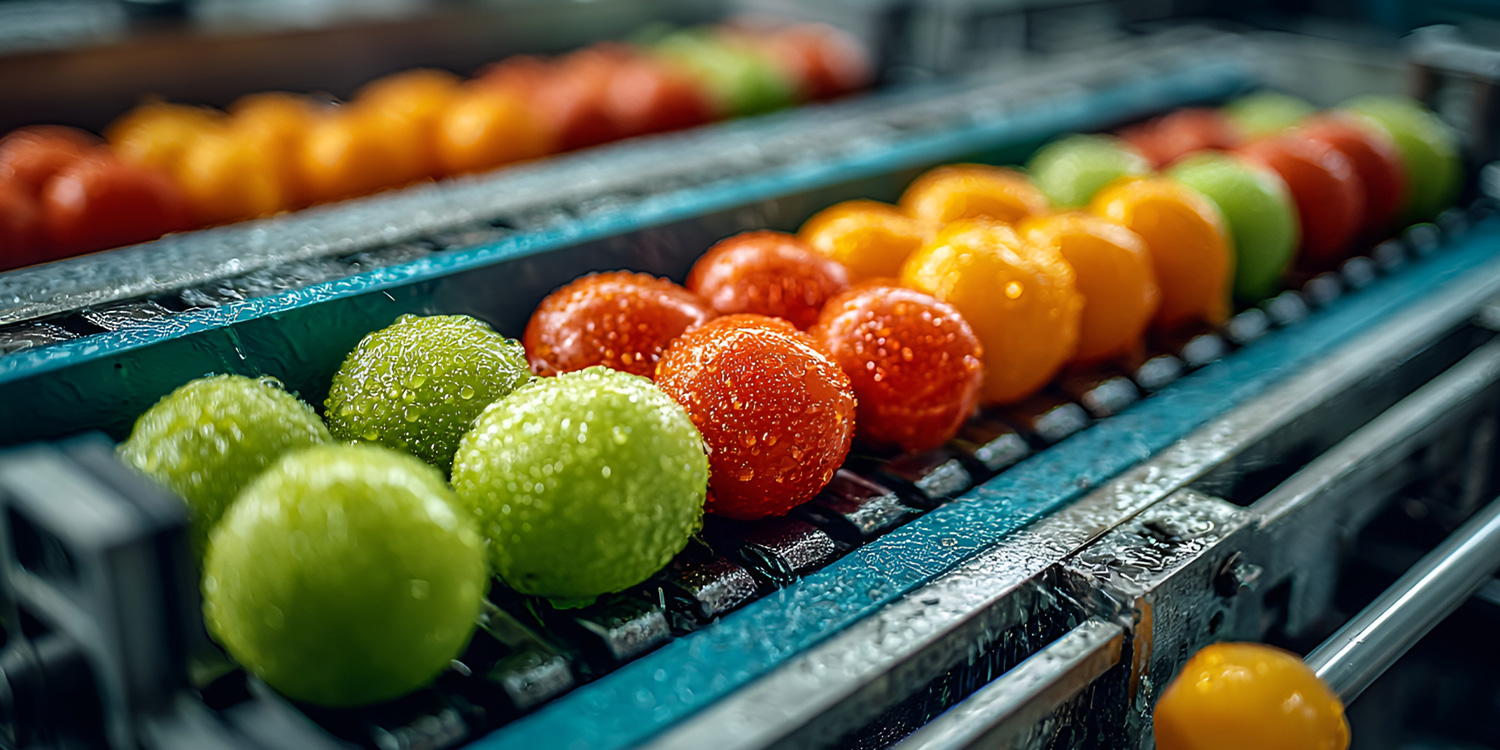
What Is Multi-Function Food Conveying Equipment Multi-function food conveying equipment refers to conveyor systems designed to handle multiple stages of food processing within a single integrated line, such as transporting, sorting, washing, cooling, drying, and packaging. Unlike single-purpose conveyors that only move product from point A to point B, these systems combine mechanical, pneumatic, or hydraulic components to perform several tasks simultaneously, reducing the need for separate machines and manual handling steps. This type of equipment is widely used in bakeries, meat processing plants, dairy facilities, and snack food manufacturing lines where efficiency, hygiene, and product consistency are critical. By consolidating multiple functions into one system, manufacturers can reduce floor space requirements, minimize product contamination risks, and streamline production workflows from raw material intake to final packaging. Core Components and How They Work Together A multi-function conveying system typically integrates several modules along a single frame or connected series of frames. Understanding each component helps operators select the right configuration for their specific production needs. Belt and Chain Drive Systems The conveying surface, whether modular plastic belting, stainless steel mesh, or food-grade rubber, moves product through each processing stage. Variable speed drives allow operators to adjust throughput based on product type and downstream equipment capacity, ensuring smooth transitions between washing, sorting, and packing stations. Integrated Sorting and Inspection Modules Many systems incorporate optical sensors, weight scales, or metal detectors directly into the conveying line, allowing defective or foreign-object-contaminated products to be automatically removed without stopping the entire production process. Key Benefits for Food Processing Facilities Investing in multi-function conveying equipment offers measurable advantages over relying on multiple standalone machines. The table below summarizes the primary operational benefits. Benefit Impact on Production Reduced Labor Costs Fewer manual handling points lower staffing requirements Improved Hygiene Fewer transfer points reduce contamination risk Space Efficiency Combined functions reduce overall floor space needed Higher Throughput Continuous processing increases output per shift These combined efficiencies often translate into a faster return on investment, particularly for facilities processing high volumes of perishable goods where speed and hygiene directly affect product quality and shelf life. Common Applications Across Food Industries Multi-function conveying equipment is adaptable to a wide range of food production environments, each with unique handling requirements based on product characteristics. Bakery lines requiring proofing, baking, and cooling transitions Meat and poultry processing with washing, chilling, and portioning stages Fruit and vegetable sorting, washing, and grading operations Snack food production involving frying, seasoning, and packaging Dairy processing lines with pasteurization and bottling integration Choosing the Right System for Your Facility Selecting appropriate multi-function conveying equipment requires careful consideration of product characteristics, production volume, and sanitation requirements specific to your operation. Material Construction Standards Food-grade stainless steel, typically 304 or 316 grade, is essential for components in direct contact with food, offering corrosion resistance and easy sanitization. Belting materials should also meet FDA or equivalent food safety certifications to prevent chemical leaching or bacterial buildup. Cleaning and Sanitation Design Systems designed with open frames, removable belts, and washdown-rated motors simplify daily cleaning routines and help facilities comply with food safety regulations such as HACCP or FDA guidelines. Evaluate throughput capacity against your peak production demands Confirm compatibility with existing upstream and downstream equipment Prioritize systems with tool-free disassembly for faster sanitation cycles Maintenance Practices That Extend Equipment Life Regular preventive maintenance is essential to keep multi-function conveying systems running efficiently and to avoid unplanned downtime that can disrupt entire production schedules. Daily inspections should include checking belt tension, lubrication levels on moving parts, and sensor calibration for sorting or inspection modules. Establishing a scheduled deep-cleaning routine, along with periodic professional servicing of motors and drive components, helps prevent premature wear and ensures consistent food safety compliance throughout the equipment's operational lifespan.
The Core Purpose of a Tropical Fruit Processing Production Line A tropical fruit processing production line is an integrated system of machinery designed to transform raw fruit such as mango, pineapple, papaya, guava, and passion fruit into stable, market-ready products including juice, puree, concentrate, dried fruit, or canned segments. Because tropical fruits are often highly perishable, seasonal, and grown in regions far from major consumption markets, processing lines play a critical role in extending shelf life, reducing post-harvest losses, and enabling export to international markets that would otherwise be inaccessible for fresh fruit due to transit time and spoilage risk. Unlike processing lines built for a single fruit type, many tropical fruit facilities are designed with a degree of flexibility, since seasonal availability often requires switching between different fruits throughout the year. Understanding the core stages of processing, the equipment involved, and the specific handling requirements of different tropical fruits helps facility operators design efficient, adaptable production systems that minimize waste and maintain consistent product quality. Key Stages of a Tropical Fruit Processing Line While specific equipment varies by fruit type and final product format, most tropical fruit processing lines follow a similar sequence of stages designed to move raw fruit through cleaning, preparation, processing, and preservation steps. Receiving and Sorting Incoming fruit is first inspected and sorted to remove damaged, underripe, or overripe units that could compromise product quality or introduce spoilage organisms into the batch. Automated sorting lines often use optical sensors to detect surface defects, size variation, or color inconsistencies, allowing faster and more consistent sorting than manual inspection alone. Washing and Cleaning Fruit passes through washing tanks or spray systems designed to remove soil, pesticide residue, and surface microorganisms. Many lines incorporate a chlorinated or ozonated water rinse at this stage to reduce microbial load before the fruit proceeds to peeling or cutting equipment. Peeling, Cutting, and Pitting This stage varies significantly depending on fruit type. Mangoes typically require pitting and peeling equipment designed around their specific shape, while pineapples need coring and shell removal machinery, and papayas require seed removal alongside peeling. Equipment flexibility here is often a major factor in overall line efficiency for facilities processing multiple fruit varieties. Pulping and Refining Once prepared, fruit is passed through pulping machines that separate juice and pulp from seeds, fibers, and skins. Refiners then adjust the pulp's texture by passing it through progressively finer screens, which is particularly important for products like mango puree, where a smooth, consistent texture is a key quality requirement. Thermal Processing Pasteurization or sterilization equipment applies controlled heat to eliminate harmful microorganisms and inactivate enzymes that could otherwise cause browning, flavor degradation, or spoilage during storage. Aseptic processing systems, which combine sterilization with sterile packaging, are increasingly used for tropical fruit purees intended for long-distance export and extended shelf life. Packaging and Filling Final product is filled into packaging formats appropriate for the intended market, such as aseptic bags-in-drums for bulk export, retail cartons for consumer juice products, or cans for shelf-stable fruit segments. Filling equipment must maintain hygienic conditions throughout to prevent post-processing contamination. Processing Requirements by Fruit Type Different tropical fruits present distinct processing challenges based on their physical structure and composition. The table below outlines key considerations for several common tropical fruits processed at commercial scale. Fruit Key Processing Challenge Common End Product Mango Fibrous pulp requiring fine refining Puree, concentrate Pineapple Tough core and shell removal Canned rings, juice Passion Fruit Seed and pulp separation Concentrate, aseptic pulp Papaya Rapid enzymatic browning after cutting Puree, dried slices Papaya in particular requires rapid processing after cutting due to its high enzymatic activity, which causes browning and flavor changes if the fruit sits exposed to air for extended periods. Facilities processing papaya often minimize the time between cutting and heat treatment to preserve color and flavor quality. Equipment Considerations for Flexible Multi-Fruit Lines Many tropical fruit processors handle multiple fruit types throughout the year based on seasonal harvest cycles, making equipment flexibility an important design consideration rather than building separate dedicated lines for each fruit. Modular pulping and refining equipment with interchangeable screen sizes to accommodate different fruit textures Adjustable peeling and cutting stations capable of handling varying fruit shapes and sizes Quick-changeover filling equipment compatible with multiple packaging formats Sanitation-in-place (CIP) systems that allow thorough cleaning between fruit type changeovers to prevent cross-contamination of flavors Clean-in-place systems are particularly valuable for multi-fruit facilities, since residual pulp or juice from one fruit type can affect the flavor profile of the next batch processed if equipment is not thoroughly sanitized between changeovers, which can be a significant quality control issue for delicately flavored products like passion fruit concentrate. Quality Control and Food Safety Considerations Consistent quality control throughout the production line is essential for meeting both domestic regulatory requirements and international export standards. Brix level (sugar content), pH, and color measurements are typically taken at multiple points along the line to verify the product meets specification before proceeding to the next processing stage. Facilities exporting to international markets often need to comply with food safety certification standards such as HACCP or ISO 22000, which require documented control points throughout the process, including thermal processing validation to confirm that pasteurization or sterilization steps consistently achieve the temperature and time combinations needed to ensure microbial safety across every production batch.
Understanding the Core Purpose of a Berry Puree Processing Production Line A berry puree processing production line is designed to transform raw berries such as strawberries, blueberries, raspberries, and blackberries into a smooth, consistent puree suitable for use in beverages, yogurt, jams, bakery fillings, and baby food. The process must preserve flavor, color, and nutritional value while eliminating seeds, stems, and impurities that could affect product quality. Because berries are delicate and highly perishable, the production line needs to move raw material through cleaning, processing, and preservation stages quickly and hygienically to prevent spoilage and maintain freshness. Unlike processing lines for firmer fruits, berry puree systems require gentler handling equipment to avoid excessive bruising or oxidation, along with fine filtration systems to remove seeds without stripping away pulp and natural texture. Understanding each stage of the process helps manufacturers select the right equipment and avoid costly inefficiencies. Key Stages of the Berry Puree Production Process A complete berry puree production line typically follows a sequence of stages, each requiring specific machinery to ensure product safety and consistency. The table below outlines the primary stages and their function within the overall process. StageFunctionCommon EquipmentSorting and WashingRemove debris, damaged berries, and contaminantsBubble washer, roller sorterCrushingBreak down berries into a pulpy mixtureCrusher-beater machineEnzyme TreatmentBreak down pectin for improved extractionEnzyme dosing tankRefining and De-seedingRemove seeds and skins, produce smooth pureePulper-finisher, screw refinerHomogenizationCreate uniform texture and consistencyHigh-pressure homogenizerPasteurizationEliminate harmful microorganismsTubular or plate pasteurizerAseptic FillingPackage puree while maintaining sterilityAseptic bag-in-box or drum filler Each of these stages plays a distinct role in ensuring the final product meets safety standards while retaining the color, flavor, and nutritional integrity that berry puree is valued for. Essential Equipment Explained in Detail Crusher-Beater Machines The crusher-beater is often the first major processing unit after washing. It gently breaks berries apart while separating larger seeds and stems in a preliminary pass, reducing the load on downstream refining equipment. Adjustable beater speeds allow operators to control the texture of the initial pulp, which is important since different berry types have varying firmness and seed sizes. Pulper-Finishers for Seed Removal Pulper-finishers use rotating paddles and fine mesh screens to separate seeds and skins from the puree. Screen sizes typically range from 0.5mm to 1.5mm depending on the desired smoothness, with finer screens producing a more refined puree suitable for beverages, while slightly coarser screens are used for products like jam that benefit from a bit more texture. Homogenizers for Texture Consistency High-pressure homogenizers break down remaining particles to create a uniform, smooth consistency and prevent separation during storage. This step is particularly important for berry purees used in dairy or beverage applications, where texture uniformity directly affects consumer perception of product quality. Maintaining Product Quality Throughout Processing Berries are particularly sensitive to oxidation and heat, both of which can degrade color and vitamin content if not properly managed. Manufacturers should pay close attention to the following practices to preserve product quality throughout the production line. Minimize the time between crushing and pasteurization to reduce oxidative browning and nutrient loss. Use enclosed, oxygen-limited systems where possible to protect sensitive anthocyanin pigments responsible for berry color. Apply flash pasteurization or aseptic processing to reduce heat exposure time while ensuring microbial safety. Maintain consistent cold chain conditions during storage and transport if the product is not shelf-stable. Regularly calibrate refining equipment to ensure consistent seed removal without excessive pulp loss. These practices help manufacturers deliver a puree that closely resembles the fresh fruit in both appearance and taste, which is a key differentiator in competitive food and beverage markets. Choosing the Right Production Line Capacity and Configuration Production line capacity should be selected based on expected seasonal berry supply, target output volume, and downstream product applications. Smaller operations processing a few hundred kilograms per hour may opt for compact, semi-automated lines, while large-scale facilities handling several tons per hour typically require fully automated systems with integrated CIP (clean-in-place) capabilities to reduce downtime between production runs. It is also important to consider flexibility in equipment design, since many facilities process multiple berry types on the same line. Machines with adjustable screen sizes, variable speed controls, and quick-change components allow manufacturers to switch between strawberry, blueberry, or mixed berry purees without extensive downtime or equipment replacement. Common Challenges and How to Avoid Them One frequent challenge in berry puree production is seed contamination in the final product, which typically results from worn or improperly sized refining screens. Regular inspection and timely replacement of screens can prevent this issue and maintain consistent product quality across batches. Another common problem is color degradation caused by prolonged exposure to oxygen or excessive heat during pasteurization. Manufacturers can address this by investing in equipment designed for minimal air exposure and by optimizing pasteurization temperature and time settings specifically for berry-based products, rather than applying generic fruit processing parameters that may not account for the unique sensitivity of berry pigments and nutrients.
Understanding the Core Components of a Dairy Production Line A dairy production line encompasses a series of interconnected processing stages designed to transform raw milk into safe, shelf-stable consumer products while preserving nutritional quality and taste. From the moment raw milk arrives at a facility to the point where finished products are packaged and ready for distribution, each stage must operate with precise temperature control, timing, and hygiene standards to ensure consistent product safety and quality across every batch produced. Modern dairy processing facilities typically integrate several specialized production lines under one operational umbrella, each optimized for a specific product category. This modular approach allows dairy processors to efficiently produce multiple product types, such as UHT milk, pasteurized milk, and yogurt, using shared infrastructure while maintaining the distinct processing parameters each product requires. UHT Milk Production Line Ultra-high temperature, or UHT, processing involves heating milk to temperatures typically between 135 and 150 degrees Celsius for a few seconds, effectively eliminating virtually all microorganisms and spores that could otherwise cause spoilage. This intense but brief heat treatment, combined with aseptic packaging that prevents recontamination after processing, allows UHT milk to remain shelf-stable at room temperature for several months without refrigeration. The UHT process relies heavily on precise temperature and flow rate control throughout the sterilization stage, as even minor deviations can either fail to achieve adequate sterilization or unnecessarily degrade the milk's flavor and nutritional profile through excessive heat exposure. Because of this sensitivity, UHT lines require sophisticated automated control systems capable of maintaining consistent processing conditions across continuous production runs. Pasteurized Milk Production Line Pasteurization uses a comparatively lower heat treatment than UHT processing, typically heating milk to around 72 degrees Celsius for approximately 15 seconds in what is known as high-temperature short-time pasteurization. This method effectively eliminates harmful pathogens while preserving more of the milk's natural flavor and nutritional characteristics compared to UHT processing, though the resulting product requires continuous refrigeration and has a considerably shorter shelf life. Pasteurized milk production lines typically include a plate heat exchanger system that efficiently transfers heat during both the heating and subsequent cooling phases, minimizing energy consumption while ensuring milk is rapidly cooled after pasteurization to prevent bacterial regrowth before packaging. Dairy Farm Milk Rooms Milk rooms serve as the critical first-stage processing environment located at or near the point of milk collection, where raw milk is initially cooled, filtered, and stored before being transported to a central processing facility. Proper milk room design and equipment selection directly influence raw milk quality, as improper cooling rates or delayed processing can allow bacterial growth to accelerate before the milk ever reaches formal processing stages. Effective milk room operations typically involve rapid cooling to below 4 degrees Celsius within a short window after milking, along with regular equipment sanitation to prevent contamination that could compromise the entire downstream production process. Because milk room conditions establish the baseline quality of raw material entering the broader production line, investment in reliable cooling and storage equipment at this stage pays dividends throughout the entire processing chain. Yogurt Fermentation Production Line Yogurt production introduces an additional layer of complexity compared to liquid milk processing, as it requires a controlled fermentation stage where specific bacterial cultures convert milk sugars into lactic acid, giving yogurt its characteristic tangy flavor and thickened texture. This fermentation process demands precise temperature control, typically maintained around 42 to 45 degrees Celsius, along with carefully monitored fermentation duration to achieve consistent product texture and acidity across every batch. Following fermentation, yogurt production lines typically include cooling stages to halt further bacterial activity once the desired acidity level is reached, along with optional homogenization and flavor addition steps depending on the specific product formulation. The precision required at each of these stages makes automated monitoring systems particularly valuable for maintaining consistent yogurt quality at commercial production scale. Comparing Key Dairy Production Line Types The table below summarizes the core processing differences and typical shelf life outcomes across the main dairy production line types. Production Line Processing Temperature Typical Shelf Life UHT Milk 135–150°C, few seconds Several months, room temperature Pasteurized Milk ~72°C, 15 seconds 1–3 weeks, refrigerated Yogurt 42–45°C fermentation 2–4 weeks, refrigerated Key Factors When Evaluating a Dairy Production Line Investment Facilities considering an investment in new or upgraded dairy processing equipment should evaluate several operational factors to ensure the selected system aligns with their specific production goals. Production capacity requirements — confirm equipment throughput matches current and anticipated future demand. Product range flexibility — consider whether the line can accommodate multiple product types without extensive retooling. Automation and monitoring capabilities — evaluate control systems that support consistent quality across continuous production runs. Hygienic design standards — ensure equipment meets applicable food safety and sanitation requirements for dairy processing. Energy efficiency — assess heat recovery and energy consumption features that affect long-term operating costs. Maintaining Consistent Quality Across the Production Process Regardless of which specific dairy product is being manufactured, maintaining strict hygiene protocols and consistent process monitoring throughout every stage remains essential for producing safe, high-quality dairy products at commercial scale. Regular equipment cleaning and sanitization, combined with continuous temperature and quality monitoring, help facilities catch potential issues early and maintain the consistent product standards that both regulatory bodies and consumers expect from modern dairy processing operations.
Contact Details
Production Address: No. 9188 Chuannan Fenggong Road, Fengxian District, Shanghai
Office Address: Room 603, Building 57, No. 260 Maoyuan Road, Fengxian District, Shanghai
TEL: 86-18221904658
E-mail: [email protected]


Request Custom Quote Need Something Special? We're Here To Help.
 English
 русский
 Français
 Español
 عربى
عربى
 Indonesia