Content
For large-scale dairy stations and milk processing plants, raw milk quality is not determined solely by the herd — it is equally shaped by what happens in the hours between milking and processing. Temperature control, hygienic storage conditions, and consistent agitation during holding all directly affect the bacterial count, fat globule stability, and sensory properties of the milk that eventually reaches consumers. A large outdoor milk storage tank is the central piece of infrastructure that governs this critical window, and selecting, installing, and operating one correctly is one of the most consequential decisions a dairy facility manager will make.
This article provides a detailed, practical examination of large outdoor milk storage tanks — their design features, key components, sizing considerations, operational requirements, and suitability for applications beyond dairy, including food and pharmaceutical liquid storage.
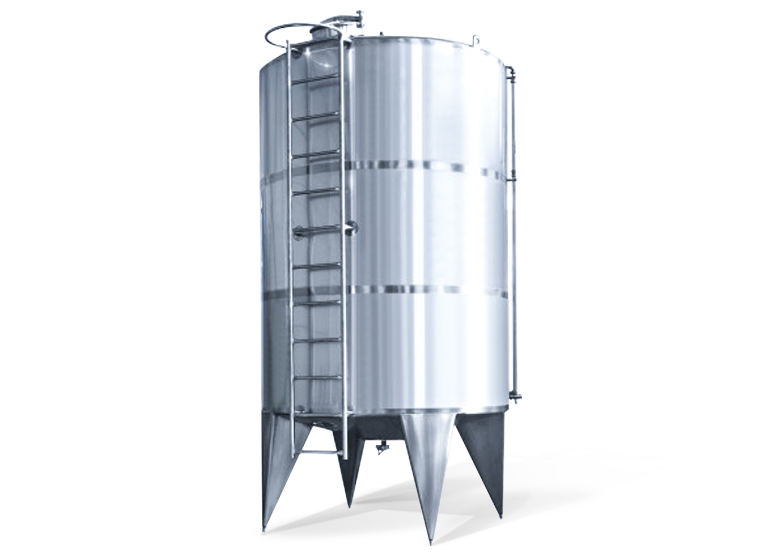
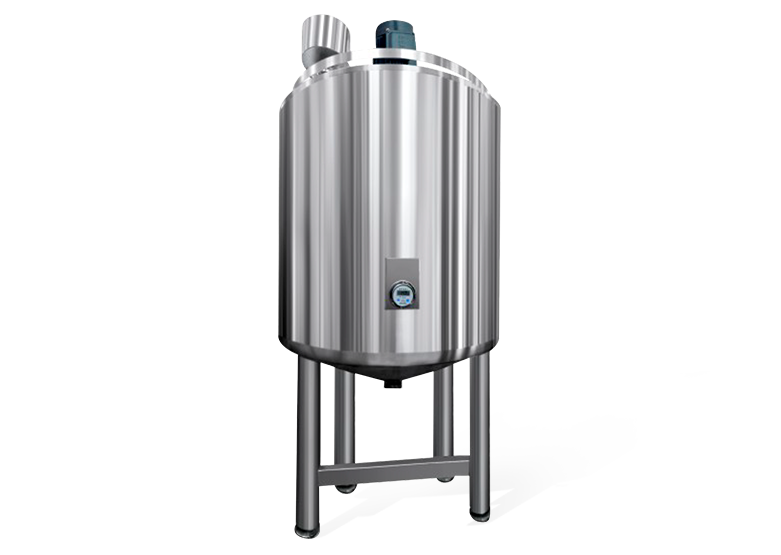
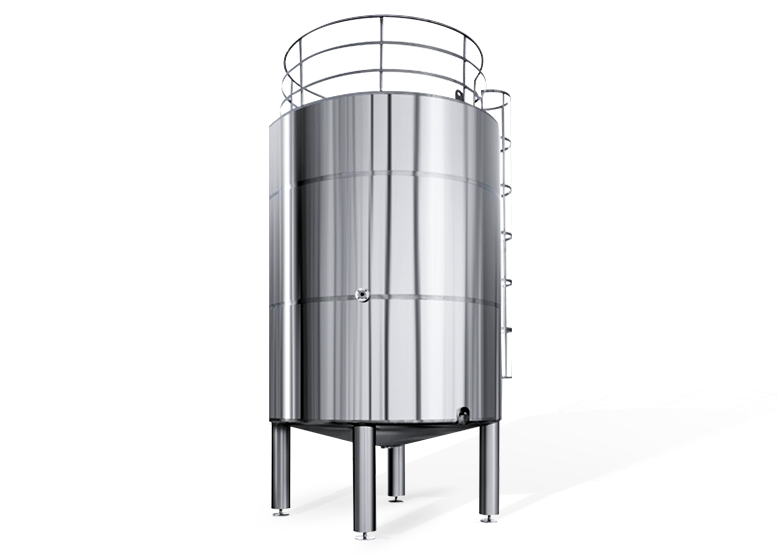
Unlike indoor silo tanks installed within temperature-controlled processing halls, outdoor milk storage tanks are exposed to direct solar radiation, ambient temperature fluctuations, rainfall, wind, and in some climates, frost or extreme heat. These environmental stresses impose design requirements that are substantially more demanding than those for indoor equivalents of the same capacity.
The outer shell of an outdoor milk storage tank is fabricated from food-grade 304 or 316L stainless steel, with a polished interior surface (typically Ra ≤ 0.8 µm) to minimize bacterial adhesion and facilitate effective cleaning. Between the inner and outer shells, high-density polyurethane foam insulation — typically 100 to 150 mm thick — is injected under pressure to form a seamless, void-free thermal barrier. This insulation layer is what allows the tank to maintain milk temperatures at or below 4°C even when ambient temperatures exceed 35°C, without continuous compressor operation.
The exterior cladding is usually a matte or brushed stainless steel skin or an aluminized panel that reflects solar heat load. In regions with high UV intensity, additional reflective coatings or sunshades are sometimes installed above the tank dome to reduce the thermal burden on the refrigeration system. Leg supports and base frames are designed for outdoor ground anchoring, with provisions for drainage runoff and pest exclusion at the foundation level.
A well-specified large outdoor milk storage tank integrates multiple systems that work together to maintain milk quality, enable safe operation, and support regulatory compliance. The following components are standard on industrial-grade units:
The cooling system consists of an evaporator coil welded directly to the outer surface of the inner tank wall — a design known as direct expansion (DX) or direct cooling. Refrigerant circulates through these coils and absorbs heat from the milk, chilling it rapidly. The compressor unit and condenser are mounted separately, either on a platform adjacent to the tank or on a skid beside it. For very large tanks (above 50,000 liters), glycol-based indirect cooling circuits are sometimes used instead of DX systems, as they allow a single chiller to serve multiple tanks and reduce the risk of refrigerant contamination in the event of a coil leak.
Milk is not a homogeneous liquid — fat globules are less dense than the aqueous phase and will cream upward within 30 to 60 minutes if the milk is left undisturbed. An agitation system prevents this separation and also ensures uniform temperature distribution throughout the tank volume. Most large outdoor tanks use a low-shear motorized agitator mounted through the top or side manway, with stainless steel paddle or propeller impellers sized to the tank diameter. Agitation speed is typically 10 to 30 RPM — fast enough to maintain homogeneity, slow enough to avoid damaging fat globules or incorporating air, which would promote oxidation and off-flavor development.
The integrated Clean-In-Place (CIP) washing system allows the tank interior to be cleaned and sanitized without disassembly, using automated spray balls or rotary jet heads mounted inside the tank dome. A standard CIP cycle for a milk storage tank involves a pre-rinse with cold water to flush residual milk, an alkaline wash (typically 1–2% NaOH solution at 70–75°C) to remove protein and fat deposits, an intermediate rinse, an acid wash (0.5–1% nitric or phosphoric acid) to dissolve mineral scale, and a final sanitizing rinse. The entire cycle typically takes 45 to 90 minutes and is controlled by a PLC-based CIP controller with automatic valve sequencing and conductivity verification of rinse water.
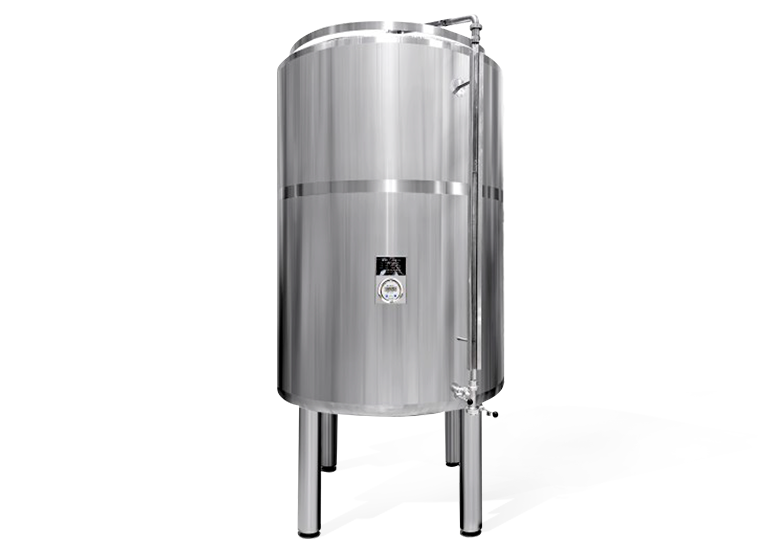
Milk storage temperature is a critical control point under both food safety legislation and dairy industry standards. Large outdoor tanks are fitted with PT100 resistance temperature detectors (RTDs) at multiple heights within the tank — typically at the bottom, mid-level, and near the top — to confirm uniform chilling across the full volume. Digital temperature displays are mounted at operator eye level on the tank exterior, and in modern installations, temperature data is transmitted in real time to a central SCADA or farm management system. High-temperature alarm relays trigger audible and visual alerts if milk temperature rises above a pre-set threshold (typically 6°C), allowing operators to intervene before product safety is compromised.
Accurate liquid level monitoring serves both operational and safety functions. Externally mounted float-type or pressure-based level transmitters provide continuous volume readouts on the operator panel. These instruments are calibrated to the specific tank geometry and output data in both percentage full and absolute volume (liters). A stainless steel sightglass tube with graduated markings on the tank exterior provides a direct visual cross-check of the level reading and is particularly useful during milk intake or transfer operations. Some installations also incorporate a high-level alarm to prevent overfilling and spillage.
Internal LED lighting is fitted through the top dome to illuminate the tank interior during inspection, sampling, or maintenance. The lights are sealed to IP68 standard to resist moisture and are typically low-heat LED units to avoid localized warming of the milk surface. Access to the interior is provided through a top-entry manway (typically 500 mm diameter on large tanks), fitted with a hinged, gasket-sealed cover that can be opened for manual inspection or CIP spray head installation. A fixed or telescoping interior ladder may also be installed for tanks above 3 meters in height.
Selecting the right tank capacity is a function of daily milk intake volume, collection frequency, and processing schedule. As a practical rule, storage capacity should cover at least 24 hours of peak intake volume to provide a buffer against collection delays, processing line downtime, or tanker scheduling disruptions. For large collection stations aggregating milk from multiple farms, 48-hour storage capacity is often specified to accommodate weekend or holiday processing gaps.
| Facility Scale | Daily Intake Volume | Recommended Tank Capacity | Typical Configuration |
| Medium dairy station | 10,000–20,000 L/day | 20,000–30,000 L | 1–2 tanks |
| Large collection center | 30,000–60,000 L/day | 50,000–100,000 L | 2–3 tanks |
| Industrial processing plant | 100,000+ L/day | 200,000–500,000 L total | Multiple tanks in battery |
Installing multiple medium-capacity tanks rather than a single very large tank offers operational advantages: one tank can be taken offline for cleaning or maintenance while the others remain in service, and incoming milk from different farms or quality grades can be stored separately for traceability purposes.
While dairy milk storage is the primary application, the design principles of a large outdoor milk storage tank — hygienic stainless steel construction, insulated shell, CIP compatibility, and precise temperature control — make it equally suitable for a range of other liquid storage applications in the food and pharmaceutical industries. Facilities that process fruit juices, liquid eggs, edible oils, syrups, or pharmaceutical intermediates often use structurally identical tanks with minor modifications to gasket materials, agitator design, or temperature setpoint range.
Key cross-industry applications include:
When specifying a tank for non-dairy applications, it is important to verify that gasket and seal materials are compatible with the specific liquid being stored — fluorosilicone or EPDM seals may be required instead of standard dairy-grade silicone for acidic or solvent-containing products. Agitator torque specifications may also need to be increased for viscous products such as thick syrups or fruit puree concentrates.
The service life of a large outdoor milk storage tank depends heavily on how consistently it is maintained. CIP cycles must be executed after every emptying of the tank — skipping or shortening cleaning cycles leads to biofilm formation on tank surfaces, which becomes progressively more difficult to remove and eventually compromises milk quality. CIP chemical concentrations and temperatures should be verified by titration or conductivity testing rather than assumed from dosing pump settings alone.
Refrigeration system maintenance is equally critical. Condenser coils on outdoor installations accumulate dust, insects, and debris that reduce heat exchange efficiency and increase compressor operating hours. A monthly visual inspection and compressed-air cleaning of condenser fins, combined with a quarterly refrigerant charge check and annual compressor oil analysis, will significantly extend equipment lifespan and reduce energy consumption. Temperature recorder calibration should be performed at least annually against a certified reference thermometer to ensure that logged temperature data remains legally defensible for food safety audits.
Finally, tank foundations and support structures should be inspected annually for corrosion, settlement, or cracking, particularly in regions with aggressive soils or seasonal frost heave. A tank that shifts out of level by even a few degrees can affect agitator bearing loads, liquid level sensor accuracy, and complete drainage during CIP — small maintenance investments at the foundation level prevent much larger operational problems downstream.

Contact Details
Production Address: No. 9188 Chuannan Fenggong Road, Fengxian District, Shanghai
Office Address: Room 603, Building 57, No. 260 Maoyuan Road, Fengxian District, Shanghai
TEL: 86-18221904658
E-mail: [email protected]

Quick Link

Request Custom Quote Need Something Special? We're Here To Help.
 English
 русский
 Français
 Español
 عربى
عربى
 Indonesia