Nov 05, 2026
A flavored milk batch that separates after a week on the shelf, a salad dressing with visible oil droplets, or a beverage base that refuses to wet out without lumps: these are the situations where a high shear emulsification mixing tank becomes the centerpiece of a liquid food line. Instead of relying on slow turbine agitation that leaves agglomerates intact, this tank uses a rotor-stator head mounted directly in the vessel to mechanically reduce droplet and particle size in place. The practical result is a more stable emulsion, a shorter processing time, and fewer product transfers between tanks. What Makes a High Shear Emulsification Mixing Tank Different In simple terms, a high shear emulsification mixing tank is a process vessel with an integrated rotor-stator workhead. The rotor spins at high speed inside a stationary stator, draws product up from the bottom of the tank, and forces it through the narrow annular gap between the two elements. High tip speed, strong turbulence, and close radial clearance combine to break droplets and particles down to a fine, uniform size. The tank therefore performs two jobs at once: it holds the batch and it acts as the mixing machine. A standard mixing agitator tank keeps a batch gently homogeneous, but the high shear configuration delivers much higher localized energy at the workhead. That energy is what breaks fat globules, disperses powders, and creates the fine emulsion that stays stable over time. In many dairy and beverage products, the difference between a stable shelf life and a separated batch is exactly this step. When you evaluate a complete tank package for a dairy or beverage project, a high shear emulsification mixing tank with properly sized rotor-stator geometry is typically the first configuration to review, because it compresses several process functions into a single vessel and simplifies the rest of the line. High Shear Emulsification Mixing Tank Suppliers, Custom Factory, Manufacturers -Yi Yang Fluid Tech is High Shear Emulsification Mixing Tank Suppliers, Customized High Shear Emulsification Mixing Tank Factory and Manuf...View Product → In-Tank Mixing versus Inline High Shear In-tank high shear mixing is the right choice when a batch needs a defined endpoint and you want to avoid the piping, pumps, and recirculation loop that an inline mixer requires. It works well for batch sizes from a few hundred liters to several thousand liters, and it is especially suited to products where the emulsion needs time to develop, such as mayonnaise bases, cream liqueurs, recombined milk, and concentrated fruit mixes. An inline high shear mixer wins when the product must be processed continuously, or when the vessel is so large that a single workhead cannot circulate the entire batch efficiently. For most medium-volume liquid food lines, however, the in-tank configuration is simpler, easier to clean, and lower in capital cost. The trade-off is that you give up the compact footprint of an inline unit and accept the tank itself as a permanent part of the line. Emulsion Results in Dairy and Beverage Processing Emulsion stability is the main reason most plants buy this equipment. The droplet size produced during high shear emulsification directly affects shelf life, texture, and mouthfeel. A typical rotor-stator head reduces droplets to roughly 2 to 10 micrometers, depending on tip speed, clearance, and formulation viscosity. That is not as fine as a high-pressure homogenizer, which can reach sub-micron droplets, but it is sufficient for a wide range of dairy and beverage products. The practical conclusion is simple: if your product needs sub-micron droplets for true physical stability, keep a homogenizer downstream. But if you need a consistent, fine emulsion without the capital cost and maintenance of high-pressure equipment, the emulsification tank is the more economical route. Common product families handled by this tank include: Recombined milk and flavored milk bases prepared before UHT treatment Yogurt mixes where milk powder must be fully rehydrated Beverage syrups and emulsion concentrates stabilized with hydrocolloids Mayonnaise, sauce, and dressing bases with a dispersed oil phase On a yogurt line, the tank is commonly used to rehydrate milk powder and shear the mix before fermentation, producing a smooth, lump-free base. The same preparation step appears in pasteurized milk lines where recombined milk is prepared before UHT treatment, and in flavored milk production where stabilizers must be fully hydrated. A full-automatic degassing machine is often placed after the emulsification tank to remove entrained air before filling, which prevents foam and improves fill-weight accuracy. Full-Automatic Degassing Machine Suppliers, Custom Factory, Manufacturers - ShanYi Yang Fluid Tech is Full-Automatic Degassing Machine Suppliers, Customized Full-Automatic Degassing Machine Factory and Manufacturers i...View Product → For the complete process sequence, a yogurt fermentation production line that includes this preparation stage helps ensure that the sheared base enters the fermentation tanks at a consistent viscosity and temperature. Selection Parameters That Determine Performance Not all high shear emulsification mixing tanks perform the same way. The parameters in the table below make more difference to the final product than the tank volume alone. Key specification parameters to compare when selecting a high shear emulsification mixing tank. Parameter Why It Matters Business Impact Rotor tip speed Determines shear intensity and final droplet size Higher tip speed gives finer droplets but increases motor load Rotor-stator clearance Smaller gap increases shear but reduces throughput Match gap to viscosity and desired droplet range Tank geometry Affects mixing pattern and vortex behavior Baffles or a counter-rotating anchor improve draw-down Heating and cooling jacket Controls temperature-sensitive emulsions Steam or chilled water jacket prevents overheating Shaft seal design Prevents contamination and product leakage Double mechanical seal is the hygienic standard Powder induction option Handles milk powder and stabilizers without lumping Vacuum inlet or eductor hopper reduces manual work CIP compatibility Reduces cleaning time and contamination risk Spray ball coverage and drainable bottom are essential If the process only requires gentle blending after the emulsion is established, a mixing agitator tank is sufficient for holding and buffer duties at a lower energy cost, leaving the high shear tank to handle only the steps that truly need shear. Mixing Agitator Tank Suppliers, Custom Factory, Manufacturers - Shanghai Yi YangYi Yang Fluid Tech is Mixing Agitator Tank Suppliers, Customized Mixing Agitator Tank Factory and Manufacturers in China, Function and Ap...View Product → Procurement Considerations and Common Pitfalls Material of construction is the first procurement risk to manage. Wetted parts should be stainless steel 316L for most liquid food applications, with a surface finish of 0.8 μm Ra or better on contact surfaces and a fully drainable vessel bottom. Welds must be ground smooth. If a supplier cannot guarantee these basics, cleaning and product safety issues are almost certain to appear later. Motor power deserves more attention than tank volume. The workhead needs a motor sized for the viscosity of the actual product, not the water-like viscosity assumed during early planning. If you process both low-viscosity beverage syrups and thicker dessert bases, a variable-frequency drive lets you adjust tip speed without changing rotor-stator geometry. It is also worth confirming the motor position and drive arrangement, because these components affect maintenance access and headroom in the plant. Another common pitfall is underestimating the effect of tank geometry on the shear process. A tall, narrow tank requires a longer draw-down path than a short, wide tank, and the workhead position must be matched to the tank proportions. Review the vendor's previous installations and ask for the batch size, product type, and achieved droplet size before committing to a quoted configuration. Because every formulation is slightly different, most tank packages need some degree of adaptation. A non-standard customization service is often involved in the final tank design when the vessel diameter, jacket arrangement, or workhead orientation must fit around existing plant layouts. Choosing a high shear emulsification mixing tank comes down to matching the rotor-stator design, tank geometry, and utility connections to the actual product set. For dairy and beverage lines where a stable emulsion is the goal, this tank is often the most cost-effective first step, and it can be paired with degassing, gentle agitation, and downstream homogenization as the product specification requires. Focus on the parameters that affect droplet size, confirm the material and cleanability standards, and the tank will fit into the line without surprising the production team later. .article-section table{display: table!important;} .article-section thead{display: table-header-group!important;} .article-section tbody{display: table-row-group!important;} .article-section tr{display: table-row!important;} .article-section th{display: table-cell!important;} .article-section td{display: table-cell!important;} .article-section caption{caption-side:bottom;font-size:16px;margin-bottom:12px;font-style:italic;color:#808080;} .article-section th{font-weight:bold;border:1px solid #cccccc;padding:8px;} .article-section td{border:1px solid #cccccc;padding:8px;} .article-section ol{margin-bottom:12px;list-style-type:decimal;list-style-position:inside;padding-left:0;} .article-section ul{margin-bottom:12px;list-style-type:disc;list-style-position:inside;} .article-section li{list-style:inherit;font-size:16px;margin-bottom:6px;} .article-section h2{font-size:22px;font-weight:bold;text-align:left;margin-bottom:12px!important;} .article-section h3{font-size:16px;font-weight:bold;text-align:left;margin-bottom:12px;} .article-section p{font-size:16px!important;margin-bottom:12px;} .product-card{display:block;margin:20px 0;border:1px solid #e5e7eb;border-radius:10px;overflow:hidden;font-style:normal;background:#fff} .pc-inner{display:flex;text-decoration:none;color:inherit;align-items:center;min-height:120px} .pc-img{width:160px;min-width:160px;aspect-ratio:4/3;height:auto;min-height:120px;object-fit:cover;flex-shrink:0;display:block;align-self:stretch} .pc-body{padding:12px 16px;flex:1;min-width:0;display:flex;flex-direction:column;align-self:stretch;justify-content:center} .pc-title{display:block;font-size:15px;font-weight:600;color:#111;margin:0 0 6px;line-height:1.4} .pc-desc{display:-webkit-box;font-size:13px;color:#6b7280;margin:0 0 8px;line-height:1.5;overflow:hidden;-webkit-line-clamp:2;line-clamp:2;-webkit-box-orient:vertical} .pc-cta{display:block;font-size:13px;font-weight:600;color:inherit;margin-top:auto} .pc-inner:hover .pc-title{text-decoration:underline} .article-section a:not(.pc-inner),article a:not(.pc-inner){color:inherit}.pc-cta{color:inherit!important}

Suppose you run a small berry processing plant and receive a delivery of fresh strawberries. By the end of the shift, those berries should become a smooth, consistent puree packed into drums or aseptic bags. The equipment that makes this possible is not a single pulper, but a coordinated berry puree processing production line. A production line designed for fruit puree is a sequence of mechanical and thermal steps: sorting, washing, milling, pulping, pasteurizing, and filling. Each step must balance two priorities: preserving the fruit's color, flavor, and structure, and maximizing yield while meeting hygienic requirements. A line that is poorly arranged will cause losses at every transfer point and force operators to make compromises between texture and output. That is why the best starting point is not a piece of equipment, but a line concept built on sound process engineering. If you understand the stages and the decisions behind them, you are better prepared to choose equipment that fits your fruit, your final product, and your plant layout. The Core Process Behind Berry Puree A typical berry puree processing production line follows a similar sequence regardless of berry variety. Fresh berries are first cleaned and sorted. They are then crushed or milled to break the cell structure, often before a short heat treatment. The heated fruit is passed through a pulping machine that separates the puree from seeds, skins, and stems. Depending on the product specification, the puree is then deaerated, pasteurized, cooled, and filled into containers that protect it from recontamination. The main stages in a complete line are: Raw material receiving and inspection Sorting and washing Crushing and enzyme treatment Pulping and refining Deaeration, pasteurization, and cooling Aseptic or hot filling The exact configuration changes with berry type. Strawberry puree is often produced with a shorter heat treatment to preserve bright color, while blueberry puree may need more enzyme action and a finer screen to handle skins. The process line should therefore be treated as a design task, not a collection of generic machines. Sorting and Washing: Protecting Product Quality Quality problems in puree usually start before the fruit enters the pulper. Rotten, under-ripe, or damaged berries contribute off-flavors and enzymes that destabilize the puree. Sorting removes these fruit before washing, which is especially important when raw material varies across seasons. Washing removes soil, pesticide residues, and microorganisms without damaging the berry surface. The equipment must be gentle enough for soft berries, but effective enough to avoid carrying contaminants into the pulper. Many lines use an industrial fruit and vegetable washing machine with adjustable water pressure and a feed conveyor that matches the sorting line. Vegetable & Fruit Washing Machine Suppliers, Custom Factory, Manufacturers - ShaYi Yang Fluid Tech is Vegetable & Fruit Washing Machine Suppliers, Customized Vegetable & Fruit Washing Machine Factory and Manufacturers...View Product → After washing, excess water should be drained quickly. Wet berries enter the crusher with visible surface water, which can dilute the puree and reduce Brix. Consider how the line handles this transition when comparing suppliers. Crushing, Enzyme Treatment, and Pulping Crushing breaks the berry skin and creates a mash that can be pumped into the next stage. For berries, a two-step approach is common: rough crushing, followed by a heated holding time. The heat softens the cell walls and helps enzymes separate the pulp from fibers. Some recipes include a pectinase enzyme treatment at this stage. Pectin holds plant cells together, and breaking it down increases the juice and puree yield. The treatment is time and temperature dependent, so the holding tank needs a precisely controlled jacket and agitator. The pulping machine is the heart of the line. It uses a rotating screen and a beating mechanism to press soft pulp through openings while retaining seeds, stems, and coarse skins. The screen size changes the final texture. A fine screen can remove seeds but lower yield; a coarse screen improves yield but leaves graininess. That is why descriptions of fruit and vegetable pulping machines often include interchangeable screens and adjustable rotor speeds. Fruit & Vegetable Pulping Machine Suppliers, Custom Factory, Manufacturers - ShaYi Yang Fluid Tech is Fruit & Vegetable Pulping Machine Suppliers, Customized Fruit & Vegetable Pulping Machine Factory and Manufacturers...View Product → If the raw material includes stone fruits or firm berries, pitting and de-seeding equipment may be added ahead of the pulper. For most true berries, however, the pulper screen alone is enough to separate small seeds. Thermal Treatment, Filling, and Shelf Stability Pasteurization is the step that makes berry puree safe and stable. The puree must be heated above the target microorganism level, held at that temperature long enough, and then cooled quickly. Typical temperatures range from 85 to 95 degrees Celsius in a continuous heat exchanger, with a holding time of 15 to 60 seconds depending on the formulation and pH. The exact parameters should be validated for each product. Puree can be filled hot into drums, or cooled and filled under aseptic conditions. Hot filling is simpler and works well for products sent immediately to another production line. Aseptic filling, often into bag-in-box or aseptic drums, allows puree to be stored at ambient temperature for months. The choice affects the line layout, cold storage requirements, and packaging cost. Do not overlook the heating surface and pumping system. Berry puree is viscous and contains particles, so an unsuitable pump can crush fibers and produce a pasty texture. A scraped-surface heat exchanger is often used for highly viscous puree, while tubular exchangers may work for less fibrous varieties. Matching the Line to the Berry Variety Different berries behave differently in the same line. The table below summarizes common process risks and the adjustments that can be made. Process adjustments vary by berry type and end use. Berry type Common processing risk Recommended line adjustment Strawberry Soft texture and bright color are easily lost Short heating time, gentle conveying, low-shear pump Blueberry Thick skins and small seeds can reduce yield Enzyme treatment and a finer pulper screen Raspberry High seed content and delicate structure Low-speed pulping and separate seed removal Blackberry High acidity and variable raw material pH monitoring and flexible pasteurization temperature A line that works well for strawberries may need significant modifications for blueberries. This is where non-standard fruit processing customization becomes valuable; rather than accepting a standard machine, you can adapt tank volumes, screen openings, and heat exchanger surfaces to the actual fruit. What to Look for When Selecting a Berry Puree Production Line When evaluating equipment, focus on yield, cleaning, and automation. Yield begins at the pulper but is also affected by transfer lines, tanks, and losses during pasteurization. A small difference of 2 to 3 percent yield can decide the profitability of the entire plant. Cleaning is just as critical. A berry puree line that handles sticky, fiber-rich product must be designed for thorough CIP cleaning, with no dead ends in piping and tanks that can be fully drained. If the line is difficult to clean, microbial risk increases and uptime falls. Automation should give operators clear control over process parameters. Recording pasteurization temperature, holding time, and filling flow is not just a convenience; it supports food safety audits and helps maintain consistent quality. Yet the line should remain simple enough for operators to understand and troubleshoot. Finally, consider the line as a whole. Rather than connecting separate equipment from different suppliers, some buyers prefer a complete berry puree processing production line that is already integrated by one manufacturer. This approach simplifies project management and ensures that all components are designed to work together. Berry Puree Processing Production Line Suppliers, Custom Factory, Manufacturers Yi Yang Fluid Tech is Berry Puree Processing Production Line Suppliers, Customized Berry Puree Processing Production Line Factory and Man...View Product → A successful berry puree production line is not defined by a single machine, because such a line includes all steps from sorting to filling and needs to account for each fruit's characteristics. The most productive plants are often those that make deliberate choices at every stage: raw material preparation, pulping, thermal treatment, and packaging. Whether you process a single variety or several, the goal is the same: turn perishable berries into a stable, valuable ingredient without wasting the fruit's natural quality. .article-section table{display: table!important;} .article-section thead{display: table-header-group!important;} .article-section tbody{display: table-row-group!important;} .article-section tr{display: table-row!important;} .article-section th{display: table-cell!important;} .article-section td{display: table-cell!important;} .article-section table caption{caption-side:bottom;font-size:16px;margin-bottom:12px;font-style:italic;color:#808080;} .article-section th{font-weight:bold;border:1px solid #cccccc;padding:8px;} .article-section td{border:1px solid #cccccc;padding:8px;} .article-section ol{margin-bottom:12px;list-style-type:decimal;list-style-position:inside;padding-left:0;} .article-section ul{margin-bottom:12px;list-style-type:disc;list-style-position:inside;} .article-section li{list-style:inherit;font-size:16px;margin-bottom:6px;} .article-section h2{font-size:22px;font-weight:bold;text-align:left;margin-bottom:12px!important;} .article-section h3{font-size:16px;font-weight:bold;text-align:left;margin-bottom:12px;} .article-section p{font-size:16px!important;margin-bottom:12px;} .product-card{display:block;margin:20px 0;border:1px solid #e5e7eb;border-radius:10px;overflow:hidden;font-style:normal;background:#fff} .pc-inner{display:flex;text-decoration:none;color:inherit;align-items:center;min-height:120px} .pc-img{width:160px;min-width:160px;aspect-ratio:4/3;height:auto;min-height:120px;object-fit:cover;flex-shrink:0;display:block;align-self:stretch} .pc-body{padding:12px 16px;flex:1;min-width:0;display:flex;flex-direction:column;align-self:stretch;justify-content:center} .pc-title{display:block;font-size:15px;font-weight:600;color:#111;margin:0 0 6px;line-height:1.4} .pc-desc{display:-webkit-box;font-size:13px;color:#6b7280;margin:0 0 8px;line-height:1.5;overflow:hidden;-webkit-line-clamp:2;line-clamp:2;-webkit-box-orient:vertical} .pc-cta{display:block;font-size:13px;font-weight:600;color:inherit;margin-top:auto} .pc-inner:hover .pc-title{text-decoration:underline} .article-section a:not(.pc-inner),article a:not(.pc-inner){color:inherit}.pc-cta{color:inherit!important}
A CIP system is only as good as the equipment behind it. If you choose tanks, pumps, heat exchangers, and control components that are poorly matched to your plant, you will end up with longer wash cycles, higher chemical consumption, and recurring blockages. On the other hand, a thoughtfully designed CIP cleaning system lets you clean product contact surfaces reliably without stripping down piping or vessels. That is why equipment selection is the most important step in any sanitary processing project. What Is a CIP Cleaning System? Clean-in-place, or CIP, is a method of cleaning the interior surfaces of process equipment without disassembly. In a typical CIP cycle, a cleaning solution is circulated through tanks, pipelines, pumps, valves, heat exchangers, and filling nozzles at controlled temperatures and flow rates. The system removes product residues, biofilms, mineral scale, and allergens between production runs. The main benefit of CIP is repeatability. An automated sequence reduces the chance of human error, and documented cycle data supports audits and quality control. Manual cleaning, by contrast, is slower and harder to validate, especially when pipe runs are long or difficult to access. A standard CIP sequence may include the following stages: A typical CIP sequence for dairy and beverage processes. Stage Purpose Typical Duration Pre-rinse Remove loose soil and product residues with warm water 5-10 min Caustic wash Dissolve fats, proteins, and organic fouling 20-40 min Intermediate rinse Flush out caustic solution 5-10 min Acid wash Remove mineral scale and hard water deposits 10-20 min Final rinse Eliminate acid residues before the next run 5-10 min Sanitizing rinse Reduce microorganism counts to a safe level 5-15 min Core Components Every CIP installation needs a defined set of equipment to deliver the cleaning solution, control its temperature, and return it to the holding tank. The core components include: Dedicated tanks for caustic, acid, water, and sanitizer Centrifugal supply pumps designed for the required flow and head A heat exchanger to keep wash water and cleaning solutions at target temperatures Properly sized piping, valves, and spray devices for agitation and coverage A control system that sequences the phases and records cycle data Why CIP Equipment Matters in Dairy and Beverage Plants Dairy and beverage processes leave behind different residues. Milk lines need caustic washes that can break down milk proteins and fats, while fruit-based beverages may require extra rinsing to remove pulp and natural sugars. Equipment surfaces made of stainless steel are the standard in these industries because they are easy to clean and resistant to corrosion, but the cleaning system must still deliver adequate flow velocity and turbulence. Without the right pump capacity and spray coverage, soil can remain in dead legs, under gaskets, and inside fittings. For example, a yogurt plant that switches between whole milk and flavored drinks may need an extra caustic wash and a longer rinse cycle between products to avoid cross-contact. The CIP equipment must handle these variations without excessive chemical waste. For example, a pasteurized milk production line typically runs several batches per day, and CIP intervals directly affect the time available for production. A fast, reliable CIP cycle means shorter downtime and less manual labor. Conversely, an undersized CIP unit can create bottlenecks that limit throughput. Key Equipment Choices for a CIP Installation Selecting CIP equipment is not simply about buying a packaged unit. Each component in the loop must be matched to the products, line lengths, and available utilities in your plant. Solution and Rinse Water Tanks The tanks that hold concentrated cleaning chemicals and rinse water must be sized to provide enough volume for the longest circuit in each cycle. They should be resistant to the chemicals used and able to maintain temperature during operation. A double-layer insulated tank is often a practical choice in dairy plants because it reduces heat loss and keeps cleaning solutions ready for the next cycle. Double-Layer Insulated Tank Suppliers, Custom Factory, Manufacturers - Shanghai Yi Yang Fluid Tech is Double-Layer Insulated Tank Suppliers, Customized Double-Layer Insulated Tank Factory and Manufacturers in China, F...View Product → Heat Exchangers for Wash Temperature Control Most CIP procedures require washing temperatures between 60°C and 80°C, depending on the soil type. Steam injection is sometimes used, but heat exchangers offer better control and energy efficiency. A dedicated heat exchanger skid can maintain a steady temperature without direct steam hitting the product contact surface, which is important for repeatable cleaning results. Heat Exchanger Skid Suppliers, Custom Factory, Manufacturers - Shanghai Yi Yang Yi Yang Fluid Tech is Heat Exchanger Skid Suppliers, Customized Heat Exchanger Skid Factory and Manufacturers in China, Function Descript...View Product → The CIP Unit, Pumps, and Control System The core of the system is the CIP unit itself, which houses the supply and return pumps, valves, sensors, and control logic. Units with automatic feedback loops monitor flow, conductivity, and temperature to determine when a rinse is complete. If you are evaluating suppliers, ask for a modular CIP cleaning system equipment design that can be expanded as your production lines grow. CIP Cleaning System Equipments Suppliers, Custom Factory, Manufacturers - ShanghYi Yang Fluid Tech is CIP Cleaning System Equipments Suppliers, Customized CIP Cleaning System Equipments Factory and Manufacturers in Ch...View Product → Selection Criteria and Buying Considerations The right CIP configuration depends on your specific process. Here are the main factors to evaluate before you commit to a supplier: Cleaning loads: list every tank, line, pump, valve, and filler that the CIP system must clean, including pipe lengths and diameters. Flow rate: the supply pump must generate a flow that produces turbulent conditions in the largest pipe. A common guideline is 1.5 to 2 m/s in the return line for dairy applications. Materials and finish: use wetted parts made of stainless steel types 304 or 316L, with surface finishes that are easy to inspect and free of cracks and crevices. Automation level: manual systems are acceptable for very small plants, but automatic or semi-automatic CIP is recommended when process lines are long or product changeovers are frequent. Regulatory compliance: choose a system that can be validated and documented for food safety programs such as HACCP, and that supports accurate record keeping. Also compare the total cost of ownership, not just the initial price. A cheaper unit that consumes more water, chemicals, and steam will cost more within a year. Consider the recovery rate, ability to reuse rinse water, and cleaning time per cycle. Consider whether the CIP system can be fitted with a water recovery tank. Reusing the final rinse water as a pre-rinse for the next cycle can cut water consumption by up to 30% in large lines. Installation, Operation, and Maintenance Even the best CIP equipment will fail to perform if the installation is not designed around the plant layout. Supply and return lines should be sloped to drain completely, and dead ends should be minimized. Pressure gauges, conductivity probes, and temperature sensors should be located where they can accurately represent the conditions inside the circuit. During operation, monitor cycle records for deviations. If cleaning time increases or the final rinse conductivity changes, investigate before production begins. Many plants apply a weekly inspection of spray balls, gaskets, and valve seals, and replace worn parts immediately. For plants that need support, technical service from the equipment supplier can help you tune the CIP parameters and train your operators. A simple preventive maintenance schedule includes checking pump seals, verifying heat exchanger performance, calibrating conductivity probes, and cleaning spray balls. These tasks take a short time but prevent costly process downtime. Choosing CIP cleaning system equipment is an engineering decision that links your food safety requirements with your production schedule. Start by defining your cleaning tasks, then match the tanks, heat exchanger, pumps, and controls to those tasks. Avoid the habit of focusing only on the central CIP unit; the storage tanks, heat transfer coil, and instrumentation all contribute to reliable cleaning. A well-designed system reduces downtime, cuts consumption, and gives you confidence in every batch you release. .article-section table{display: table!important;} .article-section thead{display: table-header-group!important;} .article-section tbody{display: table-row-group!important;} .article-section tr{display: table-row!important;} .article-section th{display: table-cell!important;} .article-section td{display: table-cell!important;} .article-section table caption{caption-side:bottom;font-size:16px;margin-bottom:12px;font-style:italic;color:#808080;} .article-section th{font-weight:bold;border:1px solid #cccccc;padding:8px;} .article-section td{border:1px solid #cccccc;padding:8px;} .article-section ol{margin-bottom:12px;list-style-type:decimal;list-style-position:inside;padding-left:0;} .article-section ul{margin-bottom:12px;list-style-type:disc;list-style-position:inside;} .article-section li{list-style:inherit;font-size:16px;margin-bottom:6px;} .article-section h2{font-size:22px;font-weight:bold;text-align:left;margin-bottom:12px!important;} .article-section h3{font-size:16px;font-weight:bold;text-align:left;margin-bottom:12px;} .article-section p{font-size:16px!important;margin-bottom:12px;} .product-card{display:block;margin:20px 0;border:1px solid #e5e7eb;border-radius:10px;overflow:hidden;font-style:normal;background:#fff} .pc-inner{display:flex;text-decoration:none;color:inherit;align-items:center;min-height:120px} .pc-img{width:160px;min-width:160px;aspect-ratio:4/3;height:auto;min-height:120px;object-fit:cover;flex-shrink:0;display:block;align-self:stretch} .pc-body{padding:12px 16px;flex:1;min-width:0;display:flex;flex-direction:column;align-self:stretch;justify-content:center} .pc-title{display:block;font-size:15px;font-weight:600;color:#111;margin:0 0 6px;line-height:1.4} .pc-desc{display:-webkit-box;font-size:13px;color:#6b7280;margin:0 0 8px;line-height:1.5;overflow:hidden;-webkit-line-clamp:2;line-clamp:2;-webkit-box-orient:vertical} .pc-cta{display:block;font-size:13px;font-weight:600;color:inherit;margin-top:auto} .pc-inner:hover .pc-title{text-decoration:underline} .article-section a:not(.pc-inner),article a:not(.pc-inner){color:inherit}.pc-cta{color:inherit!important}

Why Production Line Design Can Make or Break Your Electrolyte Drink Picture this: a beverage brand has developed an electrolyte formula in the lab, with the right sodium and potassium balance, pleasant mouthfeel, and a stable pH. The pilot batch looks perfect. But when the recipe is transferred to a continuous processing line, the mineral salts settle, dissolved oxygen creates micro-foaming during filling, and the flavor shifts after heat treatment. The product is technically the same, yet the process has changed everything. Electrolyte beverages are not ordinary soft drinks. They are formulated with specific mineral salts, sugars, and sometimes vitamins, all of which interact with water, heat, and oxygen in ways that demand precise process control. The conclusion is simple: success depends less on the formula alone and more on how well the electrolyte beverage processing production line is designed to handle those interactions. This article explains the key decisions, process steps, and equipment choices that determine whether a new electrolyte drink line will run reliably at scale. Understand the Three Osmolality Categories First Electrolyte drinks are defined by their osmolality, which is the concentration of dissolved particles in the liquid. When you consume a drink, its osmolality determines how quickly water is absorbed from the stomach into the bloodstream. This gives rise to three categories: Hypotonic drinks have a lower particle concentration than body fluids and are designed for quick hydration with a light mouthfeel. Isotonic drinks have a particle concentration close to that of blood plasma and are commonly used for rapid rehydration during exercise. Hypertonic drinks have a higher particle concentration and are often used for energy recovery after intense effort. Osmolality categories and their typical production implications. Category Reference osmolality Typical use case Production consideration Hypotonic Below 250 mOsm/L Light hydration without excess sugar Lower solids content makes mineral dissolution and mixing uniformity especially important. Isotonic 250 to 340 mOsm/L Rapid rehydration during exercise Close control of mineral and carbohydrate addition is required to stay in range. Hypertonic Above 340 mOsm/L High-energy recovery after training Higher sugar or solids load demands longer mixing time and heat-stability testing. From a processing standpoint, the most important point is that the line must be designed to maintain the target osmolality after all ingredients are added and after any losses during production. This means every piece of equipment, from mixing tanks to filling machines, must be sized and configured around the product recipe. Core Process Steps in an Electrolyte Beverage Production Line Once the formula is fixed, the next question is how to take it from a batch tank to a packaged product. A typical electrolyte beverage processing production line follows a sequence that looks like this: Water treatment and ingredient preparation Mixing and dissolving mineral salts, sugars, acids, and stabilizers Deaeration to remove dissolved oxygen Thermal treatment for microbial safety Cooling and optional dilution or concentration adjustment Filling and packaging under hygienic conditions Cleaning-in-place (CIP) between production runs Each step carries a specific risk, and the equipment must match the operator's expectations for throughput and product quality. Mixing and Mineral Dissolving Minerals such as sodium chloride, potassium citrate, magnesium sulfate, and calcium lactate differ in solubility and often resist dissolving in cold water. A dedicated mixing stage with high shear is usually the first place where a production line succeeds or fails. Many turnkey plants include a high-shear emulsification mixing tank in the first stage to break down agglomerates and hydrate stabilizers without lumps, which reduces filtration problems later in the line. High Shear Emulsification Mixing Tank Suppliers, Custom Factory, Manufacturers -Yi Yang Fluid Tech is High Shear Emulsification Mixing Tank Suppliers, Customized High Shear Emulsification Mixing Tank Factory and Manuf...View Product → Deaeration Dissolved oxygen is an invisible enemy in electrolyte drinks. It accelerates the oxidation of vitamins, changes the color of certain minerals, and causes foam during filling. An integrated fully automatic degassing machine removes dissolved oxygen under vacuum and gives the line a consistent base for thermal treatment. This step is especially important for clear electrolyte drinks where bubble defects are visible in the package. Full-Automatic Degassing Machine Suppliers, Custom Factory, Manufacturers - ShanYi Yang Fluid Tech is Full-Automatic Degassing Machine Suppliers, Customized Full-Automatic Degassing Machine Factory and Manufacturers i...View Product → Thermal Treatment and Filling Electrolyte beverages can be cold-filled with preservatives or hot-filled after pasteurization. For most sports and functional beverages, a short high-temperature treatment is sufficient to control microorganisms without destroying sensitive vitamins. The process may be integrated with the filling machine to ensure a closed path between the sterilizer and the filler. At this stage, the production line must also handle product temperature, pressure, and flow rate precisely to avoid quality drift. Cleaning in Place Because mineral salts leave scale and organic residues in pipes and tanks, a CIP cleaning system is not optional. It circulates caustic, acid, and rinse water through the line without dismantling the equipment, protecting both food safety and flavor consistency. An electrolyte line that changes between isotonic and hypertonic versions benefits from a well-designed CIP sequence that prevents cross-contamination. CIP Cleaning System Equipments Suppliers, Custom Factory, Manufacturers - ShanghYi Yang Fluid Tech is CIP Cleaning System Equipments Suppliers, Customized CIP Cleaning System Equipments Factory and Manufacturers in Ch...View Product → Equipment Selection and Integration At this point, one important question is whether to purchase individual machines or a fully engineered line. For small producers, single machines can be pieced together, but the risk of hidden bottlenecks and incompatible controls grows quickly. For most medium and large projects, a complete electrolyte beverage processing production line can be designed as one integrated system, with process tanks, pumps, heat exchangers, deaeration, filling, and CIP sized to work as a single unit. A turnkey supplier can help here. Instead of leaving the customer to handle interfaces between pumps and valves from different sources, an engineering team can specify the whole flow path, calculate pressure drops, select instruments, and generate the sequence logic that controls the line. This approach is particularly valuable when the product formulation is nonstandard or the plant has limited building space. Scale-Up Challenges and How to Avoid Them Moving from a successful pilot batch to a full-scale electrolyte beverage line is rarely a linear process. The following problems appear repeatedly in real projects: Mineral salts not dissolving completely, leading to spots or sediment in bottles. Pumping shear damage to stabilizers when the transfer pump is oversized or followed by a narrow heat exchanger. Oxygen pickup during intermediate storage, causing off-notes and vitamin degradation. Foaming during filling because the filler is not matched to the liquid viscosity or osmolality. Time lost to inadequate CIP, especially when switching from a sweet isotonic formulation to a salty hypertonic one. The pattern is clear: every potential issue is tied to how the line handles the product between unit operations. That is why a line designed with process knowledge can save months of troubleshooting. For unusual recipes, such as a high-protein electrolyte drink or a formulation with natural colors, a nonstandard customization service can adapt tank geometry, impeller speed, and piping layout to the specific mineral mixture. Working with a Turnkey Engineering Partner The final and perhaps least obvious factor is project execution. A production line is not simply a collection of tanks and pumps; it is a sequence of process steps with defined temperatures, flow rates, residence times, and cleaning cycles. A turnkey engineering approach brings these elements together under one roof. When selecting a partner, consider these questions: Does the supplier analyze your formula before proposing equipment? Can the supplier integrate deaeration, thermal treatment, and filling with a common control system? Is there a documented commissioning procedure with performance tests on water and then on product? Does the supplier offer after-sales technical service and access to spare parts? A tested engineering service can reduce the risk of delays and cost overruns. From initial process design to mechanical installation, a strong partner will make the electrolyte beverage production line a tool for business growth rather than a maintenance burden. In practice, the best way to evaluate a supplier is to ask for a process flow diagram that includes tank volumes, pump capacities, heat exchanger duty, and CIP flow requirements. The answer will quickly show whether they understand electrolyte beverage production. Electrolyte beverages reward careful planning. The successful line is one that controls solubility, oxygen, heat, and cleaning. If you are starting a new project, focus first on the process design and equipment integration, and let the details of mixing, deaeration, sterilization, and CIP shape the layout. That focus makes the difference between a drink that performs in the lab and a line that performs in the market. .article-section table{display: table!important;} .article-section thead{display: table-header-group!important;} .article-section tbody{display: table-row-group!important;} .article-section tr{display: table-row!important;} .article-section th{display: table-cell!important;} .article-section td{display: table-cell!important;} .article-section caption{caption-side:bottom;font-size:16px;margin-bottom:12px;font-style:italic;color:#808080;} .article-section th{font-weight:bold;border:1px solid #cccccc;padding:8px;} .article-section td{border:1px solid #cccccc;padding:8px;} .article-section ol{margin-bottom:12px;list-style-type:decimal;list-style-position:inside;padding-left:0;} .article-section ul{margin-bottom:12px;list-style-type:disc;list-style-position:inside;} .article-section li{list-style:inherit;font-size:16px;margin-bottom:6px;} .article-section h2{font-size:22px;font-weight:bold;text-align:left;margin-bottom:12px!important;} .article-section h3{font-size:16px;font-weight:bold;text-align:left;margin-bottom:12px;} .article-section p{font-size:16px!important;margin-bottom:12px;} .product-card{display:block;margin:20px 0;border:1px solid #e5e7eb;border-radius:10px;overflow:hidden;font-style:normal;background:#fff} .pc-inner{display:flex;text-decoration:none;color:inherit;align-items:center;min-height:120px} .pc-img{width:160px;min-width:160px;aspect-ratio:4/3;height:auto;min-height:120px;object-fit:cover;flex-shrink:0;display:block;align-self:stretch} .pc-body{padding:12px 16px;flex:1;min-width:0;display:flex;flex-direction:column;align-self:stretch;justify-content:center} .pc-title{display:block;font-size:15px;font-weight:600;color:#111;margin:0 0 6px;line-height:1.4} .pc-desc{display:-webkit-box;font-size:13px;color:#6b7280;margin:0 0 8px;line-height:1.5;overflow:hidden;-webkit-line-clamp:2;line-clamp:2;-webkit-box-orient:vertical} .pc-cta{display:block;font-size:13px;font-weight:600;color:inherit;margin-top:auto} .pc-inner:hover .pc-title{text-decoration:underline} .article-section a:not(.pc-inner),article a:not(.pc-inner){color:inherit}.pc-cta{color:inherit!important}

Suppose your energy drink formula is already validated in the laboratory: 32 mg of caffeine per 100 ml, 400 mg of taurine per serving, a B-vitamin blend, and a finished pH of 3.2. The formula works on a bench scale. The real question is whether it will survive a production line running at thousands of bottles per hour. The answer depends less on the recipe itself and more on how the energy drink processing production line is designed, integrated, and operated. In project after project, brands succeed or struggle for exactly this reason: the ones that scale reliably treat the production line as part of the product development process, not as an afterthought. What Defines an Energy Drink Processing Production Line An energy drink processing production line is a sequence of unit operations that converts water, caffeine, taurine, sweeteners, acids, preservatives, and flavorings into a stable, safe, and uniform beverage. Packaging formats vary - cans, PET bottles, glass bottles - but the core process follows a defined logic across plants. The Standard Process Sequence A typical line runs through water treatment, batching and mixing, deaeration, filtration, heat treatment, filling, and then either in-line pasteurization or pasteurization of the sealed package. For carbonated energy drinks, CO2 injection is integrated upstream of the filler. Each stage protects the product in a specific way, and skipping one stage usually shows up later as a quality problem. A simplified view of the main stages on a typical energy drink processing production line. Stage Primary Function Typical Consideration Water treatment Provides a consistent base water TDS, hardness, and dechlorination affect flavor and stability Batching and mixing Dissolves caffeine, taurine, sweeteners, and acids Powder addition point, shear level, and batch temperature Deaeration Removes dissolved oxygen Protects B vitamins and reduces flavor oxidation Filtration Removes undissolved particles Cartridge or plate filter installed before heat treatment Heat treatment Reduces microbial load HTST at 85-95 °C for high-acid energy drinks Filling Transfers product into sealed containers Hot-fill, aseptic, or ambient filling changes the whole downstream layout Post-fill pasteurization In-container pasteurization where required Tunnel or spray design must match container geometry How Formulation Decisions Change the Line Caffeine dissolves readily in hot water, so most plants prepare a concentrated caffeine solution in a small side vessel before dosing it into the main batching tank. Taurine is heat-stable and can be added earlier in the process. B vitamins, in contrast, are sensitive to prolonged heat and light exposure; if your label claims high vitamin retention, you may need to dose them later in the process or keep heat exposure short. Acidic formulations also influence material selection: at a pH near 3.2, stainless steel wetted parts and seals must be specified for corrosion resistance. Key Equipment Modules on an Energy Drink Line Once the process sequence is fixed, the equipment list follows from it. Three modules deserve the most attention during planning: mixing, deaeration, and heat treatment. These are the stages where formulation problems most often turn into production problems. Mixing and Batching The mixing stage is where a powder-heavy formula can fail first. Caffeine, taurine, and stabilizer blends tend to clump or float when added directly to cold water. A high shear emulsification mixing tank creates the hydraulic shear needed to disperse powders and oil-soluble ingredients quickly, producing a uniform base in a single vessel. For energy drink concentrates that include vitamins, flavors, or emulsion systems, the same tank can be used for the premix step before dilution. High Shear Emulsification Mixing Tank Suppliers, Custom Factory, Manufacturers -Yi Yang Fluid Tech is High Shear Emulsification Mixing Tank Suppliers, Customized High Shear Emulsification Mixing Tank Factory and Manuf...View Product → In practice, a well-designed mixing module combines a center high-shear head with a slow sweep agitator. That combination prepares stable suspensions and emulsions without trapping air, which is exactly what powder-heavy energy drink recipes need. Deaeration and Filtration Dissolved oxygen accelerates the degradation of ascorbic acid, certain B vitamins, and flavor compounds. A vacuum deaeration unit exposes a thin film of product to reduced pressure and strips dissolved oxygen down to very low levels. It also removes entrained air that would otherwise cause foaming at the filler. Our full automatic degassing machine is a standard module on functional beverage lines for exactly this reason: it protects both vitamin retention and the mouthfeel of the finished drink. After deaeration, a cartridge or plate filter captures undissolved particles before the product reaches the heat exchanger. Full-Automatic Degassing Machine Suppliers, Custom Factory, Manufacturers - ShanYi Yang Fluid Tech is Full-Automatic Degassing Machine Suppliers, Customized Full-Automatic Degassing Machine Factory and Manufacturers i...View Product → Heat Treatment, Filling, and Cleaning Because most energy drinks have a pH below 3.5, they are classified as high-acid products. Our sterilization system equipment can operate in HTST mode - typically 85-95 °C for 15-30 seconds - which is usually sufficient to achieve commercial sterility. Some producers choose hot filling at 80 °C or above, which extends shelf life and eliminates the need for a separate post-fill pasteurizer. Others prefer cold filling followed by tunnel pasteurization. Each option changes the filler specification, the container handling system, and the plant's energy balance. Carbonated products also require a counter-pressure filler to avoid CO2 loss during filling. Sterilization System Equipment Suppliers, Custom Factory, Manufacturers - ShanghYi Yang Fluid Tech is Sterilization System Equipment Suppliers, Customized Sterilization System Equipment Factory and Manufacturers in Ch...View Product → Whatever the heat profile, the line must be cleanable. An automated CIP cleaning system circulates caustic and acid solutions through tanks, heat exchangers, and fillers without disassembly, and modern lines integrate the CIP sequence into the line's automation logic. A clean line is the difference between a plant that produces consistently and one that fights contamination issues on every shift. Practical Challenges During Commissioning and Ramp-Up Most commissioning problems on energy drink lines are not exotic. They are predictable, and they can be designed out in advance if the supplier understands the product. Foaming and Air Entrapment Energy drink formulations containing taurine, ginseng extracts, or certain flavors foam readily when agitated. Foam slows down filling and traps air that oxidizes vitamins. Vacuum deaeration solves most of this problem, but the mixing tank design matters as well: slow-speed sweep agitators combined with a submerged high-shear head are the most reliable configuration for keeping air out of the product. Sedimentation and Precipitation Calcium from the base water can react with phosphate in vitamin premixes and form insoluble salts. The order of acid addition matters too: dosing preservatives and acids too quickly into a concentrated sugar or polyol solution can cause local precipitation. In practice, it is safer to dissolve acid and preservatives separately and dose them slowly. A visible haze in the finished drink is one of the most common complaints from retailers, and it is almost always preventable with the right process sequence. Batch Consistency and CIP Validation Batch-to-batch variation usually traces back to three sources: inconsistent water quality, incomplete cleaning, or manual dosing errors. A properly designed line automates recipe dosing, monitors CIP parameters such as flow rate, temperature, and conductivity, and records them. Those records are also what food-safety auditors ask to see during an inspection. What to Look for in a Production Line Supplier The equipment itself is only part of the project. Process engineering capability, installation resources, and after-sales support determine how quickly the line reaches target output and how long it stays there. Process Engineering Comes Before Equipment A supplier that asks about your target Brix, pH, vitamin retention, and container type before quoting is a supplier that understands process engineering. If the supplier starts with a standard equipment list, the line will be built around the equipment instead of around your formula. That is an expensive way to learn. For atypical recipes, ask whether the supplier can provide custom-designed processing equipment matched to your specific production targets. Installation and Commissioning Capacity Most delays on beverage projects happen during installation, not during equipment manufacturing. Check whether the supplier provides mechanical and electrical installation, whether they commission the line with your actual product, and whether the handover includes operator training. For international projects, ask about documentation, language support, and remote troubleshooting procedures. Support After Commissioning A production line typically has a useful life of ten to fifteen years, and the supplier relationship should last at least that long. Ask about spare parts availability, response times for service calls, and whether the automation software is maintained by the same team that installed it. Evaluate total cost over that period, not just the quoted price: energy consumption, CIP chemical usage, filler efficiency, and changeover time have a larger financial impact than the initial equipment difference. A reliable energy drink processing production line is the result of a few decisions made early: matching the process sequence to the formulation, selecting equipment that can handle powders, dissolved gases, and acidic products, and choosing a supplier with real integration experience. If you are planning a new facility or upgrading an existing filling hall, start by reviewing the process flow rather than the price list. For a closer look at how a complete line is configured for this category, review our energy drink processing production line. The same engineering approach applies across the functional beverage portfolio, including electrolyte beverage processing lines, where dissolved solids, acidity, and vitamin stability create the same design pressure. .article-section table{display: table!important;} .article-section thead{display: table-header-group!important;} .article-section tbody{display: table-row-group!important;} .article-section tr{display: table-row!important;} .article-section th{display: table-cell!important;} .article-section td{display: table-cell!important;} .article-section caption{caption-side:bottom;font-size:16px;margin-bottom:12px;font-style:italic;color:#808080;} .article-section th{font-weight:bold;border:1px solid #cccccc;padding:8px;} .article-section td{border:1px solid #cccccc;padding:8px;} .article-section ol{margin-bottom:12px;list-style-type:decimal;list-style-position:inside;padding-left:0;} .article-section ul{margin-bottom:12px;list-style-type:disc;list-style-position:inside;} .article-section li{list-style:inherit;font-size:16px;margin-bottom:6px;} .article-section h2{font-size:22px;font-weight:bold;text-align:left;margin-bottom:12px!important;} .article-section h3{font-size:16px;font-weight:bold;text-align:left;margin-bottom:12px;} .article-section p{font-size:16px!important;margin-bottom:12px;} .product-card{display:block;margin:20px 0;border:1px solid #e5e7eb;border-radius:10px;overflow:hidden;font-style:normal;background:#fff} .pc-inner{display:flex;text-decoration:none;color:inherit;align-items:center;min-height:120px} .pc-img{width:160px;min-width:160px;aspect-ratio:4/3;height:auto;min-height:120px;object-fit:cover;flex-shrink:0;display:block;align-self:stretch} .pc-body{padding:12px 16px;flex:1;min-width:0;display:flex;flex-direction:column;align-self:stretch;justify-content:center} .pc-title{display:block;font-size:15px;font-weight:600;color:#111;margin:0 0 6px;line-height:1.4} .pc-desc{display:-webkit-box;font-size:13px;color:#6b7280;margin:0 0 8px;line-height:1.5;overflow:hidden;-webkit-line-clamp:2;line-clamp:2;-webkit-box-orient:vertical} .pc-cta{display:block;font-size:13px;font-weight:600;color:inherit;margin-top:auto} .pc-inner:hover .pc-title{text-decoration:underline} .article-section a:not(.pc-inner),article a:not(.pc-inner){color:inherit}.pc-cta{color:inherit!important}
The most common mistake in beverage plant planning is treating a functional drink as a standard soft drink with an extra dosing pump. It is not. Functional beverages carry vitamins, minerals, electrolytes, amino acids, probiotics, or botanical extracts in small, carefully controlled doses, and most of those active ingredients are damaged by heat, oxygen, light, or excessive shear. That single fact changes equipment selection from the mixing tank to the filler. A functional beverage processing production line must be designed around the fragility of its ingredients; otherwise the finished product loses the very benefits it claims on the label. The real question is not how fast the filler runs, but whether the line protects the ingredients that make the product worth buying. What Makes a Functional Beverage Line Different A functional beverage processing production line is an integrated sequence of water treatment, dosing, mixing, thermal treatment, filling, and packaging modules, but its design logic is set by three factors: Dose accuracy. Vitamin or electrolyte levels that drift by a few percent make a batch fail its label claim or taste inconsistent from run to run. Ingredient sensitivity. Heat-labile vitamins, oxidizable botanicals, and shear-sensitive proteins force gentler treatment at every stage from batching to filling. Hygiene and traceability. Functional drinks are positioned as premium health products, and regulators, distributors, and retailers increasingly expect complete batch records. The practical result is a line that combines precise metering, short high-temperature exposure, oxygen control, and automated cleaning. That is a different machine from a conventional juice or carbonated soft drink line, even though the outer layout looks similar. Core Process Stages and Equipment Selection Every functional beverage line follows the same basic route, but the equipment inside each stage decides whether the finished drink keeps its claimed benefit and a stable shelf life. Dosing and Mixing: Where the Formula Takes Shape Most functional formulas start with treated water, sweeteners, acidulants, stabilizers, and the active compounds. The mixing stage has to dissolve or disperse each component evenly, and the smallest deviation shows up in taste profiles and laboratory results. High-shear mixing is the standard answer for emulsions and for rehydrating powders, while load cells and mass flow meters ensure that each ingredient enters at the programmed weight. For producers working with emulsions, protein fortification, or thick bases, agitation equipment deserves particular attention. A high-shear emulsification mixing tank combines heating, blending, and homogenization in one vessel, which shortens batch time and removes the transfer steps where a sensitive ingredient can be lost. High Shear Emulsification Mixing Tank Suppliers, Custom Factory, Manufacturers -Yi Yang Fluid Tech is High Shear Emulsification Mixing Tank Suppliers, Customized High Shear Emulsification Mixing Tank Factory and Manuf...View Product → Thermal Treatment: Sterility Without Destroying the Actives Heat is the most stressful stage for functional beverages. Conventional pasteurization and UHT treatment eliminate microbes, but they also degrade vitamins, denature proteins, and change the flavor of herbal extracts. The practical workaround combines several measures: Short-time, high-temperature systems such as plate or tubular heat exchangers with rapid cooling zones minimize total heat exposure. Alternative preservation such as high-pressure processing or aseptic processing is considered when the formula cannot survive a significant thermal load. The process temperature is validated against the most sensitive active ingredient, not against the least sensitive one. The sterilization module therefore has to match the product's real characteristics. A sterilization system equipment package can be configured for the required temperature profile, flow rate, and holding time of a given formula, which is why most plants prefer a supplier that engineers this stage instead of offering a generic heat exchanger. Sterilization System Equipment Suppliers, Custom Factory, Manufacturers - ShanghYi Yang Fluid Tech is Sterilization System Equipment Suppliers, Customized Sterilization System Equipment Factory and Manufacturers in Ch...View Product → Deaeration, Filling, and Automated Cleaning Dissolved oxygen accelerates the degradation of vitamin C, polyphenols, and other antioxidants, so a vacuum deaeration step is standard before filling. The filler must prevent recontamination: aseptic filling for sensitive shelf-stable products, hot filling for formulas that tolerate it, and clean filling for short-shelf-life items are the usual options. Around all of these, an automated CIP system washes tanks, pipes, and fillers without opening the line, which is the difference between consistent hygiene and recurring contamination risk. Typical stages in a functional beverage processing production line and the main risk to manage at each step. Stage Typical Equipment Main Risk to Manage Water treatment Reverse osmosis, UV disinfection Mineral consistency and flavor neutrality Dosing and mixing High-shear mixer, load cell batching Dose accuracy and even dispersion Deaeration Vacuum degassing unit Oxidation of vitamins and botanicals Thermal treatment Plate or tubular sterilizer Thermal degradation of active ingredients Filling Aseptic, hot, or clean filler Recontamination and oxygen pickup Cleaning Automated CIP system Residue, biofilm, and cross-contamination Procurement Considerations That Decide Line Performance Equipment catalogs look similar online; the differences appear when the line is running. These five points separate a line that works on paper from one that works in production. Dosing Accuracy and Recipe Control Functional ingredients are expensive and often effective at very low concentrations. The batching system should weigh or meter each component independently, log the actual quantities, and lock the recipe so operators cannot change it by accident. If a supplier cannot explain how the system prevents dosing errors, consider that a red flag. Flexibility for Multiple Formulas Most functional beverage brands run more than one SKU, and many add products over time. Changeover speed depends on separate dosing lines, flush-in-place routines, and recipe management software. The same architecture used for an electrolyte beverage production line also works for an energy drinks production line, as long as the batching and cleaning modules are designed for quick switches between formulas. Hygienic Design and CIP Performance Look for tanks and piping without dead legs, valves that drain completely, and a CIP sequence that reaches every wetted surface. Ask how the CIP circuit is validated and how long a complete wash cycle takes, because that number directly reduces available production time. Capacity and Future Expansion A line sized for today's demand with no room to grow becomes a constraint within a few years. Decide whether the plant will run one shift or three, whether more SKUs are planned, and whether a second filler or an extra storage tank can be added later without rebuilding the entire system. Supplier Engineering Capability A functional beverage line is an integration project, not a stack of machines. A supplier that can design the process flow, size every unit, install the equipment, and support it afterward removes the biggest risk: the gap between individual machines that were never designed to work together. Choosing a Turnkey Partner for the Complete Line For most beverage companies, the practical decision is between buying individual machines from several vendors or commissioning the complete line from one experienced provider. The second approach usually wins when the formula is sensitive, the launch schedule is tight, or the plant has no internal process engineering team. A turnkey scope typically covers process design, custom equipment manufacturing, system integration, mechanical and electrical installation, and commissioning. In practice, one team is responsible for making sure the sterilizer matches the mixing tank, the filling machine matches the bottle, and the CIP system matches all of them. That responsibility is exactly what an engineering service team carries on a beverage project, from line layout to utility connections and start-up support. For companies that want a single integrated configuration, a dedicated functional beverage processing production line covers the full sequence, from water treatment and batching to deaeration, sterilization, filling, and packaging, and can be adapted to related categories such as vitamin beverages. Functional Beverage Processing Production Line Suppliers, Custom Factory, ManufaYi Yang Fluid Tech is Functional Beverage Processing Production Line Suppliers, Customized Functional Beverage Processing Production Line...View Product → Bottom Line A functional beverage processing production line is a precision food-engineering system, not an off-the-shelf beverage line. The winning approach is to define the formula's sensitivity profile first and then select equipment around it: precise dosing, gentle but effective thermal treatment, oxygen control, and CIP that keeps the entire line hygienic between batches. Buyers who focus on those fundamentals, and on the supplier's ability to engineer and install the complete system, consistently get shorter start-up times and fewer batch failures than those who compare machines one by one. .article-section table{display: table!important;} .article-section thead{display: table-header-group!important;} .article-section tbody{display: table-row-group!important;} .article-section tr{display: table-row!important;} .article-section th{display: table-cell!important;} .article-section td{display: table-cell!important;} .article-section table caption{caption-side:bottom;font-size:16px;margin-bottom:12px;font-style:italic;color:#808080;} .article-section th{font-weight:bold;border:1px solid #cccccc;padding:8px;} .article-section td{border:1px solid #cccccc;padding:8px;} .article-section ol{margin-bottom:12px;list-style-type:decimal;list-style-position:inside;padding-left:0;} .article-section ul{margin-bottom:12px;list-style-type:disc;list-style-position:inside;} .article-section li{list-style:inherit;font-size:16px;margin-bottom:6px;} .article-section h2{font-size:22px;font-weight:bold;text-align:left;margin-bottom:12px!important;} .article-section h3{font-size:16px;font-weight:bold;text-align:left;margin-bottom:12px;} .article-section p{font-size:16px!important;margin-bottom:12px;} .product-card{display:block;margin:20px 0;border:1px solid #e5e7eb;border-radius:10px;overflow:hidden;font-style:normal;background:#fff} .pc-inner{display:flex;text-decoration:none;color:inherit;align-items:center;min-height:120px} .pc-img{width:160px;min-width:160px;aspect-ratio:4/3;height:auto;min-height:120px;object-fit:cover;flex-shrink:0;display:block;align-self:stretch} .pc-body{padding:12px 16px;flex:1;min-width:0;display:flex;flex-direction:column;align-self:stretch;justify-content:center} .pc-title{display:block;font-size:15px;font-weight:600;color:#111;margin:0 0 6px;line-height:1.4} .pc-desc{display:-webkit-box;font-size:13px;color:#6b7280;margin:0 0 8px;line-height:1.5;overflow:hidden;-webkit-line-clamp:2;line-clamp:2;-webkit-box-orient:vertical} .pc-cta{display:block;font-size:13px;font-weight:600;color:inherit;margin-top:auto} .pc-inner:hover .pc-title{text-decoration:underline} .article-section a:not(.pc-inner),article a:not(.pc-inner){color:inherit}.pc-cta{color:inherit!important}
Why a Tea Beverage Processing Production Line Matters Clear bottled tea reveals every weakness in a beverage plant faster than almost any other liquid product. If extraction temperatures vary by even a few degrees, the liquor turns bitter. If dissolved oxygen is not controlled during transfer, polyphenols oxidize and the color drifts from golden to brown within weeks. If the sterilization step does not match the product's pH, a sealed bottle can still spoil on the shelf. These failures are not recipe problems. They are process design problems, and the most reliable way to solve them is with a dedicated tea beverage processing production line rather than a patchwork of generic tanks and filling units. A purpose-built line does three things at once. It standardizes extraction and formulation so flavor remains consistent from batch to batch. It limits oxygen exposure and microbial risk so the finished drink keeps clarity, color and taste through its shelf life. And it integrates cleaning and sterilization into the same automated sequence, reducing manual labor and human error. This article explains the main modules of such a line, the process flow behind them, and the purchasing considerations that separate a profitable investment from a costly one. What a Tea Beverage Processing Production Line Includes Tea beverage lines differ in capacity and automation level, but the module sequence is remarkably consistent. A typical line starts with storage tanks for treated water, tea liquor and syrup; continues through extraction, filtration, blending, degassing and sterilization; and ends at filling and capping. Supporting these main stages are utility systems: hot water generation, cooling water loops, CIP cleaning and, in most modern layouts, a PLC-based control platform that records batch data. For medium-volume producers, a semi-automatic line processing 3,000 to 10,000 liters per day may be sufficient, with operators handling weighing, valve switching and CIP initiation. For larger operations, fully integrated turnkey lines run at 20,000 liters per day or more, using automatic batching, automatic valve manifolds and sterile filling under a single control philosophy. Assembling storage tanks, extractors, sterilizers and fillers from different vendors often leads to interface problems: mismatched pipe sizes, inconsistent control signals and unclear responsibility during commissioning. Producers that want to avoid these risks typically choose a complete tea beverage processing production line from one engineering supplier. Shanghai Yi Yang Fluid Technology, for instance, packages the storage, processing, sterilization and cleaning stages into a single engineered system arranged around the customer's target capacity. Tea Beverage Processing Production Line Suppliers, Custom Factory, ManufacturersYi Yang Fluid Tech is Tea Beverage Processing Production Line Suppliers, Customized Tea Beverage Processing Production Line Factory and M...View Product → Core Process Flow of Tea Beverage Production Understanding the process flow helps buyers see why certain equipment is specified and where quality risks are concentrated. Although every recipe is different, most tea beverage lines follow the same sequence. Common process steps and typical operating windows for a tea beverage production line. Exact values depend on tea type, formula and target shelf life. Process step Primary function Typical operating window Tea extraction Leach soluble solids and flavor compounds from leaf, powder or concentrate 70–95°C for 10–30 minutes, depending on tea variety Filtration and clarification Remove leaf fines and haze-forming complexes 100–300 mesh screening followed by fine filtration Formulation and blending Mix sweeteners, flavors, acids and stabilizers in precise proportions Batch blending with high-shear mixing Degassing Remove dissolved oxygen to protect color and flavor Vacuum degassing to below 1 ppm dissolved oxygen Sterilization Destroy microorganisms for shelf stability UHT at 121–137°C for 3–8 seconds, or HTST at 85–95°C for refrigerated products Filling Package under hygienic or sterile conditions Hot fill, aseptic fill or cold fill depending on product pH Two details in this sequence deserve special attention. First, the extraction step determines how much of the leaf's soluble solids, and its bitterness, enters the liquid; temperature and time must be repeatable within narrow tolerances. Second, the sterilization step determines whether the product can be distributed chilled or at ambient temperature. Products with a pH above 4.6 are low-acid and must be treated accordingly, while products acidified below 4.2 allow milder heat treatment and a wider range of filling options. Critical Equipment Modules in a Tea Beverage Line Not all equipment in a tea line carries the same weight. In practice, three groups of machines determine most of the finished product's quality and the plant's operating cost. Process Vessels and Mixing Tanks Double-layer insulated tanks hold treated water and tea liquor at stable temperatures, preventing the flavor drift caused by uncontrolled cooling. A high-shear emulsification mixing tank is used when sugar, honey or stabilizers must be dissolved completely; undissolved particles later become sedimentation at the bottom of the bottle. For leaf-tea extraction, the same vessel can be equipped with a heating jacket and agitation, though larger lines usually install a dedicated extraction tank with its own temperature control loop. Degassing and Oxygen Control Dissolved oxygen accelerates the oxidation of tea polyphenols, which leads to browning and flavor loss. A full-automatic degassing machine removes dissolved air under vacuum before the liquid reaches the sterilizer. In most modern lines, the filling section also flushes bottles with nitrogen or relies on hot filling to reduce headspace oxygen. Keeping dissolved oxygen below approximately 1 ppm makes a measurable difference to color stability over a six-month shelf life. Sterilization and CIP Cleaning This is where the largest procurement mistakes happen. Sterilization system equipment must be matched to the product's pH, package type and required shelf life. For low-acid tea sold at ambient temperature, UHT treatment at 121–137°C for a few seconds, followed by aseptic or hot filling, is the standard approach; pasteurization alone is not enough. Sterilization System Equipment Suppliers, Custom Factory, Manufacturers - ShanghYi Yang Fluid Tech is Sterilization System Equipment Suppliers, Customized Sterilization System Equipment Factory and Manufacturers in Ch...View Product → Cleaning is just as critical. Tea leaves tannins and dark deposits on the inside of pipes and tanks, and if the line does not remove them completely, residues can harbor microorganisms and taint the next batch. CIP cleaning system equipment should therefore be sized and programmed together with the rest of the line, not added later. A typical CIP cycle includes pre-rinse, caustic wash, intermediate rinse, acid wash and final rinse, with conductivity and temperature logged for validation. CIP Cleaning System Equipments Suppliers, Custom Factory, Manufacturers - ShanghYi Yang Fluid Tech is CIP Cleaning System Equipments Suppliers, Customized CIP Cleaning System Equipments Factory and Manufacturers in Ch...View Product → Engineering Considerations That Decide Tea Quality Even with well-chosen equipment, tea quality depends on several engineering details that are easy to overlook during the planning phase. Extraction repeatability: temperature control within ±2°C and a fixed time cycle prevent over-extraction, which creates bitterness, and under-extraction, which produces weak flavor. Cold stability: tannin-protein complexes form when hot tea liquor is cooled too slowly. A rapid cooling step after extraction, followed by fine filtration, prevents haze in the finished drink. Oxygen management: vacuum degassing and inert gas blanketing are not optional extras; they are the difference between a stable golden color and progressive browning during distribution. Microbiological safety: the product's pH dictates the severity of the sterilization step, so decisions about acidification must be made before the line is designed, not during commissioning. Cleaning validation: CIP cycles need defined endpoint criteria, such as rinse water conductivity below a preset limit, before the next batch is allowed to start. What to Evaluate Before Buying a Tea Beverage Line Buying a tea beverage production line is a long-term investment, and the lowest quotation rarely produces the lowest operating cost. Before signing a contract, evaluate the supplier on the following points. Capacity and expansion margin: design around your actual daily output plus a 15–20 percent reserve for seasonal demand and new product introductions. Material and surface finish: product-contact parts should be 316L stainless steel with a surface finish of Ra ≤ 0.8 µm, while non-contact frames can be 304L. Automation and data recording: a PLC-controlled line with batch reports and alarm history makes it easier to validate production and trace quality issues. Product changeover: the line should handle more than one tea type, such as black, green, oolong or herbal tea, with reasonable cleaning and setup times between runs. Installation and after-sales capability: confirm that the supplier can commission the line, train operators and deliver spare parts without prolonged lead times. Turnkey Engineering, Customization and After-Sales Support Tea factories are not identical. Some brew leaf tea in-house, others start from tea powder or concentrate; some package in glass, others in PET or cans. A turnkey supplier should adapt extraction vessel geometry, filter sizing, sterilization temperatures and filling formats to the customer's actual products rather than forcing a standard layout onto every project. Engineering design should be completed before any equipment is fabricated, and it should include mass balance, heat balance and P&ID diagrams as formal deliverables. When standard modules cannot meet a specific requirement, such as an unusual tank size, a special valve arrangement or a unique cleaning protocol, non-standard customization support becomes decisive. After commissioning, a technical service plan should cover operator training, cleaning validation support and rapid access to spare parts so that unplanned downtime does not disrupt your supply schedule. Conclusion The tea beverage market rewards producers who deliver consistent flavor, bring new products to market quickly and keep operating costs under control. A tea beverage processing production line supports all three objectives: it automates extraction and formulation, controls oxygen and microbial risk, and integrates cleaning and sterilization into one system. The real decision is not whether to automate, but how carefully the line is designed around your products, and that question is best answered before the purchase order is placed. .article-section table{display: table!important;} .article-section thead{display: table-header-group!important;} .article-section tbody{display: table-row-group!important;} .article-section tr{display: table-row!important;} .article-section th{display: table-cell!important;} .article-section td{display: table-cell!important;} .article-section caption{caption-side:bottom;font-size:16px;margin-bottom:12px;font-style:italic;color:#808080;} .article-section th{font-weight:bold;border:1px solid #cccccc;padding:8px;} .article-section td{border:1px solid #cccccc;padding:8px;} .article-section ol{margin-bottom:12px;list-style-type:decimal;list-style-position:inside;padding-left:0;} .article-section ul{margin-bottom:12px;list-style-type:disc;list-style-position:inside;} .article-section li{list-style:inherit;font-size:16px;margin-bottom:6px;} .article-section h2{font-size:22px;font-weight:bold;text-align:left;margin-bottom:12px!important;} .article-section h3{font-size:16px;font-weight:bold;text-align:left;margin-bottom:12px;} .article-section p{font-size:16px!important;margin-bottom:12px;} .product-card{display:block;margin:20px 0;border:1px solid #e5e7eb;border-radius:10px;overflow:hidden;font-style:normal;background:#fff} .pc-inner{display:flex;text-decoration:none;color:inherit;align-items:center;min-height:120px} .pc-img{width:160px;min-width:160px;aspect-ratio:4/3;height:auto;min-height:120px;object-fit:cover;flex-shrink:0;display:block;align-self:stretch} .pc-body{padding:12px 16px;flex:1;min-width:0;display:flex;flex-direction:column;align-self:stretch;justify-content:center} .pc-title{display:block;font-size:15px;font-weight:600;color:#111;margin:0 0 6px;line-height:1.4} .pc-desc{display:-webkit-box;font-size:13px;color:#6b7280;margin:0 0 8px;line-height:1.5;overflow:hidden;-webkit-line-clamp:2;line-clamp:2;-webkit-box-orient:vertical} .pc-cta{display:block;font-size:13px;font-weight:600;color:inherit;margin-top:auto} .pc-inner:hover .pc-title{text-decoration:underline} .article-section a:not(.pc-inner),article a:not(.pc-inner){color:inherit}.pc-cta{color:inherit!important}
Six months after launch, a vitamin water product usually reveals whether its processing line was designed around the product or around whatever machines happened to be available. The most visible signs are batch-to-batch inconsistency, low vitamin retention, frequent line stops, and deposit buildup in places the cleaning program cannot reach. The practical conclusion from liquid food projects is simple: define the vitamin stability window first, select the process steps, and only then choose the filling concept. A vitamin beverages processing production line is a sequence of interdependent unit operations that converts purified water, sweeteners, acids, flavorings, and vitamin premixes into a stable finished drink. Every unit has a specific function, and the connections between units matter as much as the machines themselves. Why a vitamin beverage line is not a juice or soft drink line Most juice lines are optimized around flavor and color. A vitamin beverage line has to be designed around retention of active ingredients. Vitamin C (ascorbic acid) is sensitive to oxygen, pH, light, and metal ions. B vitamins follow different degradation paths in aqueous solution, and oil-soluble vitamins need a stable emulsion system. Ignoring these characteristics is the most common reason projects fail to deliver consistent declared values. Most vitamin water formulas are designed in a pH range of 3.5 to 5.5. In the weakly acidic range, ascorbic acid is relatively stable, but dissolved oxygen and transition metals still accelerate oxidation. That is why process design has to control dissolved oxygen, maximum temperature, and exposure time together. Vitamin retention is a function of process conditions, not something the formula can achieve alone. This is the key reason why an integrated design approach is more reliable than buying individual machines. Standard processing sequence for vitamin beverages Although brand recipes differ, vitamin beverage production follows a repeatable core sequence: Water treatment: removes hardness, chlorine, and dissolved minerals that could interfere with vitamin stability. Premix preparation: dissolves or disperses dry vitamins, sweeteners, and stabilizers into a carrier liquid. Mixing and emulsification: creates a homogeneous liquid and stabilizes oil-soluble vitamins. Filtration: removes undissolved particles and protects downstream equipment. Deaeration: reduces dissolved oxygen before the liquid is heated. Pasteurization or sterilization: achieves the required microbial safety with the shortest practical heat exposure. Filling and capping: places the product into final containers under hygienic or aseptic conditions. Labeling and secondary packaging: adds traceability and protects the packaged product. Not every step needs a separate machine. In mature line designs, mixing, deaeration, and sterilization are often integrated into one process skid. The shorter the path from blending to filling, the lower the oxygen pickup and the less time vitamins spend in an unstable environment. The four process steps that determine vitamin retention High-shear mixing and premix preparation Dry vitamin premixes arrive in factories as powders and granules. Simple agitators often cannot wet these solids fast enough, which creates lumps that float, settle, or only partially dissolve. When the liquid moves to the filling tank, different bottles can receive different amounts of the claimed vitamins. That is a compliance risk as much as a quality risk. When a line handles dry vitamin premixes and oil-soluble ingredients, a high-shear emulsification mixing tank is a practical choice in the blending center. The shear force pulls powder into the liquid quickly and disperses the oil phase into fine droplets, forming a stable emulsion. For a vitamin beverage with strict batch-to-batch reproducibility, this step is not optional. High Shear Emulsification Mixing Tank Suppliers, Custom Factory, Manufacturers -Yi Yang Fluid Tech is High Shear Emulsification Mixing Tank Suppliers, Customized High Shear Emulsification Mixing Tank Factory and Manuf...View Product → Deaeration and dissolved oxygen control After mixing and shearing, the liquid is close to oxygen saturation. If that oxygen is not removed before heating, vitamin C and several B vitamins degrade through oxidative reactions. Dissolved oxygen also continues to consume vitamins after filling, through headspace oxygen and permeation through the package. An inline fully automatic degassing machine removes dissolved gas by exposing the liquid to vacuum in a thin film. In practice, this can bring oxygen down well below 1 ppm. The position of the deaerator matters as much as the model: it should sit after high-speed equipment that can introduce air, and before the sterilizer that would otherwise accelerate oxidation. Full-Automatic Degassing Machine Suppliers, Custom Factory, Manufacturers - ShanYi Yang Fluid Tech is Full-Automatic Degassing Machine Suppliers, Customized Full-Automatic Degassing Machine Factory and Manufacturers i...View Product → Pasteurization and sterilization Sterilization is the point where heat has the strongest impact on vitamins. Short-time, high-temperature treatment normally preserves vitamins better than long holding times because degradation grows with time even when temperature is moderate. HTST at 72 to 75°C for 15 to 30 seconds and UHT at 135 to 150°C for 2 to 5 seconds both produce commercially safe beverages, but their effect on vitamin retention is very different. High-acid formulas with pH below 4.0 can use a milder pasteurization regime. Low-acid or near-neutral formulas require stronger sterilization conditions. When selecting sterilization system equipment, pay attention to holding-temperature control and rapid cooling capacity, because residual heat during cooling also reduces vitamin activity. Sterilization System Equipment Suppliers, Custom Factory, Manufacturers - ShanghYi Yang Fluid Tech is Sterilization System Equipment Suppliers, Customized Sterilization System Equipment Factory and Manufacturers in Ch...View Product → Filling and capping Filling is the last technical chance to protect vitamins. Product temperature entering the filler, headspace oxygen level, and nitrogen flushing all affect shelf life. Many vitamin beverage producers prefer cold-fill specifically to avoid additional heat load. However, cold filling requires a strict hygienic filling environment and often chemical disinfection of packaging. The choice made here determines which packaging materials are usable and how long the product can remain stable in distribution. Cold-fill vs. hot-fill: what the choice means for a vitamin beverage The filling concept changes the entire upstream configuration. Cold-fill and hot-fill are not just different filling machine options; they lead to different packaging, energy use, and shelf-life strategies. Cold-fill and hot-fill differ in temperature, vitamin exposure, microbiological risk, and packaging requirements. Confirm all values with your formulation and packaging supplier. Parameter Cold-fill Hot-fill Typical fill temperature 4 to 25°C 85 to 92°C Heat load on vitamins Low; favorable for vitamin C and B vitamins High; may require overage addition Microbiological barrier Depends on filling hygiene and package disinfection Bottle and cap are heat-disinfected by the product itself Packaging container Standard PET or HDPE can be used Heat-resistant PET, glass, or metal required Expected shelf life 3 to 6 months under refrigeration 6 to 12 months at ambient temperature Energy pattern Higher cooling and disinfection demand Higher heating and bottle-cooling demand If your formula is heat-sensitive and the distribution chain supports refrigeration, cold-fill is often a reasonable starting point. If the market demands ambient shelf life, aseptic filling lets you fill at a lower temperature while maintaining a long shelf life, but the investment is higher. This decision has to be made during process design, because changing the filling concept later means reworking the sterilizer, packaging handling system, and conveying line. If the same factory will also run other beverage categories, plan for that during the line design. Products such as electrolyte beverages share most upstream equipment with vitamin water, but their acidity, sugar level, and sensitivity to heat differ. Changeover time between products has a direct influence on plant utilization and yield. Cleaning and hygiene in vitamin beverage production The cleaning challenge in vitamin beverages is not mainly sugar; it is the trace ingredients. Vitamins and minerals can deposit on heated surfaces, and incomplete cleaning allows deposits to accumulate and become a refuge for microorganisms. Design details that affect cleanability include dead legs, blind pipes, filling valve geometry, internal surfaces of the deaerator and homogenizer, and spray coverage in storage tanks. A sound design reduces cleaning dead zones from the beginning and uses a CIP system that covers every product contact surface through a combination of alkali and acid washes. The practical questions are whether the cleaning cycle can be completed within the planned shift window, whether the piping can be inspected and dismantled when needed, and how the cleaning endpoint is confirmed during product changeover. CIP does not touch the final product directly, but it is a basic condition for vitamin retention and microbial safety. What to look for when buying a vitamin beverage production line From a buying perspective, line selection can be reduced to four layers of evaluation: Process integration: How does the liquid move between mixing, deaeration, sterilization, and filling? Long holding tanks and unnecessary transfers create oxygen pickup and vitamin loss. Changeover flexibility: If you run multiple flavors or product families, how long does a changeover take? Flushing and cleaning time directly affects effective yield. Validation support: Does the supplier provide data on temperature profiles, dissolved oxygen, and microbial validation? These become the basis for your own vitamin retention test. Installation and training: Who supervises installation, who commissions the line, and what documentation is transferred? A good line can still fail if the operating team does not understand the process logic. When the purchase is a complete line rather than a single machine, supplier project capability matters more than individual equipment specifications. A supplier with in-house process engineering services can connect process design, equipment fabrication, installation, and commissioning under one responsibility, reducing interface risk between multiple vendors. Technical support after delivery also deserves attention, because adjusting cleaning parameters and switching recipes are normal operations in vitamin beverage production. Vitamin beverage production is a chain of choices: water treatment depth, premix preparation, deaeration efficiency, heat treatment intensity, and filling environment. The brands that perform well in the market are usually the ones that make these choices in the right order. Start with the vitamin stability window, design the process around it, and use a supplier that can deliver the whole sequence with validation and service. That approach produces a line that not only fills bottles, but actually protects the product inside them. .article-section table{display: table!important;} .article-section thead{display: table-header-group!important;} .article-section tbody{display: table-row-group!important;} .article-section tr{display: table-row!important;} .article-section th{display: table-cell!important;} .article-section td{display: table-cell!important;} .article-section caption{caption-side:bottom;font-size:16px;margin-bottom:12px;font-style:italic;color:#808080;} .article-section th{font-weight:bold;border:1px solid #cccccc;padding:8px;} .article-section td{border:1px solid #cccccc;padding:8px;} .article-section ol{margin-bottom:12px;list-style-type:decimal;list-style-position:inside;padding-left:0;} .article-section ul{margin-bottom:12px;list-style-type:disc;list-style-position:inside;} .article-section li{list-style:inherit;font-size:16px;margin-bottom:6px;} .article-section h2{font-size:22px;font-weight:bold;text-align:left;margin-bottom:12px!important;} .article-section h3{font-size:16px;font-weight:bold;text-align:left;margin-bottom:12px;} .article-section p{font-size:16px!important;margin-bottom:12px;} .product-card{display:block;margin:20px 0;border:1px solid #e5e7eb;border-radius:10px;overflow:hidden;font-style:normal;background:#fff} .pc-inner{display:flex;text-decoration:none;color:inherit;align-items:center;min-height:120px} .pc-img{width:160px;min-width:160px;aspect-ratio:4/3;height:auto;min-height:120px;object-fit:cover;flex-shrink:0;display:block;align-self:stretch} .pc-body{padding:12px 16px;flex:1;min-width:0;display:flex;flex-direction:column;align-self:stretch;justify-content:center} .pc-title{display:block;font-size:15px;font-weight:600;color:#111;margin:0 0 6px;line-height:1.4} .pc-desc{display:-webkit-box;font-size:13px;color:#6b7280;margin:0 0 8px;line-height:1.5;overflow:hidden;-webkit-line-clamp:2;line-clamp:2;-webkit-box-orient:vertical} .pc-cta{display:block;font-size:13px;font-weight:600;color:inherit;margin-top:auto} .pc-inner:hover .pc-title{text-decoration:underline} .article-section a:not(.pc-inner),article a:not(.pc-inner){color:inherit}.pc-cta{color:inherit!important}
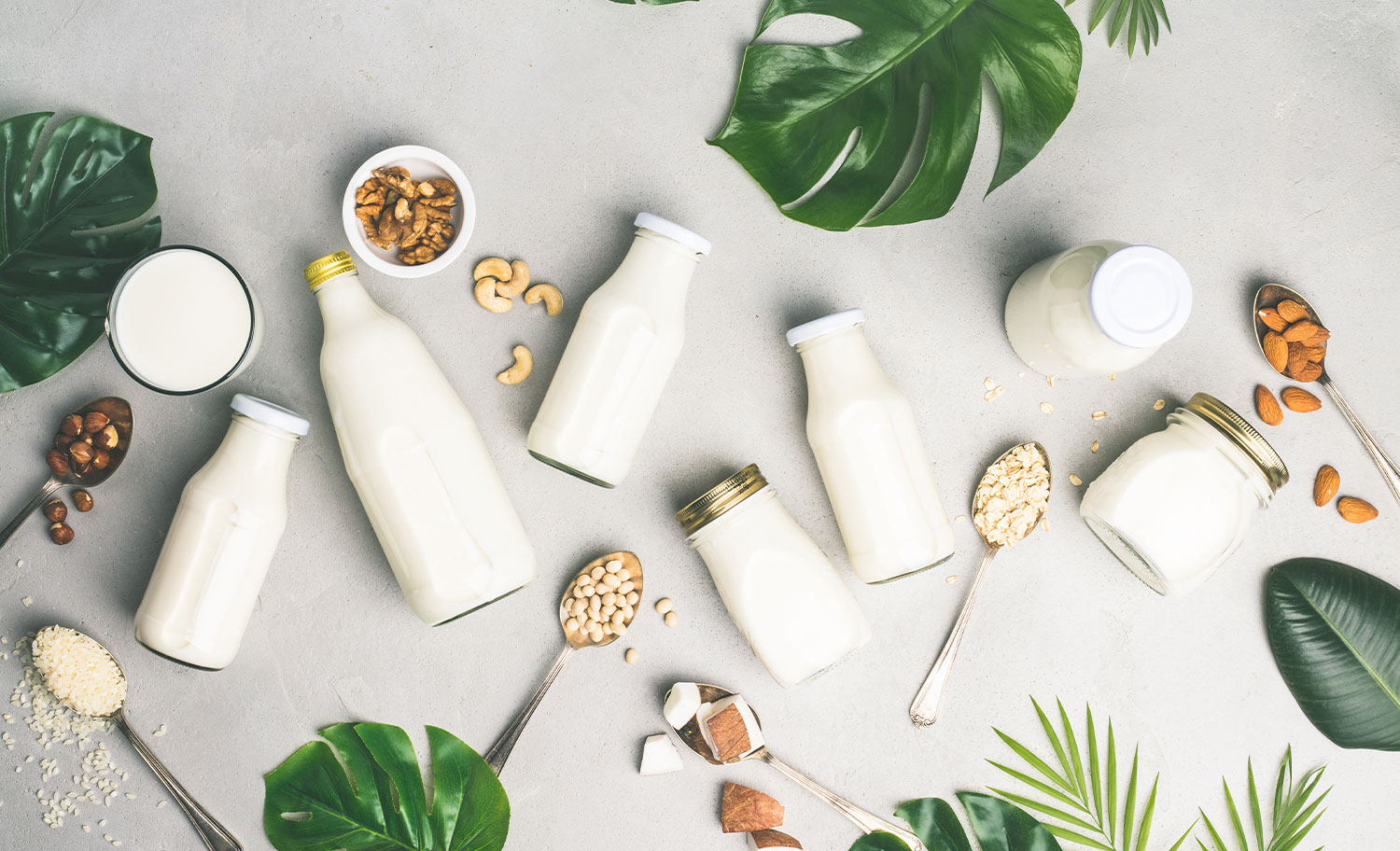
Planning a new liquid food processing production line often starts with a long list of equipment, but successful projects begin with integrated process design. A line that looks attractive on paper can still create product consistency issues, lengthy cleaning downtime, or unnecessary energy costs if the processing stages are not matched to the product and capacity. Understanding how the steps interact helps you evaluate supplier proposals, compare costs realistically, and avoid expensive changes during installation. What Defines a Liquid Food Processing Production Line? A liquid food processing production line is an integrated arrangement of tanks, pumps, heat exchangers, mixers, deaerators, fillers, and cleaning systems that move liquid food products through a controlled sequence. Unlike snack food or powder lines, liquid lines operate in closed piping and demand strict hygienic conditions throughout. The process typically covers blending, heating and cooling, holding, filling, and cleaning-in-place without dismantling the equipment. Common examples include pasteurized milk, UHT milk, yogurt, fruit juice, tea drinks, electrolyte beverages, and edible oil-based liquids. These products share similar unit operations, but the exact sequence, temperature profiles, and level of automation differ. That is why a line for one product cannot simply be scaled up or copied when the target product has a different viscosity, pH, or heat sensitivity. Key Stages from Raw Material to Finished Product Although every project is customized, most liquid food lines follow the same fundamental stages. The table below summarizes a typical configuration and the main equipment used at each step. Typical stages in a liquid food processing production line Stage Main Function Typical Equipment Raw material storage Holding milk, juice, or other liquids under controlled temperature Insulated tanks, single-layer tanks, mixing tanks Mixing and standardization Blending ingredients to meet recipe and solids content High-shear mixers, agitator tanks, inline blenders Deaeration Removing dissolved oxygen to protect flavor and vitamins Full-automatic degassing machine Heat treatment Pasteurizing or sterilizing the product Heat exchanger skid, sterilization systems Fermentation (optional) Developing flavor and texture in cultured products Stainless steel fermentation tanks Filling and packaging Dispensing product into containers with correct fill weight Filling machines, capping machines, labeling units CIP Cleaning and sanitizing product contact surfaces CIP cleaning system The table shows a general sequence, but the real challenge is sizing and interconnecting these stages. One of the most commonly underestimated areas is cleaning-in-place. A poorly configured CIP system can extend cleaning cycles, consume more water and chemicals, and reduce the useful running time of the line. A well-designed CIP cleaning system should be matched to the pipe length, tank volume, and number of circuits in your plant. CIP Cleaning System Equipments Suppliers, Custom Factory, Manufacturers - ShanghYi Yang Fluid Tech is CIP Cleaning System Equipments Suppliers, Customized CIP Cleaning System Equipments Factory and Manufacturers in Ch...View Product → Equipment Choices for Dairy, Beverage, and Fruit Products Dairy Products Milk and fermented dairy products require precise control over heating and cooling. For pasteurized milk, the line usually includes a heat exchanger, holding tube, and cold storage tank. For UHT milk, higher sterilization temperatures require an aseptic processing unit. Yogurt production adds a fermentation step, where temperature must remain stable for several hours to achieve consistent texture and acidity. A stainless steel fermentation tank helps maintain uniform temperature and reduces product loss during transfer. Stainless Steel Fermentation Tank Suppliers, Custom Factory, Manufacturers - ShaYi Yang Fluid Tech is Stainless Steel Fermentation Tank Suppliers, Customized Stainless Steel Fermentation Tank Factory and Manufacturers...View Product → Liquid Beverages Clear drinks, vitamin water, and functional beverages bring their own set of requirements. Mixing must be gentle enough to avoid air intake, and deaeration becomes critical because excess oxygen can oxidize vitamins and alter taste. A full-automatic degassing machine removes dissolved oxygen before filling, improving shelf life and flavor stability. When designing an electrolyte beverage processing line, the formulation often requires high shear mixing and low-temperature filling. Look for a design that can handle different product variants without long changeover times. Full-Automatic Degassing Machine Suppliers, Custom Factory, Manufacturers - ShanYi Yang Fluid Tech is Full-Automatic Degassing Machine Suppliers, Customized Full-Automatic Degassing Machine Factory and Manufacturers i...View Product → Fruit and Vegetable Processing Fruit purees and juices start with size reduction and extraction. Depending on the raw material, you may need a fruit washing machine, crusher, pulping machine, and a vacuum evaporator to concentrate the juice. Stone fruits, berries, and tropical fruits each behave differently under heating and pressing, so the line should be designed around the physical properties of the raw fruit rather than a generic flowchart. Cost Drivers and Engineering Decisions The investment for a liquid food processing line is influenced by several factors: Production capacity: a higher hourly output requires larger tanks, bigger heat exchangers, and faster filling machinery. Automation level: automated valve control and PLC-based batch management reduce labor but increase initial capital cost. Product type: acidic drinks, aseptic milk, and high-viscosity purees require different material and process standards. Hygiene standard: the use of 316L stainless steel, surface finish, and clean-room filling affects both price and compliance. Energy configuration: heat recovery and efficient CIP heating can lower long-term operating costs. Before comparing quotes, define your target capacity and product range. If you plan to introduce multiple SKUs on one line, flexibility will become more important than top speed. A complete engineering team can translate those requirements into a line layout that reduces transfer pumps, shortens pipes, and minimizes cleaning time. Selecting a Reliable Liquid Food Line Manufacturer When choosing a manufacturer, look beyond the individual machines. Ask about their experience with liquid food projects, their ability to fabricate nonstandard components, and the level of installation support they provide. A responsible supplier should be able to discuss process parameters, safety interlocks, and hygienic design without pushing a one-size-fits-all product. For projects where the standard catalog equipment is not enough, nonstandard customization is often needed. A manufacturer that can adapt tanks, valves, and control logic to your product characteristics is more likely to deliver a line that performs as expected on the first commissioning. You should also verify what technical support is available after installation, because correcting a poorly integrated line after commissioning is far more expensive than making design improvements on paper. Ultimately, the best liquid food processing production line is the one that matches your product properties, hygiene standards, and production schedule with a clean and feasible flow. Start by defining the process carefully, then select a partner who can take responsibility for both equipment manufacturing and engineering integration. The result will be a line that runs consistently, cleans efficiently, and can be maintained with confidence over its full service life. .article-section table{display: table!important;} .article-section thead{display: table-header-group!important;} .article-section tbody{display: table-row-group!important;} .article-section tr{display: table-row!important;} .article-section th{display: table-cell!important;} .article-section td{display: table-cell!important;} .article-section caption{caption-side:bottom;font-size:16px;margin-bottom:12px;font-style:italic;color:#808080;} .article-section th{font-weight:bold;border:1px solid #cccccc;padding:8px;} .article-section td{border:1px solid #cccccc;padding:8px;} .article-section ol{margin-bottom:12px;list-style-type:decimal;list-style-position:inside;padding-left:0;} .article-section ul{margin-bottom:12px;list-style-type:disc;list-style-position:inside;} .article-section li{list-style:inherit;font-size:16px;margin-bottom:6px;} .article-section h2{font-size:22px;font-weight:bold;text-align:left;margin-bottom:12px!important;} .article-section h3{font-size:16px;font-weight:bold;text-align:left;margin-bottom:12px;} .article-section p{font-size:16px!important;margin-bottom:12px;} .product-card{display:block;margin:20px 0;border:1px solid #e5e7eb;border-radius:10px;overflow:hidden;font-style:normal;background:#fff} .pc-inner{display:flex;text-decoration:none;color:inherit;align-items:center;min-height:120px} .pc-img{width:160px;min-width:160px;aspect-ratio:4/3;height:auto;min-height:120px;object-fit:cover;flex-shrink:0;display:block;align-self:stretch} .pc-body{padding:12px 16px;flex:1;min-width:0;display:flex;flex-direction:column;align-self:stretch;justify-content:center} .pc-title{display:block;font-size:15px;font-weight:600;color:#111;margin:0 0 6px;line-height:1.4} .pc-desc{display:-webkit-box;font-size:13px;color:#6b7280;margin:0 0 8px;line-height:1.5;overflow:hidden;-webkit-line-clamp:2;line-clamp:2;-webkit-box-orient:vertical} .pc-cta{display:block;font-size:13px;font-weight:600;color:inherit;margin-top:auto} .pc-inner:hover .pc-title{text-decoration:underline} .article-section a:not(.pc-inner),article a:not(.pc-inner){color:inherit}.pc-cta{color:inherit!important}
What a Pasteurized Milk Production Line Really Is A dairy plant planning a 10,000 L/h pasteurized milk line faces a decision that looks simple on paper: heat raw milk to 72 °C, hold it for 15 seconds, cool it, and fill it. In practice, the pasteurizer is only as reliable as the raw milk storage, clarification, standardization, homogenization, filling, and cleaning systems connected to it. A pasteurized milk production line is therefore best understood as one continuous hygienic flow, not a single machine. The conclusion that matters for buyers is this: shelf life, food safety, and flavor are decided before the milk reaches the pasteurizer and again after it leaves the holding tube. Raw milk with a high bacteria count will shorten shelf life even if the pasteurizer runs perfectly. Filling in a non-hygienic environment will re-contaminate a fully pasteurized product. Cleaning failures will undo everything within a few production runs. So the line should be evaluated as a system, from tanker reception to packaged product. Pasteurization Standards That Define the Line Every pasteurized milk production line is built around a validated time–temperature combination. The most common reference in international dairy practice is 72 °C for 15 seconds, known as high-temperature short-time (HTST) pasteurization. This treatment destroys vegetative pathogens such as Salmonella, Listeria, and E. coli while causing only limited damage to the nutritional and sensory quality of milk. Common time–temperature combinations used for milk heat treatment; UHT is sterilization rather than pasteurization. Method Temperature Holding time Typical application LTLT (batch) 63 °C 30 min Small or artisanal volumes HTST 72 °C 15 s Standard fluid milk in most plants Higher-heat shorter-time 89 °C 1.0 s Extended shelf life under refrigeration UHT 135–150 °C 2–5 s Ambient-stable milk The holding time is as important as the temperature. In an HTST line, the holding tube must be long enough to keep every particle of milk at 72 °C for at least 15 seconds at the maximum design flow rate. A flow diversion valve downstream of the holding tube automatically sends under-heated milk back to the balance tank. Temperature sensors, recording instruments, and diversion valves are therefore not optional accessories; they are the safety backbone of the line. Verification is normally done with the phosphatase test, because the enzyme alkaline phosphatase is inactivated under pasteurization conditions. Core Equipment in a Pasteurized Milk Production Line A standard line can be divided into preparation, heat treatment, filling, and cleaning. Each step uses equipment selected for capacity, product characteristics, and hygiene requirements. Raw Milk Reception and Storage Tanker milk is received through a receiving station with a filter, flow meter, and plate cooler, then stored below 4 °C to limit bacterial growth. Storage capacity should cover at least one or two filling shifts. A double-layer insulated storage tank keeps the milk temperature stable and protects it from ambient heat. Large plants often use outdoor silo tanks to reduce building cost, while smaller dairies typically choose insulated indoor tanks with gentle agitation. Double-Layer Insulated Tank Suppliers, Custom Factory, Manufacturers - Shanghai Yi Yang Fluid Tech is Double-Layer Insulated Tank Suppliers, Customized Double-Layer Insulated Tank Factory and Manufacturers in China, F...View Product → Standardization and Homogenization Standardization adjusts the fat content to the value printed on the label. In-line standardization uses a centrifugal separator to produce skim milk and cream, which are recombined in calculated proportions. Homogenization follows at a typical pressure of 150–200 bar in a two-stage homogenizer, reducing fat globule size so that cream does not separate and the mouthfeel stays smooth. The Pasteurization Unit The heart of the line is a plate heat exchanger skid built for regeneration, heating, holding, and cooling. In the regeneration section, hot pasteurized milk heats the incoming cold milk and recovers 90–95% of the energy, cutting steam and chilled water demand. The product then enters the heating section, passes through the holding tube, and is cooled to 2–4 °C before filling. A flow diversion valve protects the process: if the temperature drops below the setpoint, the valve diverts the product back for reprocessing. Heat Exchanger Skid Suppliers, Custom Factory, Manufacturers - Shanghai Yi Yang Yi Yang Fluid Tech is Heat Exchanger Skid Suppliers, Customized Heat Exchanger Skid Factory and Manufacturers in China, Function Descript...View Product → Filling, Degassing, and Cleaning in Place Pasteurized milk is filled cold, so the filling room must minimize airborne contamination. Pouch, bottle, and carton fillers each impose different hygiene requirements. Many plants include a full-automatic degassing machine before filling to remove dissolved air, which reduces oxidation and improves flavor stability. After every production run, the entire line from raw milk tanks to filling nozzles is cleaned by automated CIP cleaning system equipment, circulating caustic and acid solutions at defined temperatures and flow rates. Without CIP, protein and fat residues quickly form biofilms that no sanitizer can fully reach. CIP Cleaning System Equipments Suppliers, Custom Factory, Manufacturers - ShanghYi Yang Fluid Tech is CIP Cleaning System Equipments Suppliers, Customized CIP Cleaning System Equipments Factory and Manufacturers in Ch...View Product → Engineering Considerations for Plant Design Choosing individual components is only half of the project. The line performs to standard only when the engineering around it is correct. Capacity and Utility Planning Line capacity should be calculated from daily output and operating hours, with a practical buffer of 10–20%. A 10,000 L/h line running 12 hours a day produces about 120,000 L per day; if the same line must later produce 180,000 L, the design must change, not just the schedule. Utility planning is just as critical: steam for heating and CIP, chilled water for cooling, compressed air for valves and filling machines, and electrical capacity for pumps and homogenizers. Many project delays come from an undersized steam boiler or insufficient chilled water flow. Automation and Data Recording Modern lines use PLC and HMI control with recipe management, automatic pasteurization control, trend recording, and alarm logs. For pasteurized milk, where a few degrees or seconds decide safety, data recording is part of compliance. Records must be auditable and exportable for quality teams and regulatory inspections. A supplier that provides turnkey engineering and project implementation keeps automation, piping, and utilities consistent by design, which reduces integration risks on site. Pasteurized Milk versus UHT: Matching the Line to the Market A key decision for every dairy company is whether to produce pasteurized milk, UHT milk, or both. Pasteurized milk must stay below 4 °C from the dairy to the consumer and typically offers 7–15 days of shelf life; its fresh taste makes it the preferred product in markets with a reliable cold chain. A UHT milk production line heats milk to 135–150 °C for 2–5 seconds and fills it aseptically, giving several months of ambient shelf life at a higher energy cost. Many plants install both lines and share the preparation and cleaning systems while keeping the heat treatment sections separate. How to Choose a Supplier for a Pasteurized Milk Line The most reliable way to select a supplier is to evaluate how they handle process validation, hygienic design, and after-sales support. Request at least the following before placing an order: Heat exchanger and holding tube design calculations Pasteurization control and flow diversion philosophy Material certificates and surface finish specifications CIP sequence and validation protocol Validation, Documentation, and Hygiene Design Material certificates for 316L stainless steel, weld inspection records, and surface finish specifications determine how cleanable the line will be. Documentation is not paperwork; it is the evidence that the line will meet the required log reduction and target shelf life. A supplier with a strong engineering team can adapt the line to your raw milk quality, fat standardization strategy, and local regulatory requirements. After-Sales Support and Spare Parts A pasteurized milk line often runs in multiple shifts, so spare parts and rapid service are part of your operating cost. Confirm delivery times for plates, gaskets, pumps, and control components, and ask about commissioning and operator training. The supplier's technical service commitment affects your uptime more than the initial equipment price. Once the standards are clear and the equipment is defined, the remaining risk is mainly in integration. A supplier that designs, manufactures, and commissions the whole line can reduce interfaces and shorten the project timeline. When comparing quotes, review the complete pasteurized milk production line scope, including process design, equipment supply, installation, and commissioning, to confirm that what is quoted is a working system rather than a collection of machines. .article-section table{display: table!important;} .article-section thead{display: table-header-group!important;} .article-section tbody{display: table-row-group!important;} .article-section tr{display: table-row!important;} .article-section th{display: table-cell!important;} .article-section td{display: table-cell!important;} caption{caption-side:bottom;font-size:16px;margin-bottom:12px;font-style:italic;color:#808080;} th{font-weight:bold;border:1px solid #cccccc;padding:8px;} td{border:1px solid #cccccc;padding:8px;} ol{margin-bottom:12px;list-style-type:decimal;list-style-position:inside;padding-left:0;} ul{margin-bottom:12px;list-style-type:disc;list-style-position:inside;} li{list-style:inherit;font-size:16px;margin-bottom:6px;} h2{font-size:22px;font-weight:bold;text-align:left;margin-bottom:12px!important;} h3{font-size:16px;font-weight:bold;text-align:left;margin-bottom:12px;} p{font-size:16px!important;margin-bottom:12px;} .product-card{display:block;margin:20px 0;border:1px solid #e5e7eb;border-radius:10px;overflow:hidden;font-style:normal;background:#fff} .pc-inner{display:flex;text-decoration:none;color:inherit;align-items:center;min-height:120px} .pc-img{width:160px;min-width:160px;aspect-ratio:4/3;height:auto;min-height:120px;object-fit:cover;flex-shrink:0;display:block;align-self:stretch} .pc-body{padding:12px 16px;flex:1;min-width:0;display:flex;flex-direction:column;align-self:stretch;justify-content:center} .pc-title{display:block;font-size:15px;font-weight:600;color:#111;margin:0 0 6px;line-height:1.4} .pc-desc{display:-webkit-box;font-size:13px;color:#6b7280;margin:0 0 8px;line-height:1.5;overflow:hidden;-webkit-line-clamp:2;line-clamp:2;-webkit-box-orient:vertical} .pc-cta{display:block;font-size:13px;font-weight:600;color:inherit;margin-top:auto} .pc-inner:hover .pc-title{text-decoration:underline} .article-section a:not(.pc-inner),article a:not(.pc-inner){color:inherit}.pc-cta{color:inherit!important}
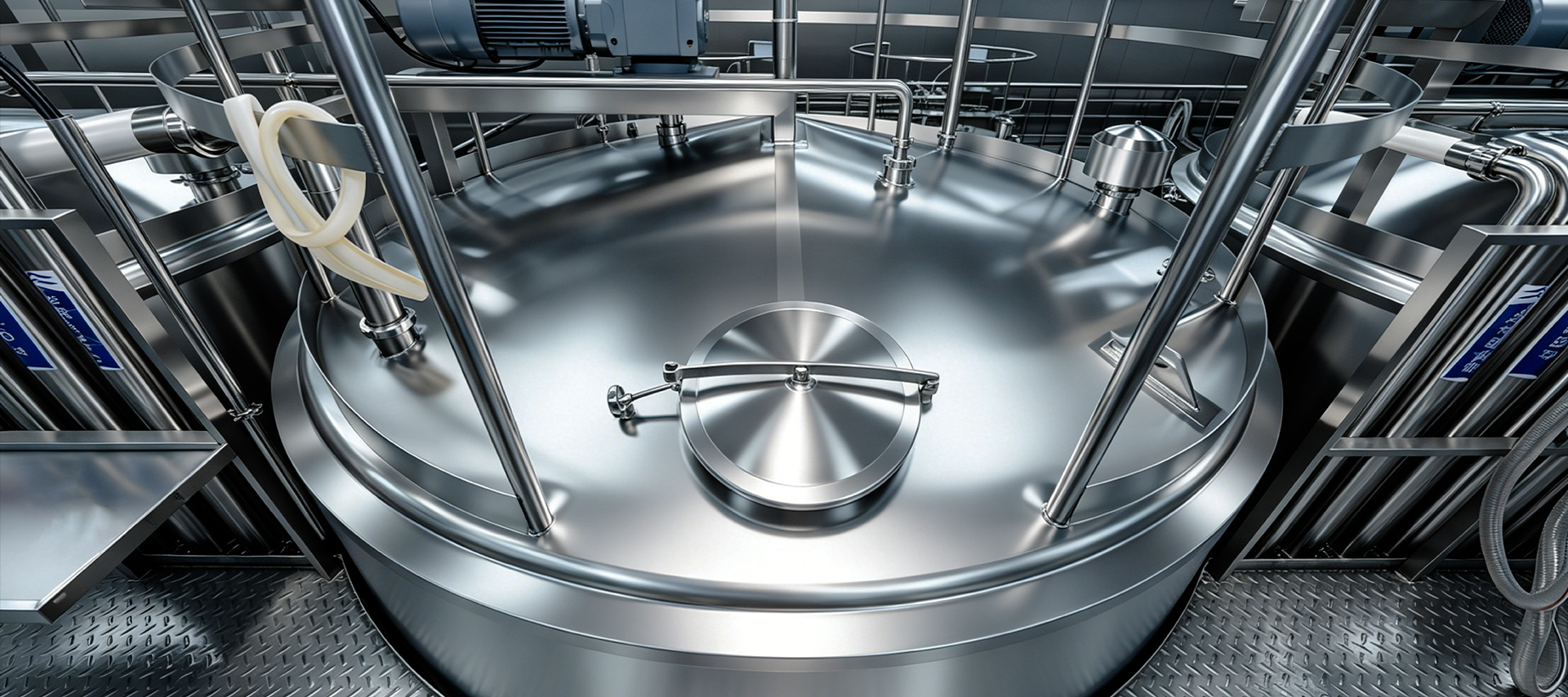
What UHT Actually Changes in a Milk Line UHT processing is defined by a simple parameter set: milk is heated to 135–150°C, held for 2–5 seconds, and then rapidly cooled to ambient temperature. The result is a commercially sterile product that can be stored unopened at room temperature for 6 to 12 months, compared with the 7 to 15 days of refrigerated shelf life typical of HTST pasteurized milk. That single difference changes the entire logic of a dairy plant, including distribution radius, packaging format, warehouse conditions, and cold-chain dependence. Temperature parameters, however, only describe the outcome, not the cost. The UHT phase triggers Maillard reactions that cause a slight cooked flavor, partial losses of thiamine and vitamin C, and whey protein denaturation whose severity depends on the shape of the full heating, holding, and cooling curve. Slow heating increases browning; insufficient cooling extends heat exposure. A well-designed UHT line is therefore less about reaching a target temperature than about ensuring that every drop of milk experiences the same compact thermal history while flowing through the system. Direct versus Indirect Heating: What It Means for Plant Operation Direct UHT systems inject culinary steam directly into the product, achieving extremely fast temperature rise and minimal heat load, which suits products where flavor preservation is the priority. But direct systems require high-quality steam, complex pressure-balancing controls, and higher initial investment. Indirect systems transfer heat through plate or tubular heat exchangers, reaching heat recovery rates above 90% while offering more intuitive control and simpler CIP programs. Except for very large white-milk plants, most UHT lines are built around indirect heating. In an indirect configuration, preheating, final heating, and cooling all happen within the same heat-transfer modules. The design quality of that package directly affects heating efficiency, fouling rate, and energy consumption. This is why equipment evaluation should not stop at the maximum sterilization temperature, but should focus on the practical regeneration rate, pressure drop, and cleanability of the heat exchanger skid under real production conditions. Heat Exchanger Skid Suppliers, Custom Factory, Manufacturers - Shanghai Yi Yang Yi Yang Fluid Tech is Heat Exchanger Skid Suppliers, Customized Heat Exchanger Skid Factory and Manufacturers in China, Function Descript...View Product → Anatomy of a UHT Milk Production Line A UHT line is not a sterilizer combined with a filler. It is a series of interconnected process stages where the output quality of each step determines the stability of the next. A complete line typically includes the following modules: Raw milk receiving and storage: reception, filtration, and short-term holding in temperature-controlled tanks. Clarification, standardization, and degassing: removal of solids, adjustment of fat and solids content, and elimination of dissolved oxygen and volatile off-flavors. Preheating and homogenization: warming milk to 65–75°C before homogenization to stabilize the fat globules. UHT sterilization and holding: heating to 135–150°C for 2–5 seconds to achieve commercial sterility. Aseptic surge and filling: sterile buffer storage followed by transfer to an aseptic filling machine. CIP and automation: in-place cleaning cycles and batch control across the entire line. Why the Pretreatment Section Sets the Limit Many plants focus their attention on the UHT section, but the true capacity constraint is usually upstream. If the raw milk has a high initial microbial count, heat-resistant enzymes can survive UHT treatment and continue breaking down fat and protein during storage, leading to coagulation or off-flavors weeks after filling. Proper filtration, degassing, and standardization reduce the burden on the sterilizer and also limit deposits on heat-transfer surfaces. Homogenizer placement matters equally. When homogenization is performed before UHT treatment, fat globules are refined at a lower viscosity and the fouling tendency of the sterilizer is reduced. A wrongly specified homogenizer, for example with insufficient pressure or poor sealing, causes fat aggregation after sterilization, and this defect becomes far more visible when the product is kept outside the cold chain. The Core Equipment That Defines UHT Performance Sterilization, Holding, and the Safety Loop The UHT section is the process heart of the line. Milk is rapidly heated to the set temperature, passed through a holding tube for the required residence time, and then cooled below 80°C. If the temperature falls below the lower process limit, a flow diversion valve must automatically redirect the under-sterilized product so that it never reaches the filling stage. This function depends not only on the sterilizer itself, but also on instrumentation, valve trains, and control logic. Evaluating sterilization system equipment therefore requires a closer look at holding-tube design margin, heat-transfer efficiency, sensor response time, and the reliability of the diversion system. These details determine whether the line can maintain commercial sterility under fluctuating raw-milk conditions. Sterilization System Equipment Suppliers, Custom Factory, Manufacturers - ShanghYi Yang Fluid Tech is Sterilization System Equipment Suppliers, Customized Sterilization System Equipment Factory and Manufacturers in Ch...View Product → Degassing, Homogenization, and Flow Stability The role of degassing in a UHT line is easily underestimated. Dissolved oxygen in raw milk accelerates fat oxidation and produces stale flavors, while entrained air disturbs flow meters and filling accuracy. A degassing unit slightly raises the milk temperature to reduce gas solubility and then applies vacuum to remove air and part of the volatile aroma compounds, improving the flavor stability of the final product. In a properly designed line, surge capacity before and after the UHT section absorbs the intermittent start-stop behavior of the filler. Without that buffer, filling interruptions directly disturb flow velocity and holding time in the sterilizer, creating a hidden variability that no control loop can fully correct. Selection Criteria for a UHT Milk Production Line Line selection should begin with a realistic capacity and product plan, not with a list of machines. Only after the capacity range is fixed can the heating method, heat-exchange area, buffer-tank volume, and filler speed be matched coherently. The table below shows typical reference ranges. Reference configuration ranges for UHT milk production lines. Capacity Typical Heating Approach Considerations 1,000–3,000 L/h Indirect plate heat exchanger Compact layout, lower energy demand, suited to regional supply 3,000–6,000 L/h Indirect or steam infusion Requires larger buffer tanks and higher-efficiency CIP cycles 6,000–12,000 L/h Steam infusion or mixed systems Full automation, heat recovery, sustained filling coordination Raw Milk Quality and Standardization Raw-milk quality sets a hard limit on UHT shelf life. During project planning, the supplier should receive clear data on microbial count, somatic cell count, and protein heat stability, because these values drive the choice of sterilization temperature and homogenization pressure. Milk with poor protein heat stability tends to foul the heating surfaces quickly, shortening continuous runtime and increasing the number of cleaning cycles. Regional Market and Packaging Requirements In the domestic Chinese market, UHT milk is mainly packed in aseptic brick and pillow formats for ambient distribution. When the line is planned for export to Southeast Asia, the Middle East, or Africa, the filler material compatibility, packaging format, and warehouse conditions must be reviewed in advance. If the same line will also handle flavored milk or milk beverages, the CIP sequence must be designed to prevent cross-contamination between product changes. For a plant that serves only a local market and has no ambient distribution need, a simpler pasteurized milk production line is often the more sensible capital choice. The economic value of UHT technology appears only when long shelf life and room-temperature logistics are part of the business model. Operational Risks and the Cleaning Strategy Heat Exchanger Fouling The most unpredictable cause of downtime in UHT plants is fouling of heat-transfer surfaces. Milk proteins and calcium salts deposit on the hot wall, gradually reducing heat-transfer efficiency and increasing pressure drop until the system requires a cleaning stop. The practical way to control fouling is through preheating temperature, flow velocity, and raw-milk composition, not by simply shortening the cleaning interval. A well-designed exchanger keeps the wall-to-fluid temperature difference low enough to slow deposition. Post-Sterilization Contamination The largest quality risk in a UHT line is not inside the sterilizer but downstream of it. Aseptic tank vents, filler air systems, and gaskets at pipe connections can all allow recontamination of an already sterile product. Because this type of defect usually appears only after several weeks of storage, the investigation is costly and often requires discarding large batches. Prevention depends on the design of the aseptic section and on disciplined maintenance of every sealing component. CIP Cleaning: The Line's First Line of Defense Regular cleaning is the basic countermeasure against both fouling and recontamination. A complete CIP program covers alkaline and acid wash stages plus final rinsing, and it must deliver the required flow rate and temperature through the holding tube specifically. A properly sized CIP cleaning system reduces the need for manual disassembly and lowers the chance of human error. CIP Cleaning System Equipments Suppliers, Custom Factory, Manufacturers - ShanghYi Yang Fluid Tech is CIP Cleaning System Equipments Suppliers, Customized CIP Cleaning System Equipments Factory and Manufacturers in Ch...View Product → Even with the right equipment, CIP parameters need verification and continuous optimization based on site conditions. The technical service support a supplier provides after commissioning, including cleaning validation, fault diagnosis, and operator training, often makes the difference between a line that runs reliably and one that never reaches its nominal output. Engineering Capability Determines the Project Outcome Buyers naturally compare the prices and brands of sterilizers and fillers, but the engineering design around those machines is what determines whether the plant actually performs. Tank sizing, pipe slopes, pump selection, heat-recovery networks, automation logic, and the CIP piping network all have to be balanced as a single system. A supplier with full-line integration experience starts from a process flow calculation and then selects equipment to fit that flow, rather than assembling individual machines from different sources. This is why process and engineering design capability must carry the same weight in supplier evaluation as hardware pricing. UHT lines involve large capital expenditure and leave little room for modification after installation. Giving equal priority to process design, equipment matching, cleaning validation, and after-sales support is more important than bargaining for the lowest price on a single machine. .article-section table{display: table!important;} .article-section thead{display: table-header-group!important;} .article-section tbody{display: table-row-group!important;} .article-section tr{display: table-row!important;} .article-section th{display: table-cell!important;} .article-section td{display: table-cell!important;} .article-section table caption{caption-side:bottom;font-size:16px;margin-bottom:12px;font-style:italic;color:#808080;} .article-section table th{font-weight:bold;border:1px solid #cccccc;padding:8px;} .article-section table td{border:1px solid #cccccc;padding:8px;} .article-section ol{margin-bottom:12px;list-style-type:decimal;list-style-position:inside;padding-left:0;} .article-section ul{margin-bottom:12px;list-style-type:disc;list-style-position:inside;} .article-section li{list-style:inherit;font-size:16px;margin-bottom:6px;} .article-section h2{font-size:22px;font-weight:bold;text-align:left;margin-bottom:12px!important;} .article-section h3{font-size:16px;font-weight:bold;text-align:left;margin-bottom:12px;} .article-section p{font-size:16px!important;margin-bottom:12px;} .product-card{display:block;margin:20px 0;border:1px solid #e5e7eb;border-radius:10px;overflow:hidden;font-style:normal;background:#fff} .pc-inner{display:flex;text-decoration:none;color:inherit;align-items:center;min-height:120px} .pc-img{width:160px;min-width:160px;aspect-ratio:4/3;height:auto;min-height:120px;object-fit:cover;flex-shrink:0;display:block;align-self:stretch} .pc-body{padding:12px 16px;flex:1;min-width:0;display:flex;flex-direction:column;align-self:stretch;justify-content:center} .pc-title{display:block;font-size:15px;font-weight:600;color:#111;margin:0 0 6px;line-height:1.4} .pc-desc{display:-webkit-box;font-size:13px;color:#6b7280;margin:0 0 8px;line-height:1.5;overflow:hidden;-webkit-line-clamp:2;line-clamp:2;-webkit-box-orient:vertical} .pc-cta{display:block;font-size:13px;font-weight:600;color:inherit;margin-top:auto} .pc-inner:hover .pc-title{text-decoration:underline} .article-section a:not(.pc-inner),article a:not(.pc-inner){color:inherit}.pc-cta{color:inherit!important}
Raw milk normally leaves a dairy farm at around 4°C and travels in an insulated tanker to the processing plant. From the moment it enters the receiving bay, a chain of decisions — cooling rate, storage time, fat standardization, heat treatment and filling — determines whether the finished product meets its shelf-life, flavor and safety targets. That is why a dairy production line should be treated as one integrated process system, not as a collection of individual machines. Each stage feeds the next, and the weakest stage sets the limit for the whole line. What a Dairy Production Line Includes In practical terms, a dairy production line is the sequence of equipment and control steps that converts raw milk into pasteurized milk, UHT milk, yogurt, flavored milk or other dairy beverages. The scope of the line depends on the target product: a simple pasteurized milk line can be completed with a few core modules, while a line producing yogurt and cultured drinks adds fermentation, cooling and fruit-dosing stages. Core stages of a dairy production line and what each stage must achieve. Stage Purpose Typical Equipment Receiving and storage Accept raw milk, cool it quickly and hold it safely Receiving pump, plate cooler, raw milk silo Clarification Remove sediment, somatic cells and fine particles Inline filter, disc clarifier Standardization Adjust fat and solids content to the product specification Cream separator, in-line blending system Homogenization Reduce fat globules to prevent creaming Homogenizer operating at roughly 150-200 bar Heat treatment Kill pathogens and spoilage organisms Plate heat exchanger, UHT sterilization system Fermentation Convert lactose into lactic acid for cultured products Stainless steel fermentation tank Filling Package the product with minimal recontamination Aseptic or clean filling machine CIP cleaning Clean all product-contact surfaces without dismantling CIP set with tanks, pumps, valves and control logic The exact arrangement varies, but the principle stays the same: product flows from raw milk intake toward filling, and every step is designed to protect quality and minimize microbial risk. The Stages in Practice Receiving and Cold Storage Raw milk arrives in tankers that are usually cleaned in place before loading. The first job of the receiving station is to cool the milk quickly and transfer it to a chilled silo. Holding temperature should stay at or below 4°C, and silo residence time should be kept short because even at low temperature, bacterial counts rise slowly. For plants that receive large volumes, an outdoor milk silo with an agitator and accurate level measurement is often the most space-efficient option. Standardization and Homogenization Standardization makes the fat content consistent. A cream separator divides whole milk into skim milk and cream, and an in-line blending system recombines them to the required ratio, for example 1.5%, 2.5% or 3.5% fat. Homogenization then forces the milk through a narrow gap under high pressure, normally between 150 and 200 bar, to break fat globules into much smaller droplets. This prevents cream from rising to the top and improves the perceived mouthfeel of the product. Heat Treatment: Pasteurization and UHT Heat treatment is the heart of a dairy processing line. The classic process is high-temperature short-time pasteurization, where milk is held at 72-75°C for about 15 seconds. This destroys vegetative pathogens while keeping the fresh flavor that refrigerated pasteurized milk is known for. For ambient-stable products, UHT processing at 135-140°C for 2-5 seconds followed by aseptic filling gives a shelf life of several months without refrigeration. The capacity of the dairy sterilization system must match the output of the filling machine, otherwise bottlenecks appear at the most expensive part of the line. If your market is built around fresh milk distributors, a pasteurized milk production line is usually the right starting point; if export or long-distance retail is the goal, UHT technology becomes difficult to avoid. Sterilization System Equipment Suppliers, Custom Factory, Manufacturers - ShanghYi Yang Fluid Tech is Sterilization System Equipment Suppliers, Customized Sterilization System Equipment Factory and Manufacturers in Ch...View Product → Fermentation for Cultured Products Yogurt and fermented dairy drinks follow a different path after standardization. The milk is heated, cooled to inoculation temperature, and mixed with starter culture in a fermentation tank. The culture converts lactose into lactic acid, lowering the pH until the milk coagulates. A typical yogurt fermentation runs at 42-43°C and stops when the pH reaches about 4.5, after which the product must be cooled quickly to stop further acid development. The design of the tank, the accuracy of temperature control and the way the coagulum is cooled all affect texture and syneresis. A dedicated yogurt fermentation line handles these steps more reliably than a line that was originally built for plain milk and later modified. Filling and Packaging Filling is where the product meets its packaging, and also where most recontamination risk enters the process. Aseptic filling keeps both product and package sterile for long-shelf-life items, while clean filling is adequate for refrigerated short-life milk. The filling room should be physically separate from the wet processing area, with positive air pressure and controlled access. Packaging format — bottles, pouches, gable-top cartons or aseptic bricks — drives the speed and cost of this stage. Why CIP Is Part of the Line, Not an Afterthought Every dairy line leaves protein and fat films on the inside of pipes, heat exchanger plates and tank walls. If those films are not removed properly, bacteria find a safe place to grow and the next batch is contaminated. CIP, or cleaning in place, solves this by circulating caustic and acid solutions through the circuit at controlled temperatures, flow rates and times, without dismantling the process line. A well-designed CIP cleaning system recovers and reuses the cleaning solutions, tracks detergent concentration, and runs automatically after each production shift. The practical benefit is shorter cleaning time, lower chemical use, and repeatable hygiene that is difficult to achieve with manual cleaning. When you compare quotes for a dairy line, check whether the CIP set is large enough for the longest circuit and whether it can clean the heat exchanger and filler at the same flow rates used in production. CIP Cleaning System Equipments Suppliers, Custom Factory, Manufacturers - ShanghYi Yang Fluid Tech is CIP Cleaning System Equipments Suppliers, Customized CIP Cleaning System Equipments Factory and Manufacturers in Ch...View Product → What to Evaluate Before Buying a Dairy Production Line Buying a dairy line is a capital decision with daily operational consequences. The following factors separate a line that runs smoothly from one that drains time and money: Daily capacity and shift pattern: define the required output per day, then calculate the effective running hours. A line rated at 5,000 L/h but cleaned for three 2-hour shifts per day will not deliver 40,000 L in a single shift. Product flexibility: decide whether the line will run one product for long periods or switch between pasteurized milk, flavored milk and yogurt. Flexible lines need extra valves, tanks and more sophisticated automation. Hygiene standards: confirm the expected compliance level, because material grade, weld quality, surface finish and gasket selection all change the price. The lowest quote may be cheaper to install but more expensive to keep certifiable. Utilities and layout: steam generation, chilled water, compressed air and electrical load must be checked before the equipment is ordered. A line designed for one utility condition may not perform when installed in a different plant. Automation level: manual, semi-automatic and fully automatic lines differ not only in price but in traceability. Automatic batch recording becomes essential if your customer audits your production data. If you are still deciding between fresh and long-life products, compare the full supply chain, including distribution temperature, retail shelf life and return rates, rather than only the cost per liter. Why the Supplier Matters as Much as the Machines A dairy production line does not deliver value on the day it is installed. It delivers value when the first batch passes quality control, when the line reaches its rated capacity, and when it keeps delivering that output after six months of continuous production. This is where the supplier's integration experience becomes decisive. A turnkey supplier takes responsibility for process design, equipment supply, installation and commissioning, so the customer does not have to coordinate separate vendors for tanks, heat exchangers, fillers and pipework. For the same reason, after-sales support should be part of the purchasing criteria, not an afterthought. Spare parts availability, response time and the supplier's ability to provide technical service and maintenance support during regular operation determine how long your line stays productive. It also helps if the supplier can customize equipment for your specific milk composition, packaging layout or building constraints; standardized hardware rarely covers every dairy plant. A complete dairy production line from a single responsible supplier reduces interface problems between stages and gives you one point of contact for performance, cleaning and maintenance questions, which is worth more than a small discount on quotation. Dairy Production Line Suppliers, Custom Factory, Manufacturers - Shanghai Yi YanYi Yang Fluid Tech is Dairy Production Line Suppliers, Customized Dairy Production Line Factory and Manufacturers in China, Our Dairy Pro...View Product → Plan the Line Around the Product You Will Actually Sell The market position you choose — fresh and local, or long-life and exportable — should shape every major decision, from heat treatment to filling. The most successful dairy investments start with a clear product definition and realistic capacity target, then let the process design follow. By evaluating each stage as part of an integrated line, and by choosing a supplier whose equipment, engineering and after-sales service are aligned, you are far more likely to commission a line that runs reliably, cleans well and pays for itself on schedule. .article-section table{display: table!important;} .article-section thead{display: table-header-group!important;} .article-section tbody{display: table-row-group!important;} .article-section tr{display: table-row!important;} .article-section th{display: table-cell!important;} .article-section td{display: table-cell!important;} .article-section caption{caption-side:bottom;font-size:16px;margin-bottom:12px;font-style:italic;color:#808080;} .article-section th{font-weight:bold;border:1px solid #cccccc;padding:8px;} .article-section td{border:1px solid #cccccc;padding:8px;} .article-section ol{margin-bottom:12px;list-style-type:decimal;list-style-position:inside;padding-left:0;} .article-section ul{margin-bottom:12px;list-style-type:disc;list-style-position:inside;} .article-section li{list-style:inherit;font-size:16px;margin-bottom:6px;} .article-section h2{font-size:22px;font-weight:bold;text-align:left;margin-bottom:12px!important;} .article-section h3{font-size:16px;font-weight:bold;text-align:left;margin-bottom:12px;} .article-section p{font-size:16px!important;margin-bottom:12px;} .product-card{display:block;margin:20px 0;border:1px solid #e5e7eb;border-radius:10px;overflow:hidden;font-style:normal;background:#fff} .pc-inner{display:flex;text-decoration:none;color:inherit;align-items:center;min-height:120px} .pc-img{width:160px;min-width:160px;aspect-ratio:4/3;height:auto;min-height:120px;object-fit:cover;flex-shrink:0;display:block;align-self:stretch} .pc-body{padding:12px 16px;flex:1;min-width:0;display:flex;flex-direction:column;align-self:stretch;justify-content:center} .pc-title{display:block;font-size:15px;font-weight:600;color:#111;margin:0 0 6px;line-height:1.4} .pc-desc{display:-webkit-box;font-size:13px;color:#6b7280;margin:0 0 8px;line-height:1.5;overflow:hidden;-webkit-line-clamp:2;line-clamp:2;-webkit-box-orient:vertical} .pc-cta{display:block;font-size:13px;font-weight:600;color:inherit;margin-top:auto} .pc-inner:hover .pc-title{text-decoration:underline} .article-section a:not(.pc-inner),article a:not(.pc-inner){color:inherit}.pc-cta{color:inherit!important}
Contact Details
Production Address: No. 9188 Chuannan Fenggong Road, Fengxian District, Shanghai
Office Address: Room 603, Building 57, No. 260 Maoyuan Road, Fengxian District, Shanghai
TEL: 86-18221904658
E-mail: [email protected]


Request Custom Quote Need Something Special? We're Here To Help.
 English
 русский
 Français
 Español
 عربى
 Indonesia