Content
UHT processing is defined by a simple parameter set: milk is heated to 135–150°C, held for 2–5 seconds, and then rapidly cooled to ambient temperature. The result is a commercially sterile product that can be stored unopened at room temperature for 6 to 12 months, compared with the 7 to 15 days of refrigerated shelf life typical of HTST pasteurized milk. That single difference changes the entire logic of a dairy plant, including distribution radius, packaging format, warehouse conditions, and cold-chain dependence.
Temperature parameters, however, only describe the outcome, not the cost. The UHT phase triggers Maillard reactions that cause a slight cooked flavor, partial losses of thiamine and vitamin C, and whey protein denaturation whose severity depends on the shape of the full heating, holding, and cooling curve. Slow heating increases browning; insufficient cooling extends heat exposure. A well-designed UHT line is therefore less about reaching a target temperature than about ensuring that every drop of milk experiences the same compact thermal history while flowing through the system.
Direct UHT systems inject culinary steam directly into the product, achieving extremely fast temperature rise and minimal heat load, which suits products where flavor preservation is the priority. But direct systems require high-quality steam, complex pressure-balancing controls, and higher initial investment. Indirect systems transfer heat through plate or tubular heat exchangers, reaching heat recovery rates above 90% while offering more intuitive control and simpler CIP programs. Except for very large white-milk plants, most UHT lines are built around indirect heating.
In an indirect configuration, preheating, final heating, and cooling all happen within the same heat-transfer modules. The design quality of that package directly affects heating efficiency, fouling rate, and energy consumption. This is why equipment evaluation should not stop at the maximum sterilization temperature, but should focus on the practical regeneration rate, pressure drop, and cleanability of the heat exchanger skid under real production conditions.
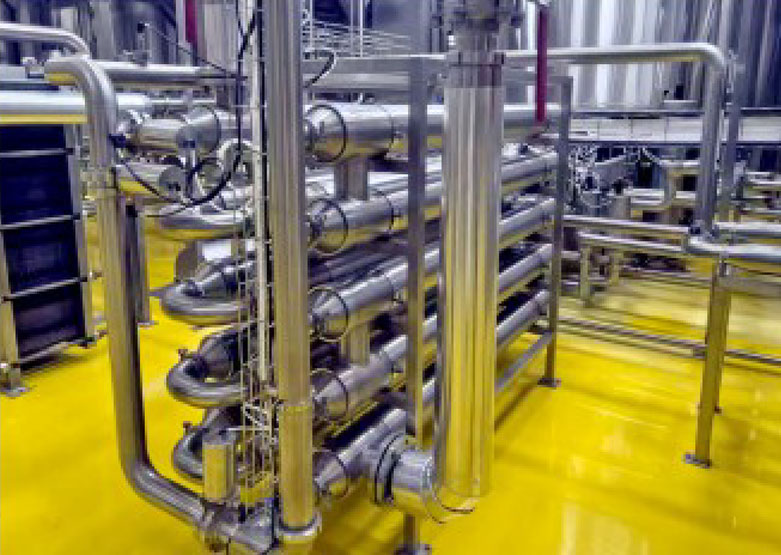 Heat Exchanger Skid Suppliers, Custom Factory, Manufacturers - Shanghai Yi Yang Yi Yang Fluid Tech is Heat Exchanger Skid Suppliers, Customized Heat Exchanger Skid Factory and Manufacturers in China, Function Descript...View Product →
A UHT line is not a sterilizer combined with a filler. It is a series of interconnected process stages where the output quality of each step determines the stability of the next. A complete line typically includes the following modules:
Many plants focus their attention on the UHT section, but the true capacity constraint is usually upstream. If the raw milk has a high initial microbial count, heat-resistant enzymes can survive UHT treatment and continue breaking down fat and protein during storage, leading to coagulation or off-flavors weeks after filling. Proper filtration, degassing, and standardization reduce the burden on the sterilizer and also limit deposits on heat-transfer surfaces.
Homogenizer placement matters equally. When homogenization is performed before UHT treatment, fat globules are refined at a lower viscosity and the fouling tendency of the sterilizer is reduced. A wrongly specified homogenizer, for example with insufficient pressure or poor sealing, causes fat aggregation after sterilization, and this defect becomes far more visible when the product is kept outside the cold chain.
The UHT section is the process heart of the line. Milk is rapidly heated to the set temperature, passed through a holding tube for the required residence time, and then cooled below 80°C. If the temperature falls below the lower process limit, a flow diversion valve must automatically redirect the under-sterilized product so that it never reaches the filling stage.
This function depends not only on the sterilizer itself, but also on instrumentation, valve trains, and control logic. Evaluating sterilization system equipment therefore requires a closer look at holding-tube design margin, heat-transfer efficiency, sensor response time, and the reliability of the diversion system. These details determine whether the line can maintain commercial sterility under fluctuating raw-milk conditions.
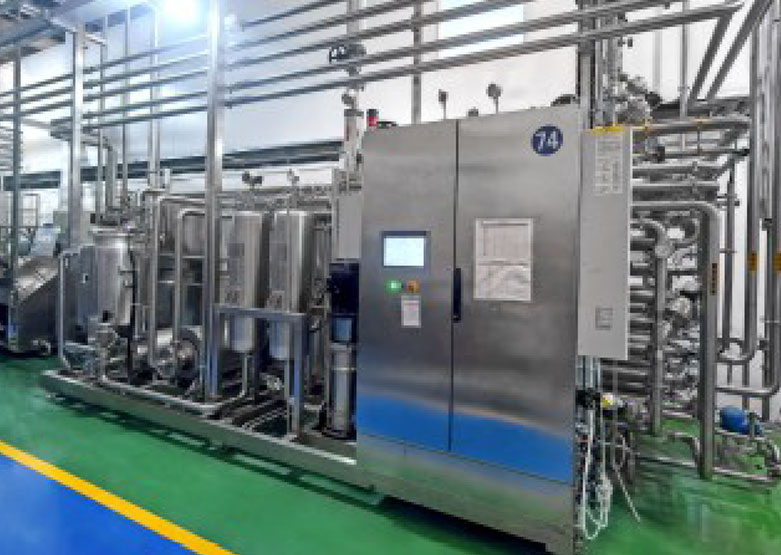 Sterilization System Equipment Suppliers, Custom Factory, Manufacturers - ShanghYi Yang Fluid Tech is Sterilization System Equipment Suppliers, Customized Sterilization System Equipment Factory and Manufacturers in Ch...View Product →
The role of degassing in a UHT line is easily underestimated. Dissolved oxygen in raw milk accelerates fat oxidation and produces stale flavors, while entrained air disturbs flow meters and filling accuracy. A degassing unit slightly raises the milk temperature to reduce gas solubility and then applies vacuum to remove air and part of the volatile aroma compounds, improving the flavor stability of the final product.
In a properly designed line, surge capacity before and after the UHT section absorbs the intermittent start-stop behavior of the filler. Without that buffer, filling interruptions directly disturb flow velocity and holding time in the sterilizer, creating a hidden variability that no control loop can fully correct.
Line selection should begin with a realistic capacity and product plan, not with a list of machines. Only after the capacity range is fixed can the heating method, heat-exchange area, buffer-tank volume, and filler speed be matched coherently. The table below shows typical reference ranges.
| Capacity | Typical Heating Approach | Considerations |
|---|---|---|
| 1,000–3,000 L/h | Indirect plate heat exchanger | Compact layout, lower energy demand, suited to regional supply |
| 3,000–6,000 L/h | Indirect or steam infusion | Requires larger buffer tanks and higher-efficiency CIP cycles |
| 6,000–12,000 L/h | Steam infusion or mixed systems | Full automation, heat recovery, sustained filling coordination |
Raw-milk quality sets a hard limit on UHT shelf life. During project planning, the supplier should receive clear data on microbial count, somatic cell count, and protein heat stability, because these values drive the choice of sterilization temperature and homogenization pressure. Milk with poor protein heat stability tends to foul the heating surfaces quickly, shortening continuous runtime and increasing the number of cleaning cycles.
In the domestic Chinese market, UHT milk is mainly packed in aseptic brick and pillow formats for ambient distribution. When the line is planned for export to Southeast Asia, the Middle East, or Africa, the filler material compatibility, packaging format, and warehouse conditions must be reviewed in advance. If the same line will also handle flavored milk or milk beverages, the CIP sequence must be designed to prevent cross-contamination between product changes.
For a plant that serves only a local market and has no ambient distribution need, a simpler pasteurized milk production line is often the more sensible capital choice. The economic value of UHT technology appears only when long shelf life and room-temperature logistics are part of the business model.
The most unpredictable cause of downtime in UHT plants is fouling of heat-transfer surfaces. Milk proteins and calcium salts deposit on the hot wall, gradually reducing heat-transfer efficiency and increasing pressure drop until the system requires a cleaning stop. The practical way to control fouling is through preheating temperature, flow velocity, and raw-milk composition, not by simply shortening the cleaning interval. A well-designed exchanger keeps the wall-to-fluid temperature difference low enough to slow deposition.
The largest quality risk in a UHT line is not inside the sterilizer but downstream of it. Aseptic tank vents, filler air systems, and gaskets at pipe connections can all allow recontamination of an already sterile product. Because this type of defect usually appears only after several weeks of storage, the investigation is costly and often requires discarding large batches. Prevention depends on the design of the aseptic section and on disciplined maintenance of every sealing component.
Regular cleaning is the basic countermeasure against both fouling and recontamination. A complete CIP program covers alkaline and acid wash stages plus final rinsing, and it must deliver the required flow rate and temperature through the holding tube specifically. A properly sized CIP cleaning system reduces the need for manual disassembly and lowers the chance of human error.
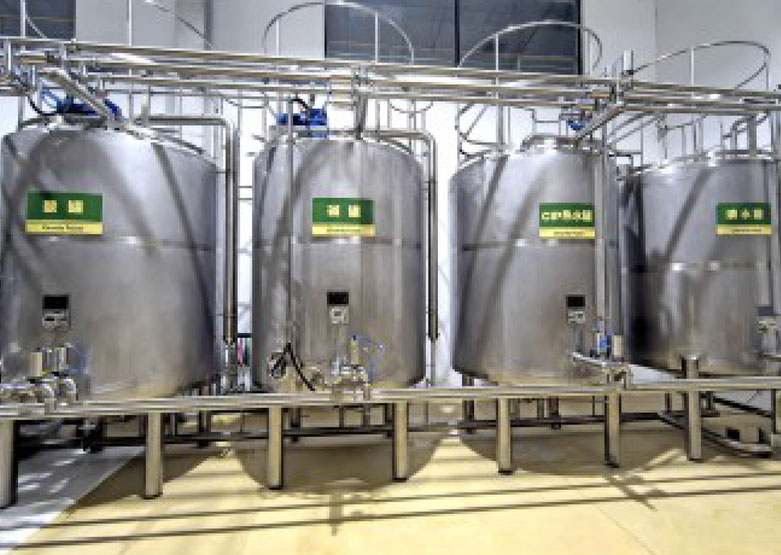 CIP Cleaning System Equipments Suppliers, Custom Factory, Manufacturers - ShanghYi Yang Fluid Tech is CIP Cleaning System Equipments Suppliers, Customized CIP Cleaning System Equipments Factory and Manufacturers in Ch...View Product →
Even with the right equipment, CIP parameters need verification and continuous optimization based on site conditions. The technical service support a supplier provides after commissioning, including cleaning validation, fault diagnosis, and operator training, often makes the difference between a line that runs reliably and one that never reaches its nominal output.
Buyers naturally compare the prices and brands of sterilizers and fillers, but the engineering design around those machines is what determines whether the plant actually performs. Tank sizing, pipe slopes, pump selection, heat-recovery networks, automation logic, and the CIP piping network all have to be balanced as a single system. A supplier with full-line integration experience starts from a process flow calculation and then selects equipment to fit that flow, rather than assembling individual machines from different sources.
This is why process and engineering design capability must carry the same weight in supplier evaluation as hardware pricing. UHT lines involve large capital expenditure and leave little room for modification after installation. Giving equal priority to process design, equipment matching, cleaning validation, and after-sales support is more important than bargaining for the lowest price on a single machine.

Contact Details
Production Address: No. 9188 Chuannan Fenggong Road, Fengxian District, Shanghai
Office Address: Room 603, Building 57, No. 260 Maoyuan Road, Fengxian District, Shanghai
TEL: 86-18221904658
E-mail: [email protected]

Quick Link

Request Custom Quote Need Something Special? We're Here To Help.
 English
 русский
 Français
 Español
 عربى
عربى
 Indonesia