Content
A dairy plant planning a 10,000 L/h pasteurized milk line faces a decision that looks simple on paper: heat raw milk to 72 °C, hold it for 15 seconds, cool it, and fill it. In practice, the pasteurizer is only as reliable as the raw milk storage, clarification, standardization, homogenization, filling, and cleaning systems connected to it. A pasteurized milk production line is therefore best understood as one continuous hygienic flow, not a single machine.
The conclusion that matters for buyers is this: shelf life, food safety, and flavor are decided before the milk reaches the pasteurizer and again after it leaves the holding tube. Raw milk with a high bacteria count will shorten shelf life even if the pasteurizer runs perfectly. Filling in a non-hygienic environment will re-contaminate a fully pasteurized product. Cleaning failures will undo everything within a few production runs. So the line should be evaluated as a system, from tanker reception to packaged product.
Every pasteurized milk production line is built around a validated time–temperature combination. The most common reference in international dairy practice is 72 °C for 15 seconds, known as high-temperature short-time (HTST) pasteurization. This treatment destroys vegetative pathogens such as Salmonella, Listeria, and E. coli while causing only limited damage to the nutritional and sensory quality of milk.
| Method | Temperature | Holding time | Typical application |
|---|---|---|---|
| LTLT (batch) | 63 °C | 30 min | Small or artisanal volumes |
| HTST | 72 °C | 15 s | Standard fluid milk in most plants |
| Higher-heat shorter-time | 89 °C | 1.0 s | Extended shelf life under refrigeration |
| UHT | 135–150 °C | 2–5 s | Ambient-stable milk |
The holding time is as important as the temperature. In an HTST line, the holding tube must be long enough to keep every particle of milk at 72 °C for at least 15 seconds at the maximum design flow rate. A flow diversion valve downstream of the holding tube automatically sends under-heated milk back to the balance tank. Temperature sensors, recording instruments, and diversion valves are therefore not optional accessories; they are the safety backbone of the line. Verification is normally done with the phosphatase test, because the enzyme alkaline phosphatase is inactivated under pasteurization conditions.
A standard line can be divided into preparation, heat treatment, filling, and cleaning. Each step uses equipment selected for capacity, product characteristics, and hygiene requirements.
Tanker milk is received through a receiving station with a filter, flow meter, and plate cooler, then stored below 4 °C to limit bacterial growth. Storage capacity should cover at least one or two filling shifts. A double-layer insulated storage tank keeps the milk temperature stable and protects it from ambient heat. Large plants often use outdoor silo tanks to reduce building cost, while smaller dairies typically choose insulated indoor tanks with gentle agitation.
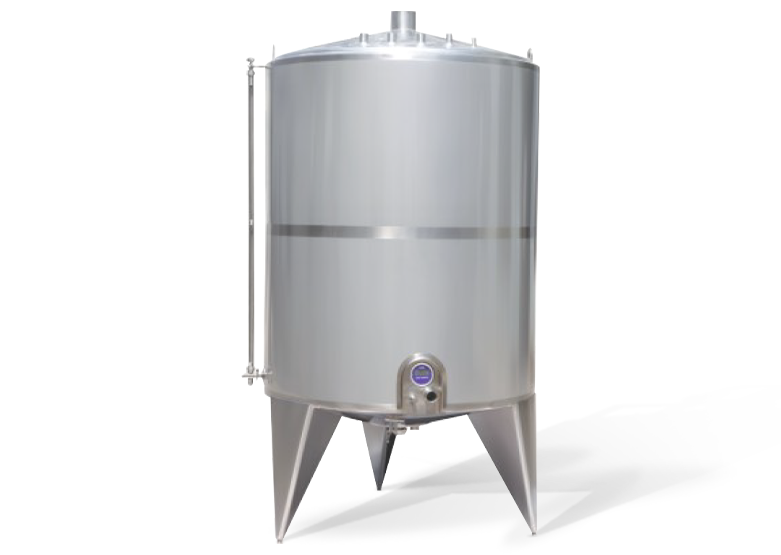 Double-Layer Insulated Tank Suppliers, Custom Factory, Manufacturers - Shanghai Yi Yang Fluid Tech is Double-Layer Insulated Tank Suppliers, Customized Double-Layer Insulated Tank Factory and Manufacturers in China, F...View Product →
Standardization adjusts the fat content to the value printed on the label. In-line standardization uses a centrifugal separator to produce skim milk and cream, which are recombined in calculated proportions. Homogenization follows at a typical pressure of 150–200 bar in a two-stage homogenizer, reducing fat globule size so that cream does not separate and the mouthfeel stays smooth.
The heart of the line is a plate heat exchanger skid built for regeneration, heating, holding, and cooling. In the regeneration section, hot pasteurized milk heats the incoming cold milk and recovers 90–95% of the energy, cutting steam and chilled water demand. The product then enters the heating section, passes through the holding tube, and is cooled to 2–4 °C before filling. A flow diversion valve protects the process: if the temperature drops below the setpoint, the valve diverts the product back for reprocessing.
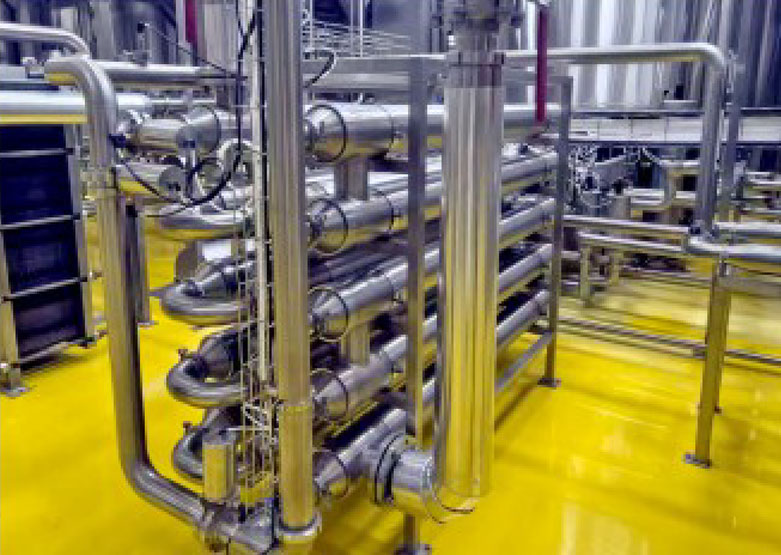 Heat Exchanger Skid Suppliers, Custom Factory, Manufacturers - Shanghai Yi Yang Yi Yang Fluid Tech is Heat Exchanger Skid Suppliers, Customized Heat Exchanger Skid Factory and Manufacturers in China, Function Descript...View Product →
Pasteurized milk is filled cold, so the filling room must minimize airborne contamination. Pouch, bottle, and carton fillers each impose different hygiene requirements. Many plants include a full-automatic degassing machine before filling to remove dissolved air, which reduces oxidation and improves flavor stability. After every production run, the entire line from raw milk tanks to filling nozzles is cleaned by automated CIP cleaning system equipment, circulating caustic and acid solutions at defined temperatures and flow rates. Without CIP, protein and fat residues quickly form biofilms that no sanitizer can fully reach.
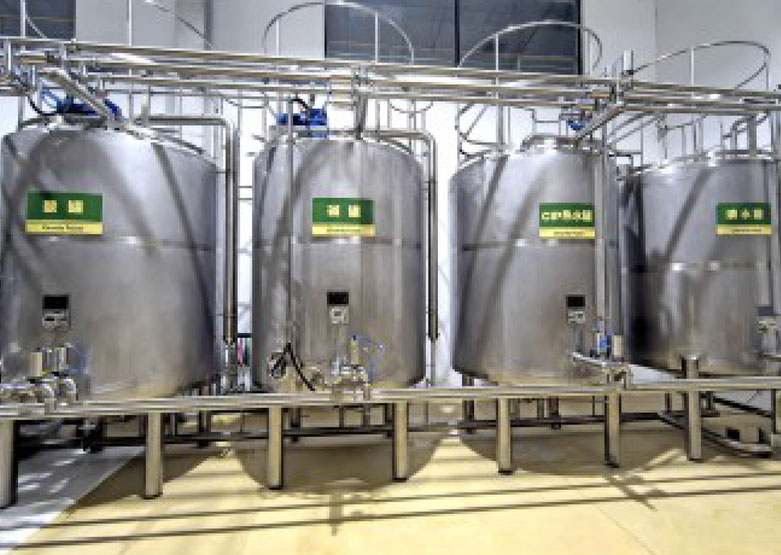 CIP Cleaning System Equipments Suppliers, Custom Factory, Manufacturers - ShanghYi Yang Fluid Tech is CIP Cleaning System Equipments Suppliers, Customized CIP Cleaning System Equipments Factory and Manufacturers in Ch...View Product →
Choosing individual components is only half of the project. The line performs to standard only when the engineering around it is correct.
Line capacity should be calculated from daily output and operating hours, with a practical buffer of 10–20%. A 10,000 L/h line running 12 hours a day produces about 120,000 L per day; if the same line must later produce 180,000 L, the design must change, not just the schedule. Utility planning is just as critical: steam for heating and CIP, chilled water for cooling, compressed air for valves and filling machines, and electrical capacity for pumps and homogenizers. Many project delays come from an undersized steam boiler or insufficient chilled water flow.
Modern lines use PLC and HMI control with recipe management, automatic pasteurization control, trend recording, and alarm logs. For pasteurized milk, where a few degrees or seconds decide safety, data recording is part of compliance. Records must be auditable and exportable for quality teams and regulatory inspections. A supplier that provides turnkey engineering and project implementation keeps automation, piping, and utilities consistent by design, which reduces integration risks on site.
A key decision for every dairy company is whether to produce pasteurized milk, UHT milk, or both. Pasteurized milk must stay below 4 °C from the dairy to the consumer and typically offers 7–15 days of shelf life; its fresh taste makes it the preferred product in markets with a reliable cold chain. A UHT milk production line heats milk to 135–150 °C for 2–5 seconds and fills it aseptically, giving several months of ambient shelf life at a higher energy cost. Many plants install both lines and share the preparation and cleaning systems while keeping the heat treatment sections separate.
The most reliable way to select a supplier is to evaluate how they handle process validation, hygienic design, and after-sales support. Request at least the following before placing an order:
Material certificates for 316L stainless steel, weld inspection records, and surface finish specifications determine how cleanable the line will be. Documentation is not paperwork; it is the evidence that the line will meet the required log reduction and target shelf life. A supplier with a strong engineering team can adapt the line to your raw milk quality, fat standardization strategy, and local regulatory requirements.
A pasteurized milk line often runs in multiple shifts, so spare parts and rapid service are part of your operating cost. Confirm delivery times for plates, gaskets, pumps, and control components, and ask about commissioning and operator training. The supplier's technical service commitment affects your uptime more than the initial equipment price.
Once the standards are clear and the equipment is defined, the remaining risk is mainly in integration. A supplier that designs, manufactures, and commissions the whole line can reduce interfaces and shorten the project timeline. When comparing quotes, review the complete pasteurized milk production line scope, including process design, equipment supply, installation, and commissioning, to confirm that what is quoted is a working system rather than a collection of machines.

Contact Details
Production Address: No. 9188 Chuannan Fenggong Road, Fengxian District, Shanghai
Office Address: Room 603, Building 57, No. 260 Maoyuan Road, Fengxian District, Shanghai
TEL: 86-18221904658
E-mail: [email protected]

Quick Link

Request Custom Quote Need Something Special? We're Here To Help.
 English
 русский
 Français
 Español
 عربى
عربى
 Indonesia