Content
Raw milk normally leaves a dairy farm at around 4°C and travels in an insulated tanker to the processing plant. From the moment it enters the receiving bay, a chain of decisions — cooling rate, storage time, fat standardization, heat treatment and filling — determines whether the finished product meets its shelf-life, flavor and safety targets. That is why a dairy production line should be treated as one integrated process system, not as a collection of individual machines. Each stage feeds the next, and the weakest stage sets the limit for the whole line.
In practical terms, a dairy production line is the sequence of equipment and control steps that converts raw milk into pasteurized milk, UHT milk, yogurt, flavored milk or other dairy beverages. The scope of the line depends on the target product: a simple pasteurized milk line can be completed with a few core modules, while a line producing yogurt and cultured drinks adds fermentation, cooling and fruit-dosing stages.
| Stage | Purpose | Typical Equipment |
|---|---|---|
| Receiving and storage | Accept raw milk, cool it quickly and hold it safely | Receiving pump, plate cooler, raw milk silo |
| Clarification | Remove sediment, somatic cells and fine particles | Inline filter, disc clarifier |
| Standardization | Adjust fat and solids content to the product specification | Cream separator, in-line blending system |
| Homogenization | Reduce fat globules to prevent creaming | Homogenizer operating at roughly 150-200 bar |
| Heat treatment | Kill pathogens and spoilage organisms | Plate heat exchanger, UHT sterilization system |
| Fermentation | Convert lactose into lactic acid for cultured products | Stainless steel fermentation tank |
| Filling | Package the product with minimal recontamination | Aseptic or clean filling machine |
| CIP cleaning | Clean all product-contact surfaces without dismantling | CIP set with tanks, pumps, valves and control logic |
The exact arrangement varies, but the principle stays the same: product flows from raw milk intake toward filling, and every step is designed to protect quality and minimize microbial risk.
Raw milk arrives in tankers that are usually cleaned in place before loading. The first job of the receiving station is to cool the milk quickly and transfer it to a chilled silo. Holding temperature should stay at or below 4°C, and silo residence time should be kept short because even at low temperature, bacterial counts rise slowly. For plants that receive large volumes, an outdoor milk silo with an agitator and accurate level measurement is often the most space-efficient option.
Standardization makes the fat content consistent. A cream separator divides whole milk into skim milk and cream, and an in-line blending system recombines them to the required ratio, for example 1.5%, 2.5% or 3.5% fat. Homogenization then forces the milk through a narrow gap under high pressure, normally between 150 and 200 bar, to break fat globules into much smaller droplets. This prevents cream from rising to the top and improves the perceived mouthfeel of the product.
Heat treatment is the heart of a dairy processing line. The classic process is high-temperature short-time pasteurization, where milk is held at 72-75°C for about 15 seconds. This destroys vegetative pathogens while keeping the fresh flavor that refrigerated pasteurized milk is known for. For ambient-stable products, UHT processing at 135-140°C for 2-5 seconds followed by aseptic filling gives a shelf life of several months without refrigeration. The capacity of the dairy sterilization system must match the output of the filling machine, otherwise bottlenecks appear at the most expensive part of the line. If your market is built around fresh milk distributors, a pasteurized milk production line is usually the right starting point; if export or long-distance retail is the goal, UHT technology becomes difficult to avoid.
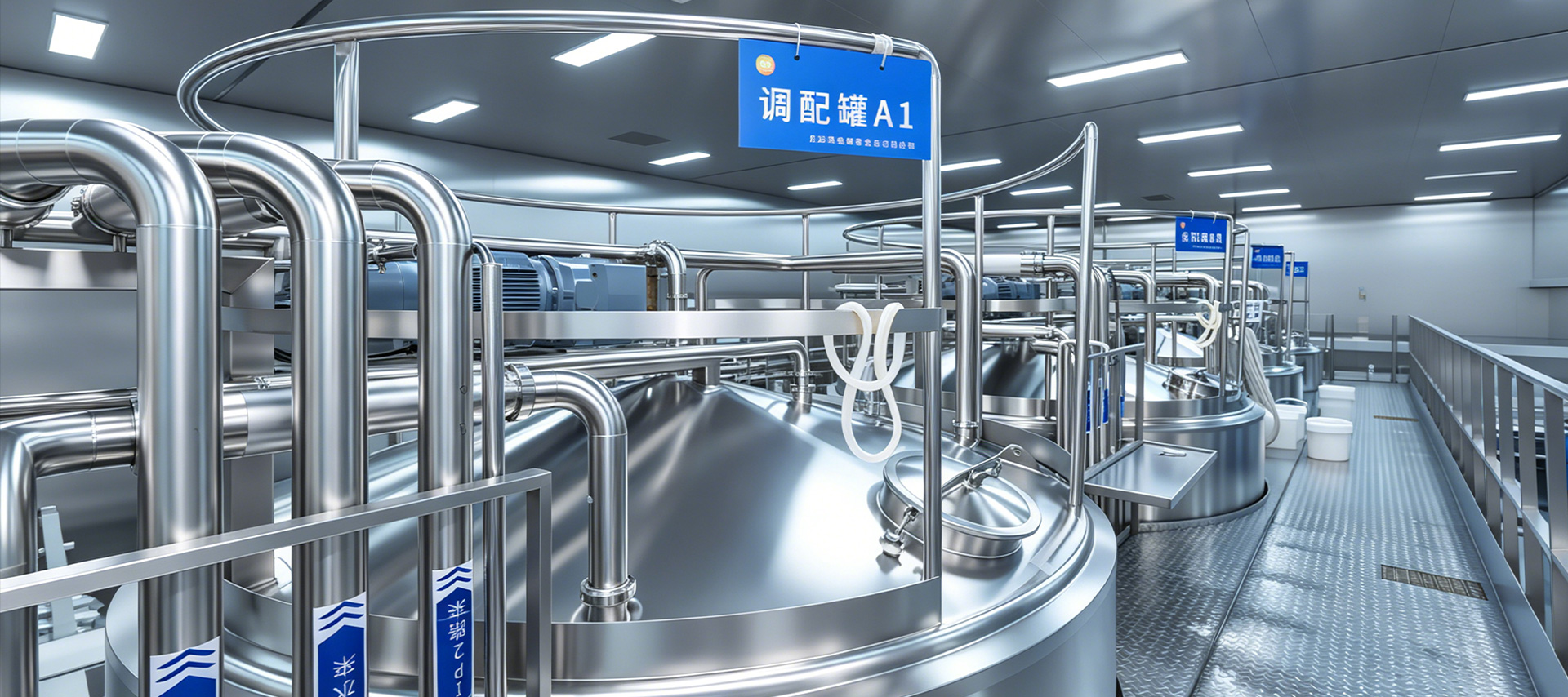
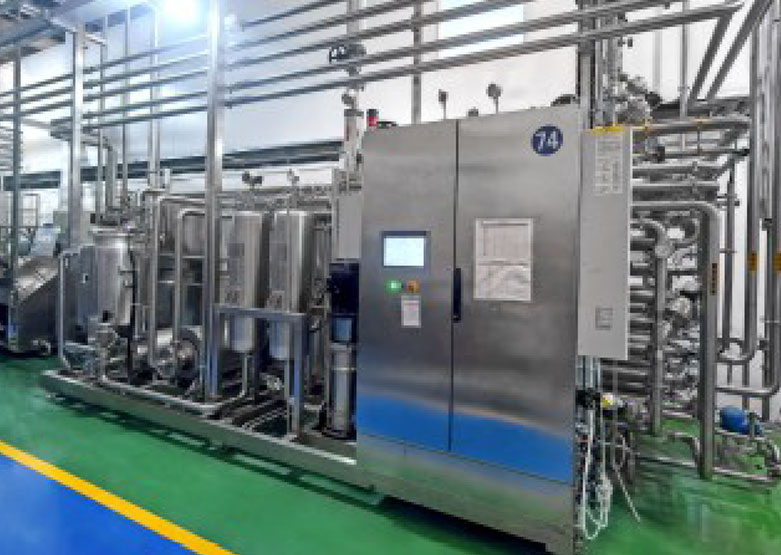 Sterilization System Equipment Suppliers, Custom Factory, Manufacturers - ShanghYi Yang Fluid Tech is Sterilization System Equipment Suppliers, Customized Sterilization System Equipment Factory and Manufacturers in Ch...View Product →
Yogurt and fermented dairy drinks follow a different path after standardization. The milk is heated, cooled to inoculation temperature, and mixed with starter culture in a fermentation tank. The culture converts lactose into lactic acid, lowering the pH until the milk coagulates. A typical yogurt fermentation runs at 42-43°C and stops when the pH reaches about 4.5, after which the product must be cooled quickly to stop further acid development. The design of the tank, the accuracy of temperature control and the way the coagulum is cooled all affect texture and syneresis. A dedicated yogurt fermentation line handles these steps more reliably than a line that was originally built for plain milk and later modified.
Filling is where the product meets its packaging, and also where most recontamination risk enters the process. Aseptic filling keeps both product and package sterile for long-shelf-life items, while clean filling is adequate for refrigerated short-life milk. The filling room should be physically separate from the wet processing area, with positive air pressure and controlled access. Packaging format — bottles, pouches, gable-top cartons or aseptic bricks — drives the speed and cost of this stage.
Every dairy line leaves protein and fat films on the inside of pipes, heat exchanger plates and tank walls. If those films are not removed properly, bacteria find a safe place to grow and the next batch is contaminated. CIP, or cleaning in place, solves this by circulating caustic and acid solutions through the circuit at controlled temperatures, flow rates and times, without dismantling the process line. A well-designed CIP cleaning system recovers and reuses the cleaning solutions, tracks detergent concentration, and runs automatically after each production shift. The practical benefit is shorter cleaning time, lower chemical use, and repeatable hygiene that is difficult to achieve with manual cleaning. When you compare quotes for a dairy line, check whether the CIP set is large enough for the longest circuit and whether it can clean the heat exchanger and filler at the same flow rates used in production.
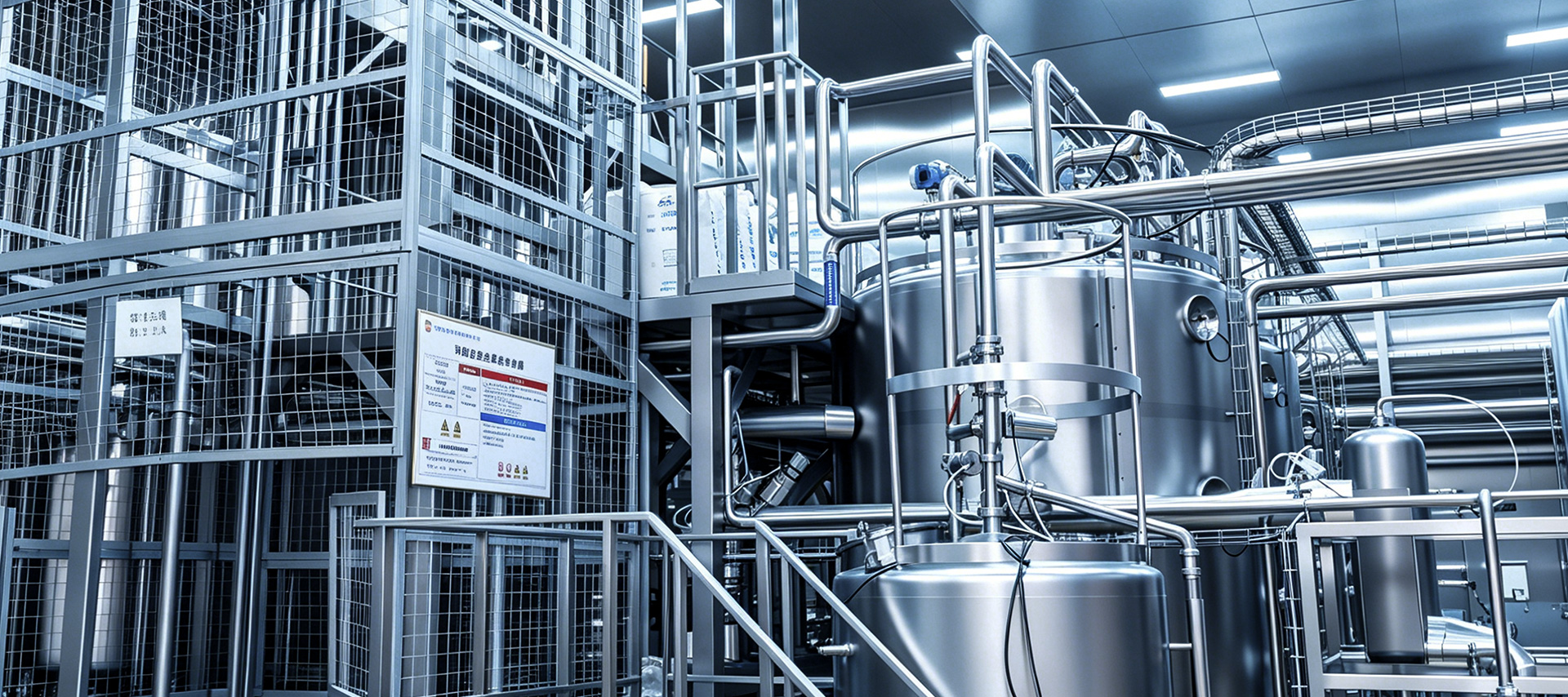
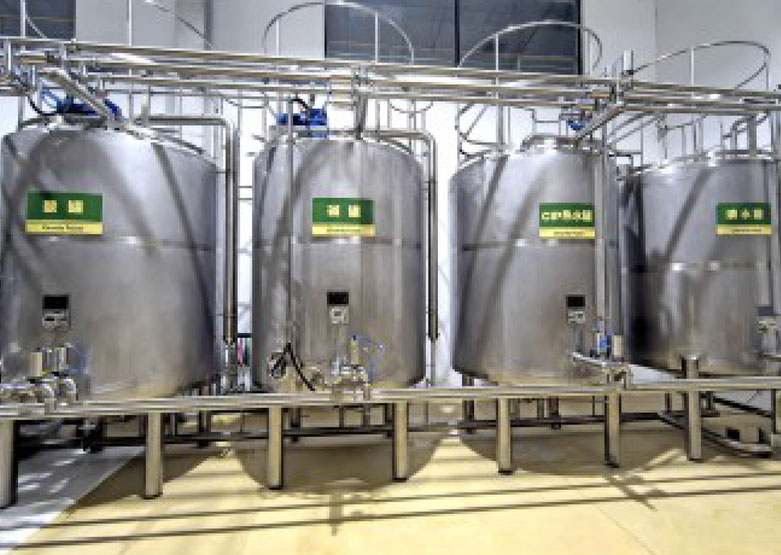 CIP Cleaning System Equipments Suppliers, Custom Factory, Manufacturers - ShanghYi Yang Fluid Tech is CIP Cleaning System Equipments Suppliers, Customized CIP Cleaning System Equipments Factory and Manufacturers in Ch...View Product →
Buying a dairy line is a capital decision with daily operational consequences. The following factors separate a line that runs smoothly from one that drains time and money:
If you are still deciding between fresh and long-life products, compare the full supply chain, including distribution temperature, retail shelf life and return rates, rather than only the cost per liter.
A dairy production line does not deliver value on the day it is installed. It delivers value when the first batch passes quality control, when the line reaches its rated capacity, and when it keeps delivering that output after six months of continuous production. This is where the supplier's integration experience becomes decisive. A turnkey supplier takes responsibility for process design, equipment supply, installation and commissioning, so the customer does not have to coordinate separate vendors for tanks, heat exchangers, fillers and pipework.
For the same reason, after-sales support should be part of the purchasing criteria, not an afterthought. Spare parts availability, response time and the supplier's ability to provide technical service and maintenance support during regular operation determine how long your line stays productive. It also helps if the supplier can customize equipment for your specific milk composition, packaging layout or building constraints; standardized hardware rarely covers every dairy plant.
A complete dairy production line from a single responsible supplier reduces interface problems between stages and gives you one point of contact for performance, cleaning and maintenance questions, which is worth more than a small discount on quotation.
 Dairy Production Line Suppliers, Custom Factory, Manufacturers - Shanghai Yi YanYi Yang Fluid Tech is Dairy Production Line Suppliers, Customized Dairy Production Line Factory and Manufacturers in China, Our Dairy Pro...View Product →
The market position you choose — fresh and local, or long-life and exportable — should shape every major decision, from heat treatment to filling. The most successful dairy investments start with a clear product definition and realistic capacity target, then let the process design follow. By evaluating each stage as part of an integrated line, and by choosing a supplier whose equipment, engineering and after-sales service are aligned, you are far more likely to commission a line that runs reliably, cleans well and pays for itself on schedule.

Contact Details
Production Address: No. 9188 Chuannan Fenggong Road, Fengxian District, Shanghai
Office Address: Room 603, Building 57, No. 260 Maoyuan Road, Fengxian District, Shanghai
TEL: 86-18221904658
E-mail: [email protected]

Quick Link

Request Custom Quote Need Something Special? We're Here To Help.
 English
 русский
 Français
 Español
 عربى
عربى
 Indonesia