Content
A dairy plant that wants to scale from pilot yogurt production to a full industrial output usually starts with a question about tank volume. The question that actually decides the project's success is different: can the pasteurizer, fermentation tanks, cooling capacity, CIP cleaning, and filling equipment operate as one reliable sequence? In our dairy engineering projects, the same conclusion keeps appearing. A yogurt fermentation production line produces consistent batches only when the process stages are designed together, not bought separately.
A yogurt fermentation production line is an integrated chain that starts with raw milk reception and ends with cold storage of the packed product. Fermentation is the heart of the line, but its result depends on upstream pretreatment and on the cooling profile applied after the culture has done its work. The table below summarizes the main stages for a typical medium- or large-capacity line.
| Stage | Objective | Typical equipment |
|---|---|---|
| Raw milk reception and storage | Cool and buffer the incoming milk | Milk storage tanks, plate coolers |
| Standardization and mixing | Adjust fat and solids, blend ingredients | Mixing agitator tanks, inline blenders |
| Heat treatment | Eliminate pathogens and strengthen the gel | Heat exchanger skid, holding tubes |
| Fermentation | Acidify the milk to the target pH | Stainless steel fermentation tanks |
| Cooling | Stop the fermentation at the correct acidity | Chilled water jackets, plate coolers |
| Filling and packing | Package the product with minimal handling | Cup fillers, packaging machines |
| CIP cleaning | Remove residues and sanitize the circuit | CIP cleaning system equipment |
On a compact line, several stages may be combined in one skid. On a large line, they are usually separated to allow higher throughput and parallel batches. The right configuration depends on the daily production plan, the number of SKUs, and the packaging format, not on the equipment catalog alone.
Fermentation converts lactose into lactic acid. The pH falls from about 6.6 to 4.2-4.5, and the milk proteins coagulate into a soft gel. Most yogurt cultures work best at 42-43°C, and the tank must hold that temperature within a narrow band across the whole volume. Once the target pH is reached, the jacket switches to chilled water to stop the culture activity.
For stirred yogurt, the agitator also determines the final body. If it runs too fast, it damages the gel and the product feels watery; if it runs too slowly, the temperature and pH are not uniform. That is why a stainless steel fermentation tank should be specified with the culture type, pH endpoint, and cooling ramp in mind, rather than chosen from a generic size chart.
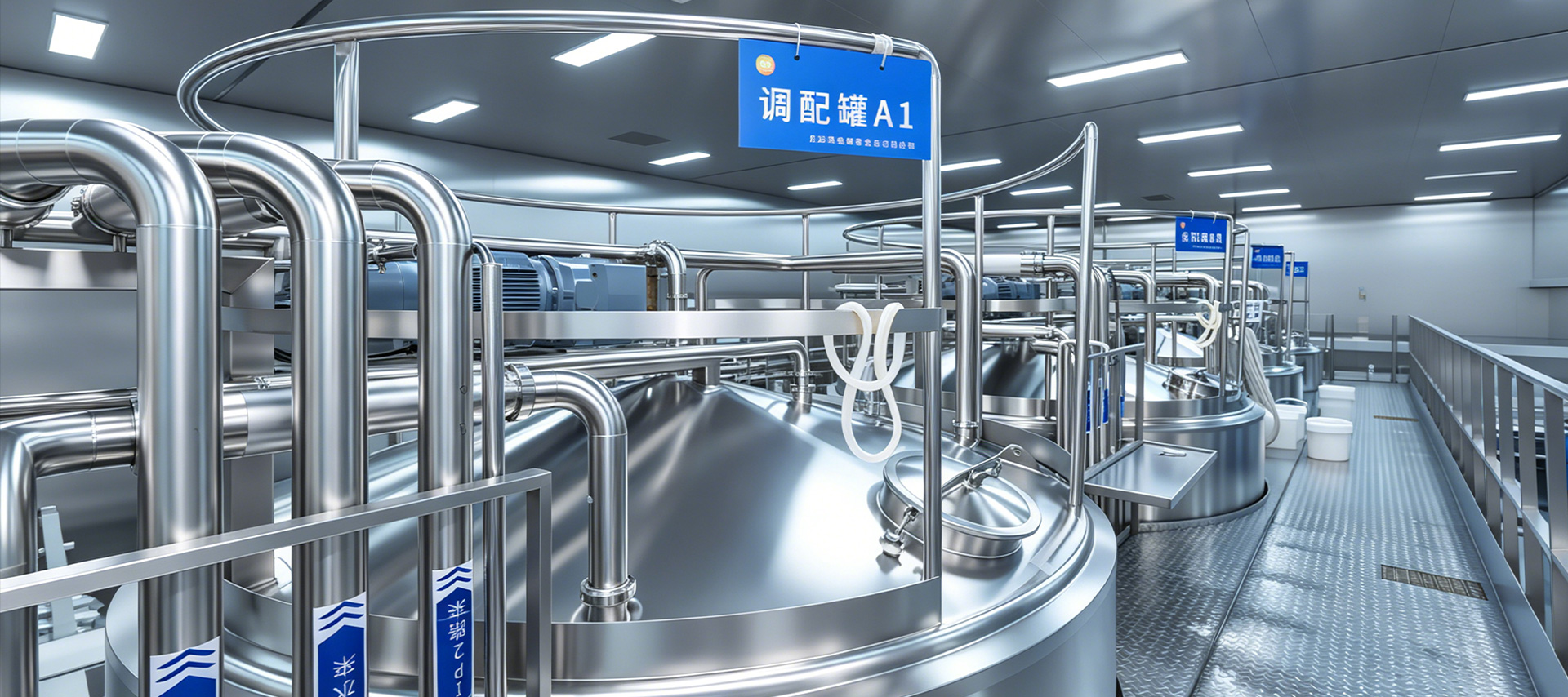
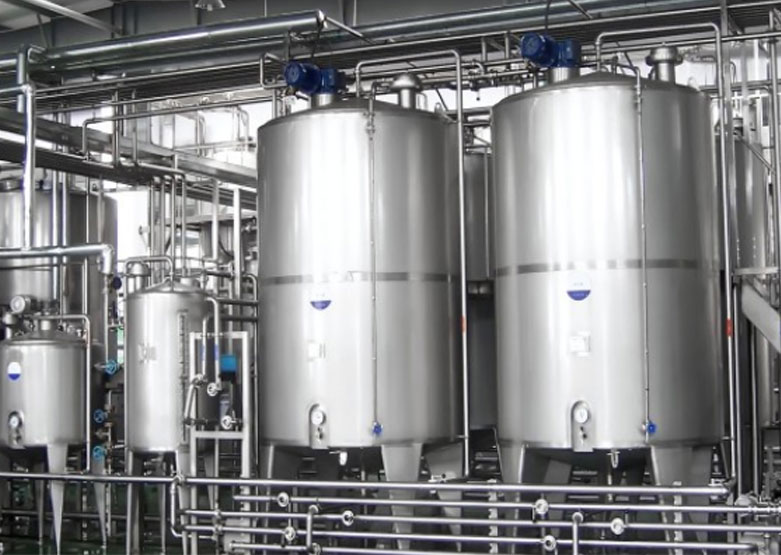 Stainless Steel Fermentation Tank Suppliers, Custom Factory, Manufacturers - ShaYi Yang Fluid Tech is Stainless Steel Fermentation Tank Suppliers, Customized Stainless Steel Fermentation Tank Factory and Manufacturers...View Product →
Before fermentation, the milk base is heated to 85-95°C for 5-10 minutes. This is higher than the pasteurization temperature used for drinking milk, because the denaturation of whey proteins improves the water-holding capacity of the gel and gives the yogurt a firmer body. The heat treatment also reduces the background microflora that could compete with the starter culture.
A heat exchanger skid with a regeneration section is the standard solution on medium and large lines. The regeneration section recovers heat from the outgoing hot product and typically saves more than 85 percent of the energy that direct heating would consume. The same skid can act as the heating and cooling backbone for the whole line.
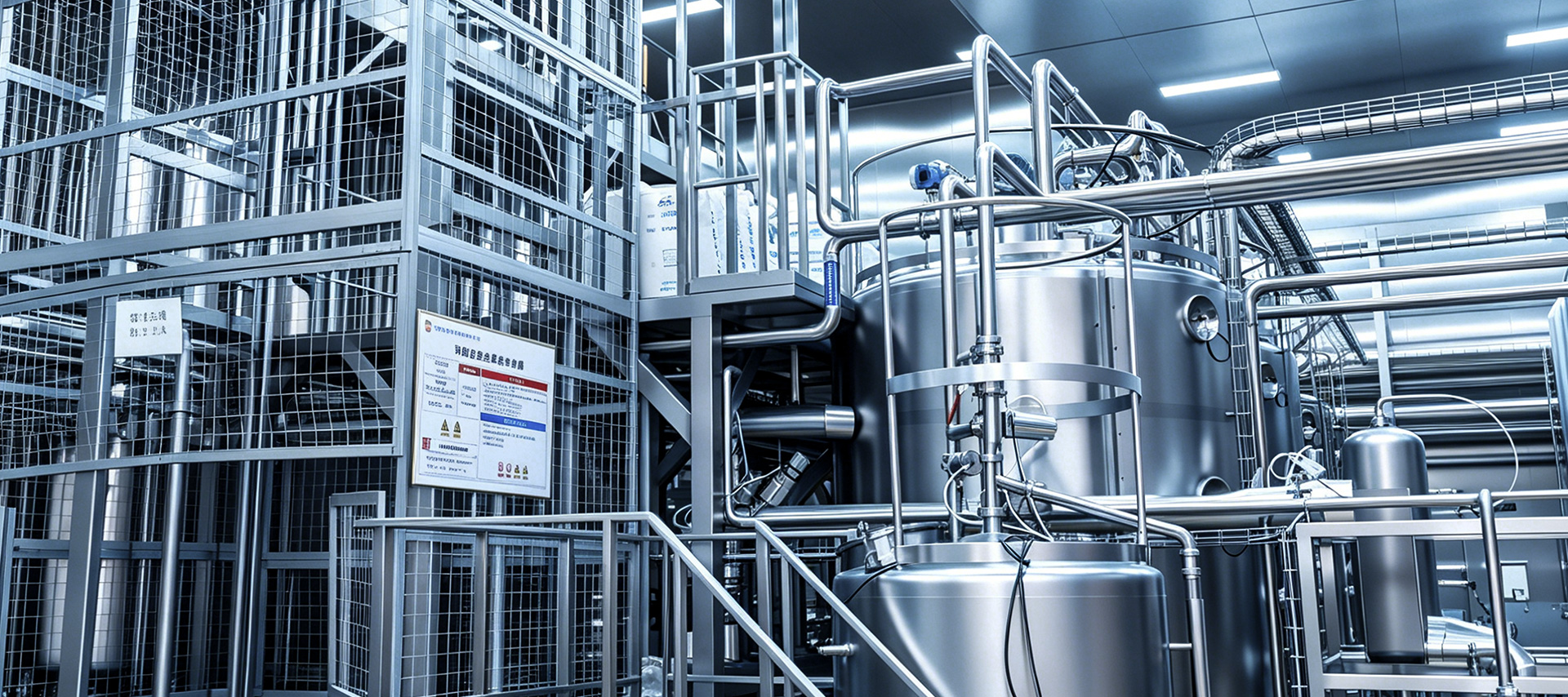
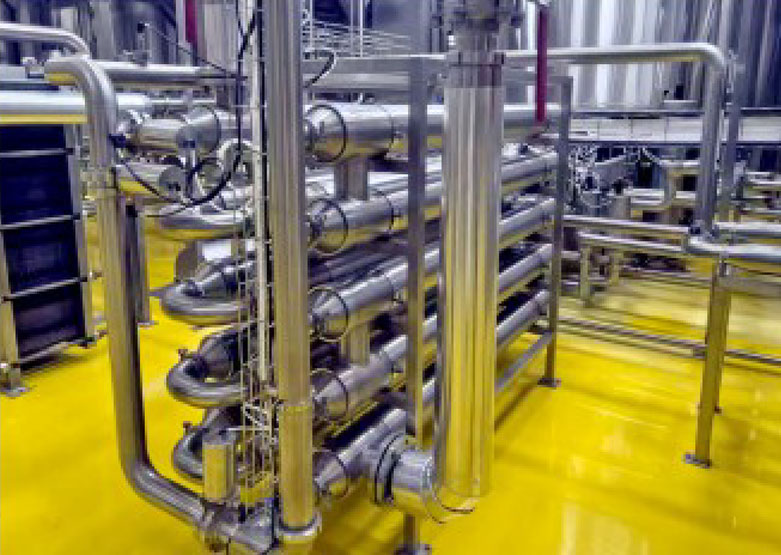 Heat Exchanger Skid Suppliers, Custom Factory, Manufacturers - Shanghai Yi Yang Yi Yang Fluid Tech is Heat Exchanger Skid Suppliers, Customized Heat Exchanger Skid Factory and Manufacturers in China, Function Descript...View Product →
Yogurt equipment handles a high-protein, high-fat product that leaves a tenacious film on tank walls and pipes. If that film is not removed, it becomes a breeding ground for spoilage organisms, and the next batch will lose shelf life no matter how carefully the fermentation was controlled.
Cleaning in place (CIP) closes this gap. A complete CIP cleaning system equipment package covers the fermentation tanks, the heat exchanger, the pipelines, and the filling machine. For dairy soils, an alkaline wash followed by an acid rinse and a final water rinse is the standard sequence, and the rinse water quality should match the product water used in the recipe.
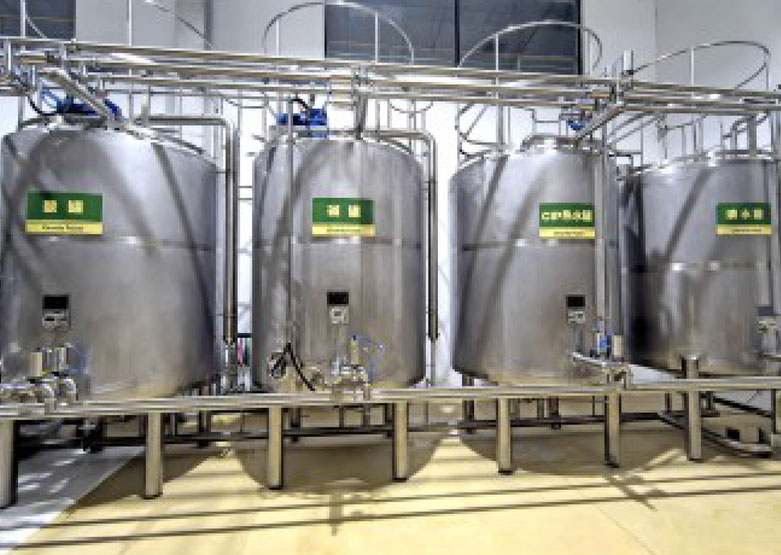 CIP Cleaning System Equipments Suppliers, Custom Factory, Manufacturers - ShanghYi Yang Fluid Tech is CIP Cleaning System Equipments Suppliers, Customized CIP Cleaning System Equipments Factory and Manufacturers in Ch...View Product →
The product type changes the line layout. Set yogurt ferments directly in the consumer cup, so the gel is never pumped after it has formed. The filling machine must be precise, and the cups move gently through incubation and cooling. Stirred yogurt ferments in bulk tanks and is then pumped, cooled, mixed with fruit or flavor, and filled. That route needs a tank agitator that breaks the gel evenly, a shear-tolerant pump, and a cooling section able to handle a viscous product without destroying the texture.
Greek-style yogurt, which is concentrated by straining or membrane filtration, adds a separation step to the line and changes the solids handling. Drinking yogurt, on the other hand, uses a milder agitation and a different filling temperature. These variants are best discussed during the process design phase, because they influence tank volumes, pump selection, and cooling capacity from the start.
The cooling step is where batch consistency is won or lost. The culture remains active until the product is chilled below about 10°C, so a slow cooling step lets the pH keep falling and the yogurt becomes more acidic and thinner. Most recipes define a practical window: cool from 42-43°C down to below 20°C within 30-60 minutes, then down to 4°C for storage.
The control system should start the cooling on the measured pH value, not on a fixed timer, because culture activity varies with the raw milk quality and the starter dosage. A line that links its fermentation and cooling control to the actual product condition will hold its target acidity more reliably than one that runs on a pre-set schedule.
Capacity is usually stated in liters per hour on the filler and metric tons per day at the tank farm, but the real bottleneck is often fermentation time. A typical batch ferments for 4-6 hours, and cooling and filling take additional time after that. The number of fermentation tanks can matter more than their total volume. With two tanks, one batch can be cooled and filled while the next is incubating, which keeps the filler busy and shortens the daily cycle. The number of SKUs also matters, because every change of flavor, formula, or culture requires an intermediate cleaning cycle.
Compare suppliers on more than price. Check the grade of stainless steel, the surface finish of product-contact parts, and the design of agitator seals, because these decide cleaning results and service life. Ask for documented references and confirm that the control system records temperature, pH, and cleaning data for every batch. It is also worth asking what else the same infrastructure can produce later; many dairies use one milk reception and pasteurization section to feed both a yogurt line and a pasteurized milk production line, which improves the return on the overall investment.
For a new factory, the process layout determines the length of piping, the position of CIP return lines, and the sizing of the cold room. A supplier that takes responsibility for engineering and system integration can coordinate equipment design, utilities, and installation under one contract. That shortens the project schedule and avoids the classic problem of a line that works on paper but cannot be cleaned or serviced in the actual building.
Every successful yogurt project we have worked on followed the same order: define the product parameters first, then design the line around them. Fermentation time, cooling profile, cleaning frequency, and packaging format all belong to one system, and the equipment should be selected to match that system rather than assembled from separate catalogs. If you are comparing configurations or planning a new capacity, a practical next step is to review the complete yogurt fermentation production line overview and map your own process to it.

Contact Details
Production Address: No. 9188 Chuannan Fenggong Road, Fengxian District, Shanghai
Office Address: Room 603, Building 57, No. 260 Maoyuan Road, Fengxian District, Shanghai
TEL: 86-18221904658
E-mail: [email protected]

Quick Link

Request Custom Quote Need Something Special? We're Here To Help.
 English
 русский
 Français
 Español
 عربى
عربى
 Indonesia