Content
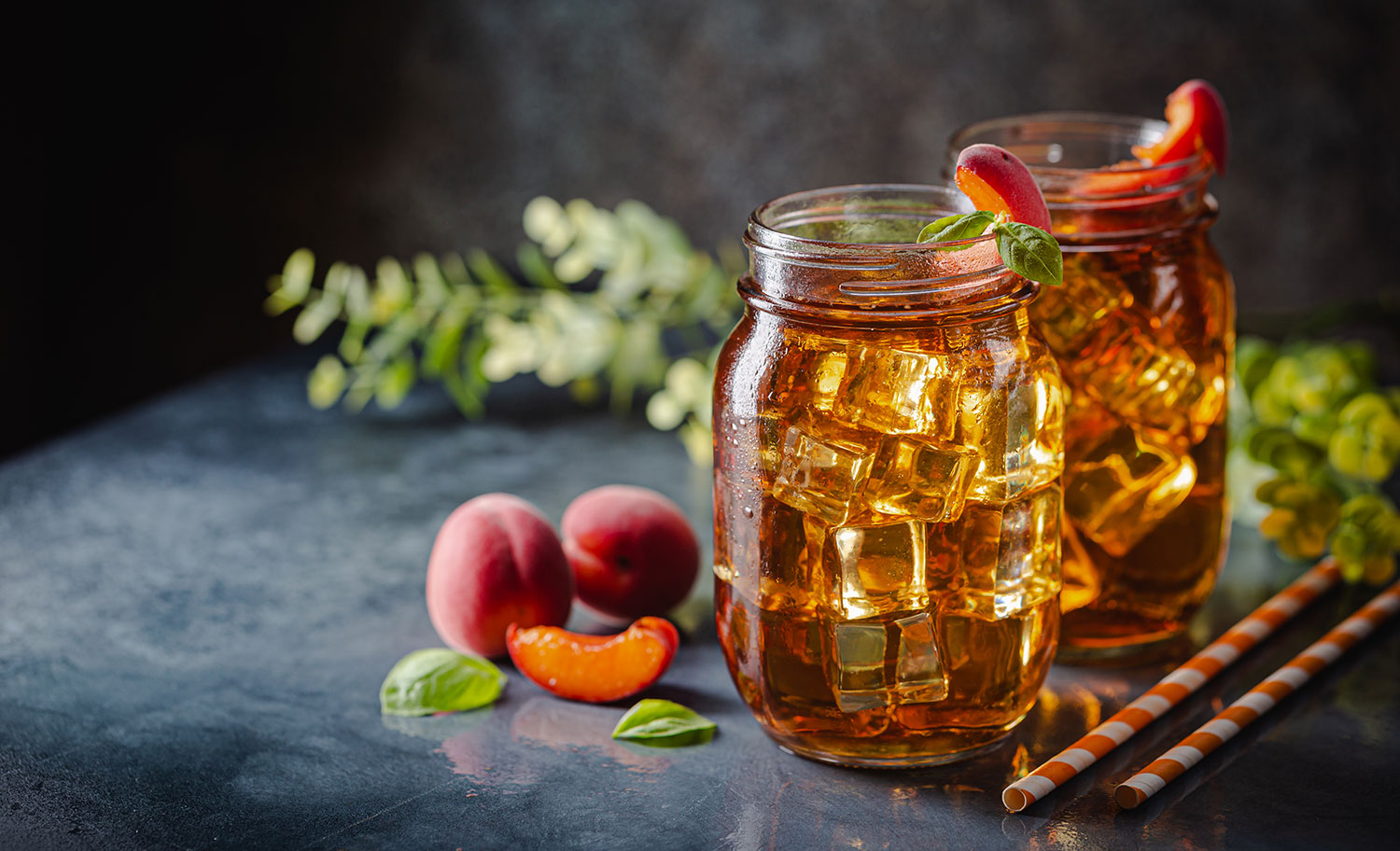
Clear bottled tea reveals every weakness in a beverage plant faster than almost any other liquid product. If extraction temperatures vary by even a few degrees, the liquor turns bitter. If dissolved oxygen is not controlled during transfer, polyphenols oxidize and the color drifts from golden to brown within weeks. If the sterilization step does not match the product's pH, a sealed bottle can still spoil on the shelf. These failures are not recipe problems. They are process design problems, and the most reliable way to solve them is with a dedicated tea beverage processing production line rather than a patchwork of generic tanks and filling units.
A purpose-built line does three things at once. It standardizes extraction and formulation so flavor remains consistent from batch to batch. It limits oxygen exposure and microbial risk so the finished drink keeps clarity, color and taste through its shelf life. And it integrates cleaning and sterilization into the same automated sequence, reducing manual labor and human error. This article explains the main modules of such a line, the process flow behind them, and the purchasing considerations that separate a profitable investment from a costly one.
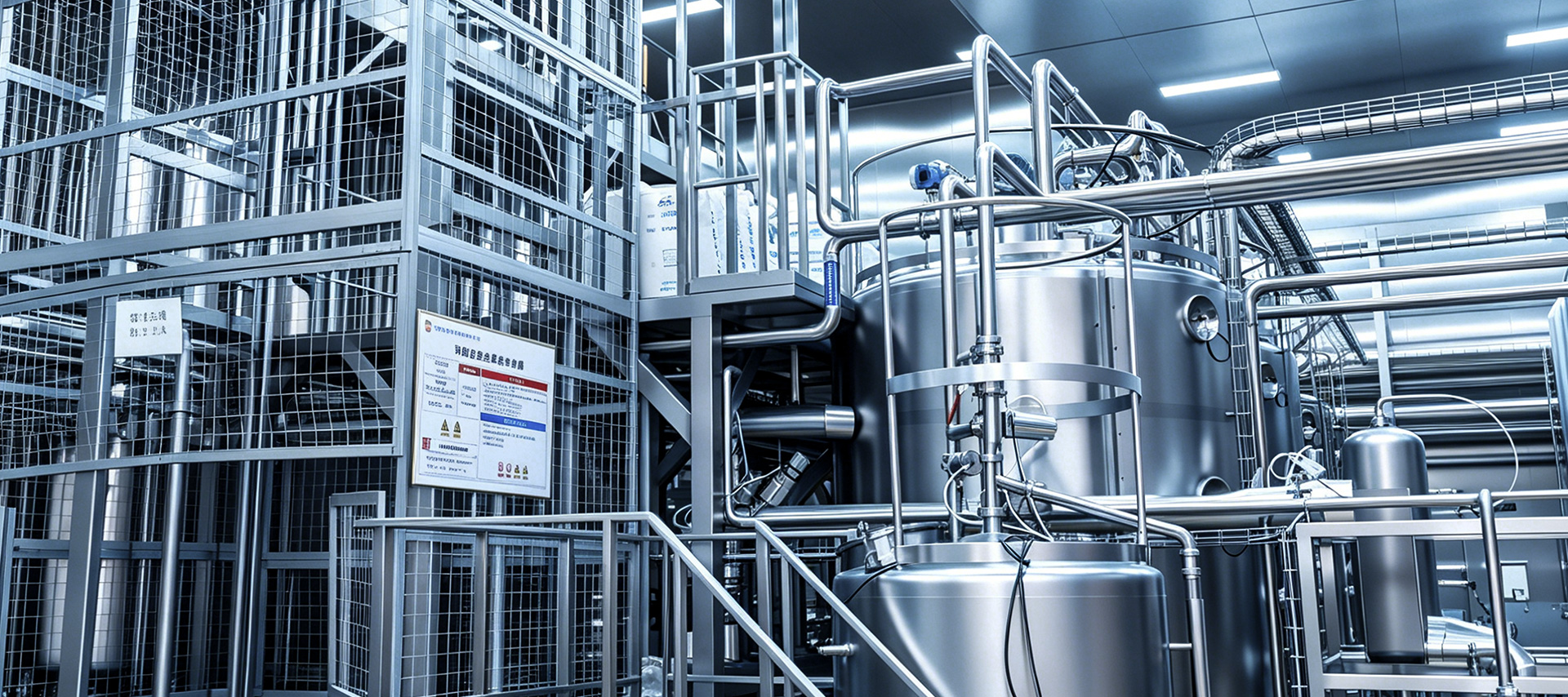
Tea beverage lines differ in capacity and automation level, but the module sequence is remarkably consistent. A typical line starts with storage tanks for treated water, tea liquor and syrup; continues through extraction, filtration, blending, degassing and sterilization; and ends at filling and capping. Supporting these main stages are utility systems: hot water generation, cooling water loops, CIP cleaning and, in most modern layouts, a PLC-based control platform that records batch data.
For medium-volume producers, a semi-automatic line processing 3,000 to 10,000 liters per day may be sufficient, with operators handling weighing, valve switching and CIP initiation. For larger operations, fully integrated turnkey lines run at 20,000 liters per day or more, using automatic batching, automatic valve manifolds and sterile filling under a single control philosophy.
Assembling storage tanks, extractors, sterilizers and fillers from different vendors often leads to interface problems: mismatched pipe sizes, inconsistent control signals and unclear responsibility during commissioning. Producers that want to avoid these risks typically choose a complete tea beverage processing production line from one engineering supplier. Shanghai Yi Yang Fluid Technology, for instance, packages the storage, processing, sterilization and cleaning stages into a single engineered system arranged around the customer's target capacity.
 Tea Beverage Processing Production Line Suppliers, Custom Factory, ManufacturersYi Yang Fluid Tech is Tea Beverage Processing Production Line Suppliers, Customized Tea Beverage Processing Production Line Factory and M...View Product →
Understanding the process flow helps buyers see why certain equipment is specified and where quality risks are concentrated. Although every recipe is different, most tea beverage lines follow the same sequence.
| Process step | Primary function | Typical operating window |
|---|---|---|
| Tea extraction | Leach soluble solids and flavor compounds from leaf, powder or concentrate | 70–95°C for 10–30 minutes, depending on tea variety |
| Filtration and clarification | Remove leaf fines and haze-forming complexes | 100–300 mesh screening followed by fine filtration |
| Formulation and blending | Mix sweeteners, flavors, acids and stabilizers in precise proportions | Batch blending with high-shear mixing |
| Degassing | Remove dissolved oxygen to protect color and flavor | Vacuum degassing to below 1 ppm dissolved oxygen |
| Sterilization | Destroy microorganisms for shelf stability | UHT at 121–137°C for 3–8 seconds, or HTST at 85–95°C for refrigerated products |
| Filling | Package under hygienic or sterile conditions | Hot fill, aseptic fill or cold fill depending on product pH |
Two details in this sequence deserve special attention. First, the extraction step determines how much of the leaf's soluble solids, and its bitterness, enters the liquid; temperature and time must be repeatable within narrow tolerances. Second, the sterilization step determines whether the product can be distributed chilled or at ambient temperature. Products with a pH above 4.6 are low-acid and must be treated accordingly, while products acidified below 4.2 allow milder heat treatment and a wider range of filling options.
Not all equipment in a tea line carries the same weight. In practice, three groups of machines determine most of the finished product's quality and the plant's operating cost.
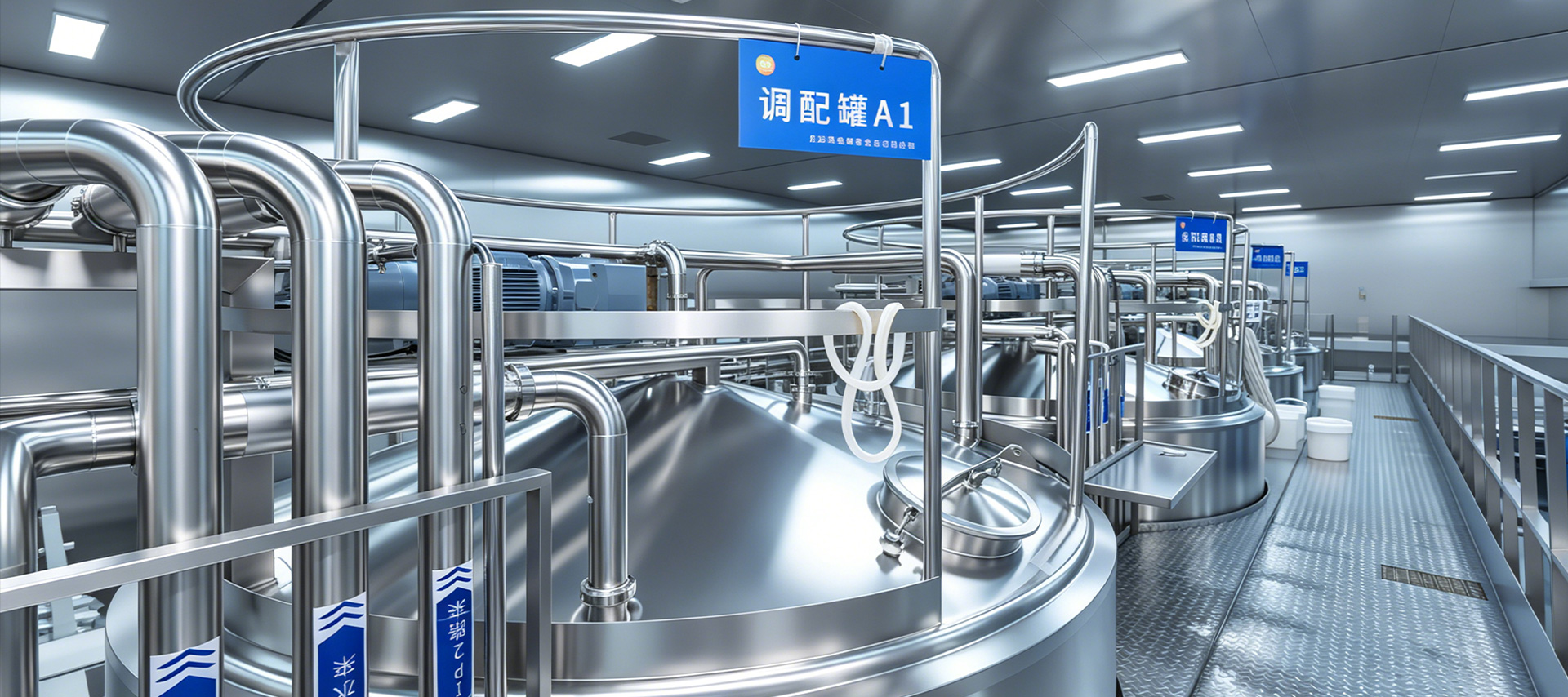
Double-layer insulated tanks hold treated water and tea liquor at stable temperatures, preventing the flavor drift caused by uncontrolled cooling. A high-shear emulsification mixing tank is used when sugar, honey or stabilizers must be dissolved completely; undissolved particles later become sedimentation at the bottom of the bottle. For leaf-tea extraction, the same vessel can be equipped with a heating jacket and agitation, though larger lines usually install a dedicated extraction tank with its own temperature control loop.
Dissolved oxygen accelerates the oxidation of tea polyphenols, which leads to browning and flavor loss. A full-automatic degassing machine removes dissolved air under vacuum before the liquid reaches the sterilizer. In most modern lines, the filling section also flushes bottles with nitrogen or relies on hot filling to reduce headspace oxygen. Keeping dissolved oxygen below approximately 1 ppm makes a measurable difference to color stability over a six-month shelf life.
This is where the largest procurement mistakes happen. Sterilization system equipment must be matched to the product's pH, package type and required shelf life. For low-acid tea sold at ambient temperature, UHT treatment at 121–137°C for a few seconds, followed by aseptic or hot filling, is the standard approach; pasteurization alone is not enough.
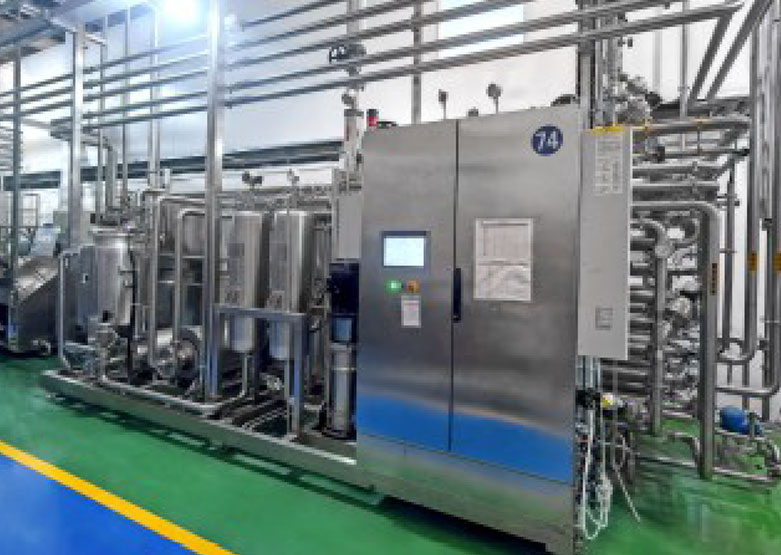 Sterilization System Equipment Suppliers, Custom Factory, Manufacturers - ShanghYi Yang Fluid Tech is Sterilization System Equipment Suppliers, Customized Sterilization System Equipment Factory and Manufacturers in Ch...View Product →
Cleaning is just as critical. Tea leaves tannins and dark deposits on the inside of pipes and tanks, and if the line does not remove them completely, residues can harbor microorganisms and taint the next batch. CIP cleaning system equipment should therefore be sized and programmed together with the rest of the line, not added later. A typical CIP cycle includes pre-rinse, caustic wash, intermediate rinse, acid wash and final rinse, with conductivity and temperature logged for validation.
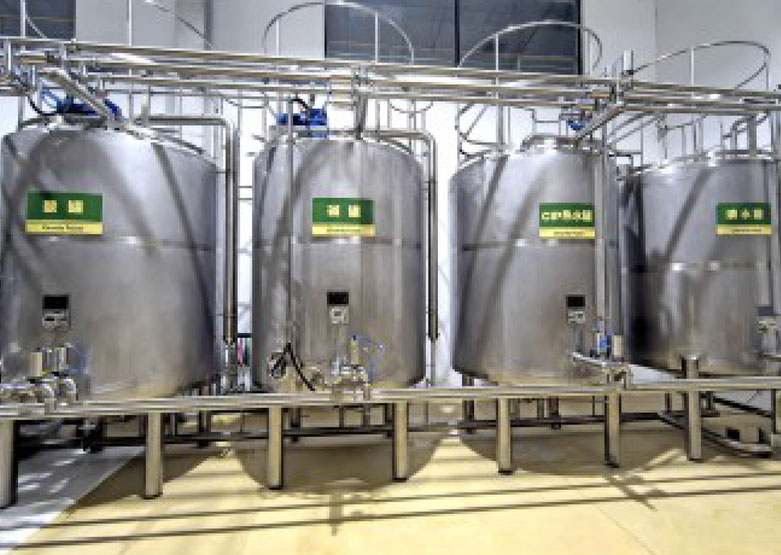 CIP Cleaning System Equipments Suppliers, Custom Factory, Manufacturers - ShanghYi Yang Fluid Tech is CIP Cleaning System Equipments Suppliers, Customized CIP Cleaning System Equipments Factory and Manufacturers in Ch...View Product →
Even with well-chosen equipment, tea quality depends on several engineering details that are easy to overlook during the planning phase.
Buying a tea beverage production line is a long-term investment, and the lowest quotation rarely produces the lowest operating cost. Before signing a contract, evaluate the supplier on the following points.
Tea factories are not identical. Some brew leaf tea in-house, others start from tea powder or concentrate; some package in glass, others in PET or cans. A turnkey supplier should adapt extraction vessel geometry, filter sizing, sterilization temperatures and filling formats to the customer's actual products rather than forcing a standard layout onto every project.
Engineering design should be completed before any equipment is fabricated, and it should include mass balance, heat balance and P&ID diagrams as formal deliverables. When standard modules cannot meet a specific requirement, such as an unusual tank size, a special valve arrangement or a unique cleaning protocol, non-standard customization support becomes decisive. After commissioning, a technical service plan should cover operator training, cleaning validation support and rapid access to spare parts so that unplanned downtime does not disrupt your supply schedule.
The tea beverage market rewards producers who deliver consistent flavor, bring new products to market quickly and keep operating costs under control. A tea beverage processing production line supports all three objectives: it automates extraction and formulation, controls oxygen and microbial risk, and integrates cleaning and sterilization into one system. The real decision is not whether to automate, but how carefully the line is designed around your products, and that question is best answered before the purchase order is placed.

Contact Details
Production Address: No. 9188 Chuannan Fenggong Road, Fengxian District, Shanghai
Office Address: Room 603, Building 57, No. 260 Maoyuan Road, Fengxian District, Shanghai
TEL: 86-18221904658
E-mail: [email protected]

Quick Link

Request Custom Quote Need Something Special? We're Here To Help.
 English
 русский
 Français
 Español
 عربى
عربى
 Indonesia