Content
The commercial production of tea beverages involves far more than brewing a pot of tea and sealing it in a bottle. A fully integrated tea beverage processing production line combines precise ingredient handling, thermal treatment, sterile filling, and automated packaging into a continuous, high-output system. Whether the end product is ready-to-drink (RTD) green tea, black tea with milk, or herbal infusions, the underlying production logic follows a structured sequence of operations. Understanding each stage helps manufacturers identify efficiency gaps, ensure food safety compliance, and scale output without sacrificing product quality.
Every production run begins with raw material intake. Dry tea leaves, plant extracts, sweeteners, additives, and water are received and inspected against established quality specifications. For loose-leaf inputs, moisture content, particle size, and microbial load are assessed before materials enter the processing floor. Water treatment is equally critical, as tap or well water must be purified through reverse osmosis (RO) filtration and deionization to remove chlorine, heavy metals, and dissolved solids that would otherwise alter taste and stability.

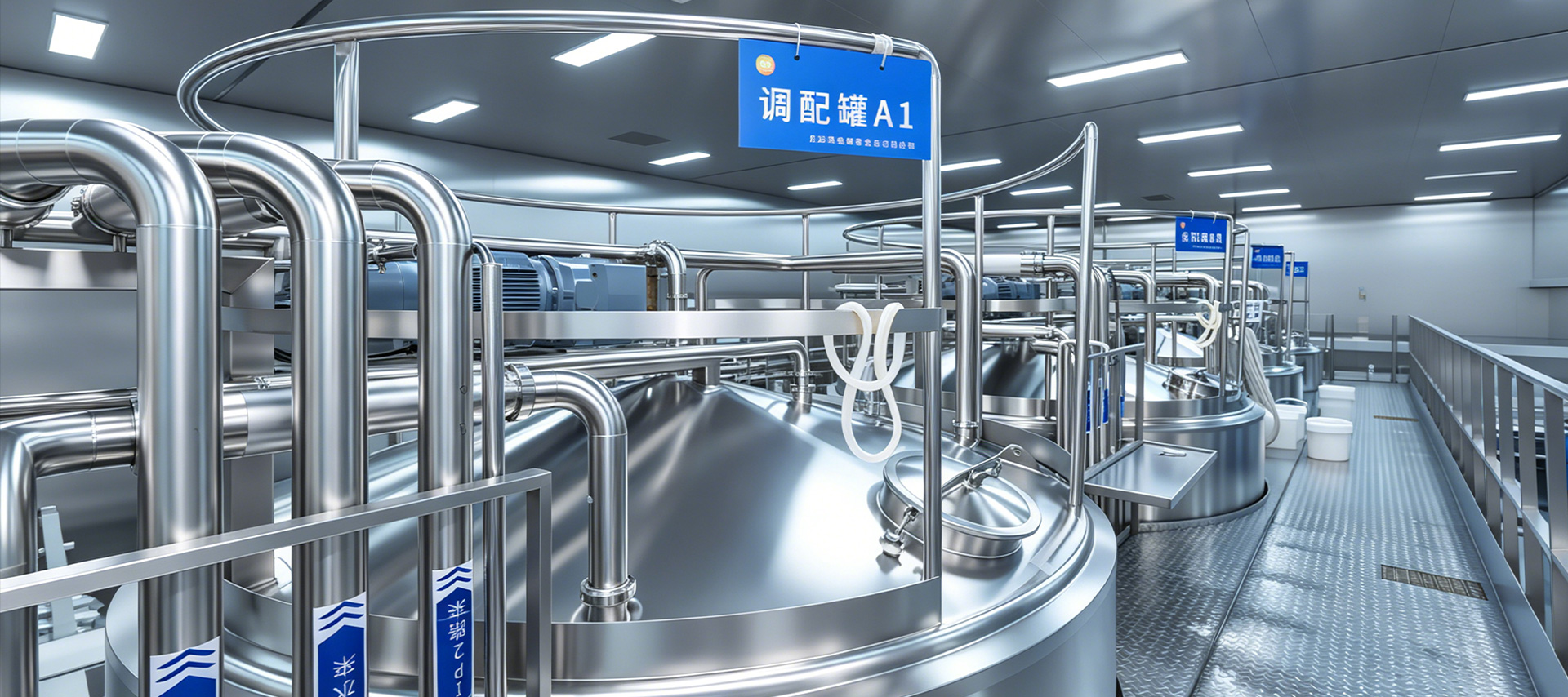
Dry ingredients are typically stored in climate-controlled silos or sealed bins to prevent clumping and contamination. Liquid ingredients such as concentrated plant extracts or flavoring agents are held in stainless steel tanks with agitation systems. The pre-treatment stage sets the quality baseline for everything downstream, making supplier qualification and incoming inspection non-negotiable steps in any well-managed line.
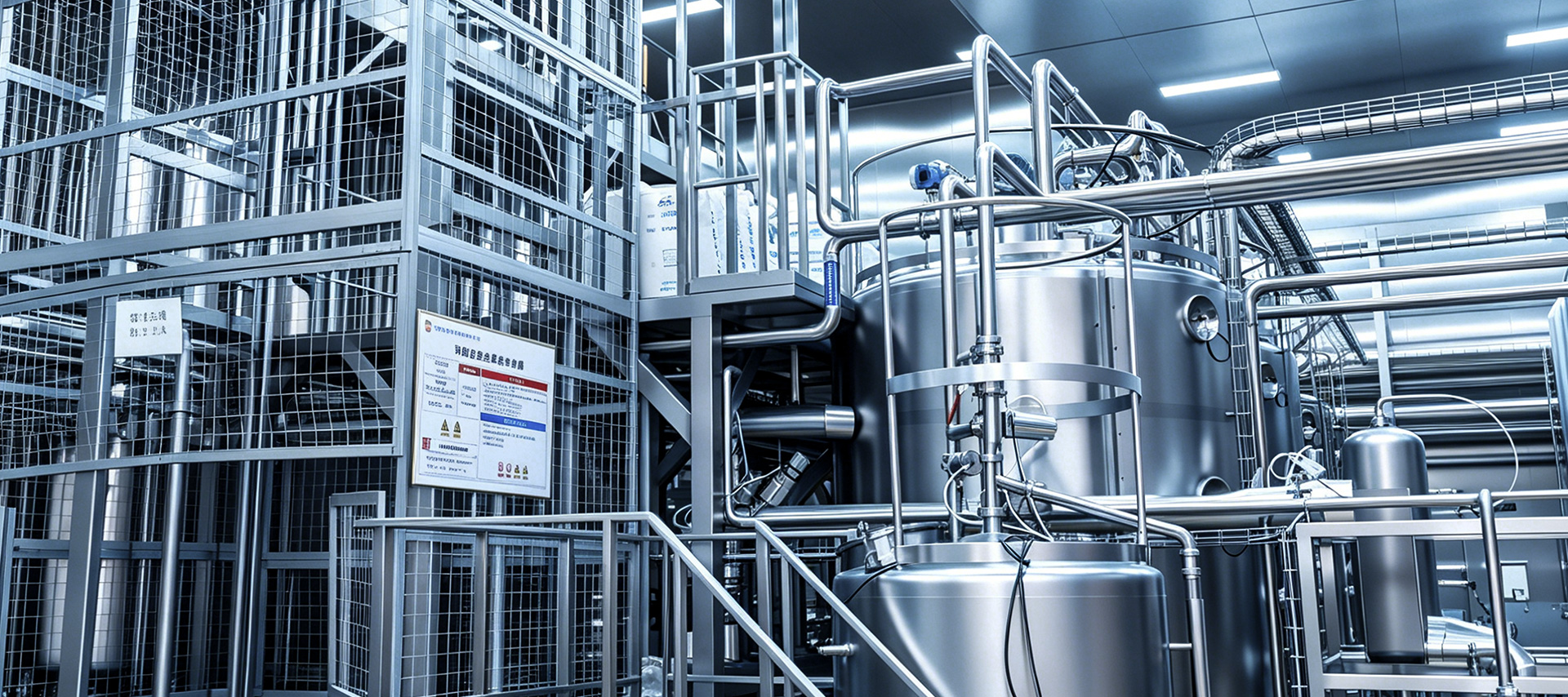
The extraction stage converts raw tea materials into a concentrated liquid base. Industrial tea extraction systems typically fall into two categories: hot water extraction and cold brew extraction. Hot water extraction uses temperatures ranging from 75°C to 95°C, depending on the tea variety, to dissolve catechins, caffeine, theanine, and aromatic compounds within a controlled contact time. Cold brew systems operate at temperatures below 20°C over extended periods, producing a smoother flavor profile with lower bitterness, but requiring longer cycle times and larger tank capacity.
The table below summarizes the standard operating ranges for common tea types in a continuous hot extraction system:
| Tea Type | Extraction Temp (°C) | Contact Time (min) | Tea-to-Water Ratio |
| Green Tea | 75–80 | 3–6 | 1:80 to 1:100 |
| Black Tea | 88–95 | 4–8 | 1:60 to 1:80 |
| Oolong Tea | 82–88 | 4–7 | 1:70 to 1:90 |
| Herbal Infusion | 90–95 | 5–10 | 1:50 to 1:70 |
After extraction, the liquid passes through a filtration stage that removes spent leaves and suspended solids. Continuous belt presses, centrifuges, or plate-and-frame filters are commonly used, followed by a secondary microfiltration membrane to achieve the clarity expected in commercial bottled tea.
Once the base tea liquid is prepared, it enters a blending tank where sweeteners, acids, stabilizers, vitamins, or flavors are added according to the product formula. Automated dosing systems use flow meters and load cells to ensure each ingredient is added within tight tolerance bands. For milk tea variants, emulsification equipment is used to evenly disperse fat-containing dairy or plant-based ingredients throughout the liquid matrix.
Standardization involves adjusting the brix (sugar content), pH, and Brix-to-acid ratio to meet the target sensory profile. Inline refractometers and pH sensors provide real-time feedback to the control system, allowing automatic corrections before the product moves to thermal processing. This stage is where much of the batch-to-batch consistency work happens, and it requires close coordination between the formula team and production operators.
Thermal treatment is the most critical food safety step in the entire tea beverage processing production line. Two main methods are used depending on the packaging format and desired shelf life:
The choice between these two methods affects not only equipment investment but also the flavor profile of the final product. UHT-treated teas often develop a cooked note due to Maillard reactions at elevated temperatures, which must be managed through formula adjustments or flavor masking agents.
The filling stage must maintain the sterility established during thermal processing. Three filling approaches are standard across the industry:
Fill volume accuracy is monitored through in-line checkweighers or flow meters, with automated rejection systems removing under- or over-filled containers before they reach the sealing unit.
After sealing, containers move through labeling machines that apply pressure-sensitive, shrink-sleeve, or glue-applied labels with precise registration. High-speed inkjet or laser coders print lot numbers, manufacturing dates, and best-before dates directly onto containers or caps. Vision inspection systems check for missing labels, skewed application, and illegible codes before containers advance to secondary packaging.
Secondary packaging involves grouping individual containers into multipacks, inserting them into cartons, or wrapping them in shrink film. Automated case erectors, product conveyors, and case packers form and fill shipping cases at rates synchronized with the upstream filling system. Palletizing robots stack cases onto pallets following pre-programmed patterns that optimize load stability and warehouse stacking efficiency.
Modern tea beverage processing production lines embed quality control at every stage rather than relying solely on end-of-line inspection. Critical control points include extraction temperature and time, post-filtration turbidity, blending brix and pH, thermal process lethality (F-value or equivalent log reduction), fill weight, and seal integrity. Each of these parameters is logged by the SCADA or PLC system and stored for batch traceability purposes.
Sensory evaluation panels assess flavor, color, and aroma from each production batch using standardized protocols. Microbiological testing of retained samples confirms sterility before product is released from the warehouse. For export markets, additional compliance checks cover heavy metal limits, pesticide residue levels in the tea input, and packaging migration testing.
Line efficiency in a tea beverage production facility is determined not just by individual machine speed but by how well each stage is integrated. Buffer tanks between extraction and filling protect against upstream delays. Automated CIP (Clean-in-Place) systems cycle the processing pipework through caustic, acid, and rinse sequences between production runs, minimizing downtime and reducing cross-contamination risk. OEE (Overall Equipment Effectiveness) tracking helps operations teams quantify availability losses, speed losses, and quality losses separately, enabling targeted improvement actions rather than broad capacity upgrades.
Selecting the right combination of thermal treatment, filling technology, and container format early in the project design phase avoids costly retrofits later. Manufacturers scaling from 5,000 bottles per hour to 30,000 bottles per hour face not just equipment sizing challenges but also changes to CIP sequencing, utility supply, and quality system documentation. Planning the production line as an integrated system from the outset is what separates sustainable scale-up from reactive problem-solving.

Contact Details
Production Address: No. 9188 Chuannan Fenggong Road, Fengxian District, Shanghai
Office Address: Room 603, Building 57, No. 260 Maoyuan Road, Fengxian District, Shanghai
TEL: 86-18221904658
E-mail: [email protected]

Quick Link

Request Custom Quote Need Something Special? We're Here To Help.
 English
 русский
 Français
 Español
 عربى
عربى
 Indonesia