English
 русский
 Français
 Español
 عربى
عربى
 Indonesia
Energy Drinks Processing Production Line Factory
-- Steady & Reliable Manufacturer --
Product Overview
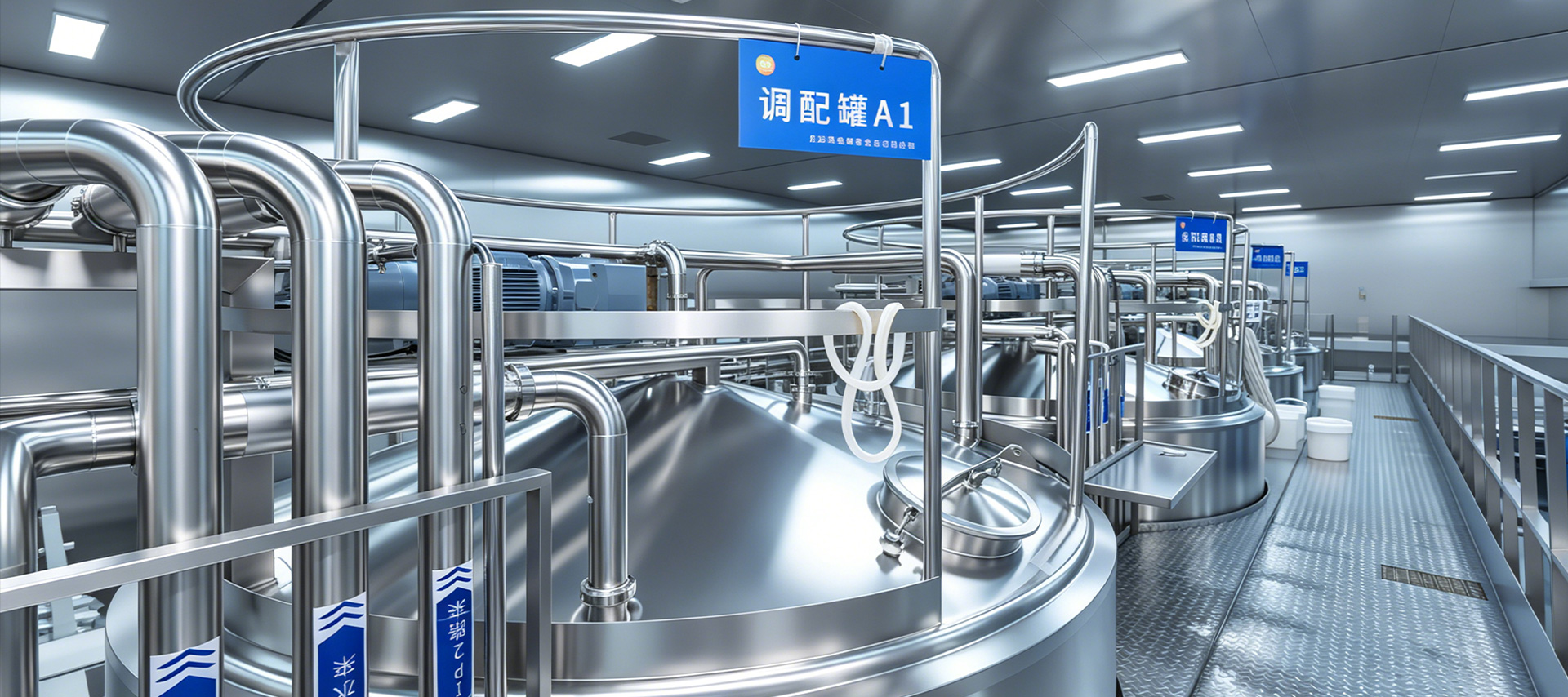
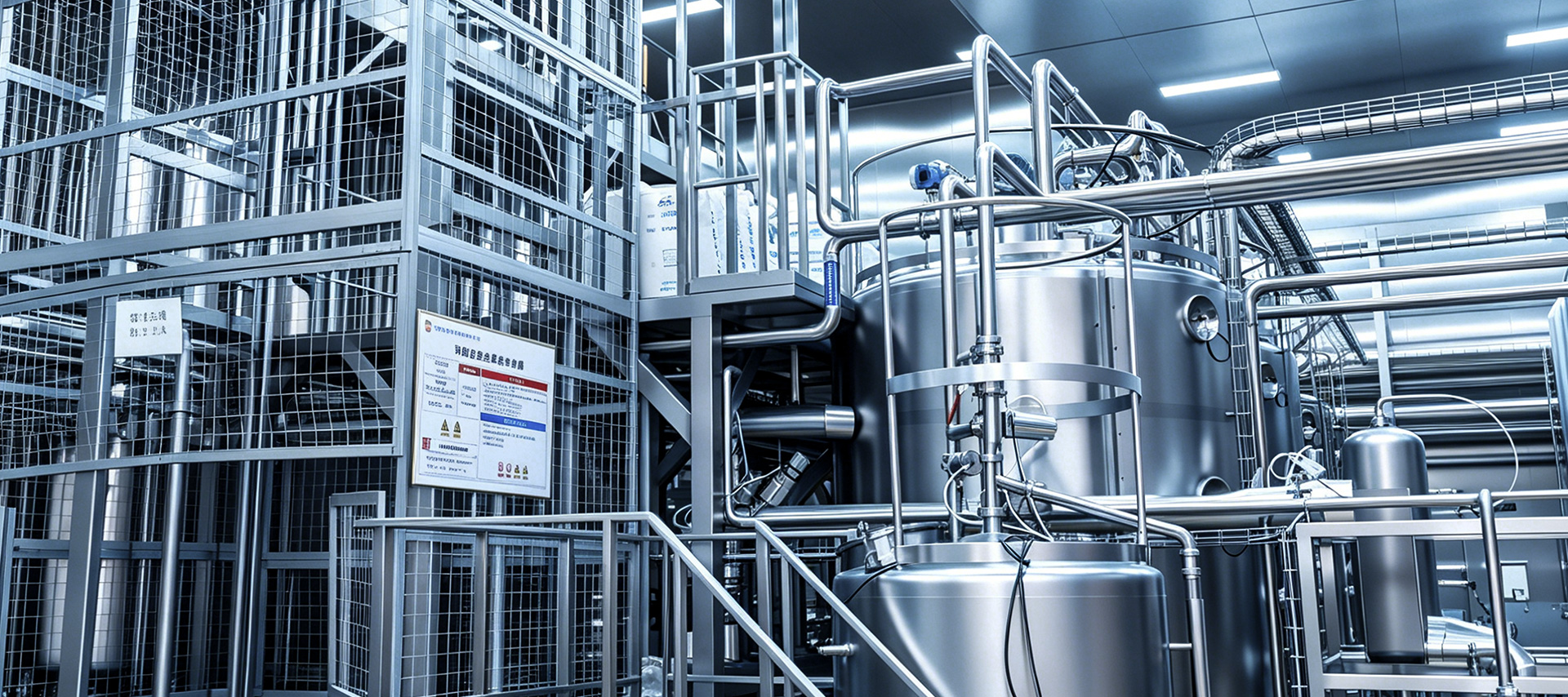
Our Energy Drinks Processing Production Line is a fully integrated, food-grade solution for the high-speed manufacturing of carbonated and non-carbonated energy beverages. The line covers every stage from RO water treatment, ingredient batching, and sugar dissolving through pasteurization, carbonation, and filling into PET bottles, aluminum cans, or glass containers. Engineered for the fast-paced functional beverage market, the line handles heat-sensitive active ingredients — including caffeine, taurine, B-vitamins, and amino acids — with precision temperature management that preserves efficacy and label compliance. Capacities from 1,000 L/h to 20,000 L/h are available, all built to CE and ISO 9001 standards with full PLC automation and CIP cleaning.
Technical Specification Sheet
| Parameter | Detail |
|---|---|
| Processing Capacity | 1,000 L/h – 20,000 L/h (customizable) |
| Sterilization Method | HTST pasteurization (85–90°C, 30 s) or hot-fill (85–92°C) or medium-temperature fill (65–75°C) |
| Carbonation System | Inline CO2 carbonation mixer; 2.5–4.0 volumes CO2 adjustable |
| Water Treatment | Multi-stage RO + UV sterilization + degassing |
| Ingredient Dosing System | Precision dosing for liquid and powder actives (caffeine, taurine, vitamins, amino acids) |
| Sugar Dissolving System | Continuous hot-dissolving with inline filtration |
| CIP Cleaning System | Fully automatic; alkali/acid/rinse cycle |
| Filling Formats | PET bottles (250–500 ml), aluminum cans (250–500 ml), glass bottles |
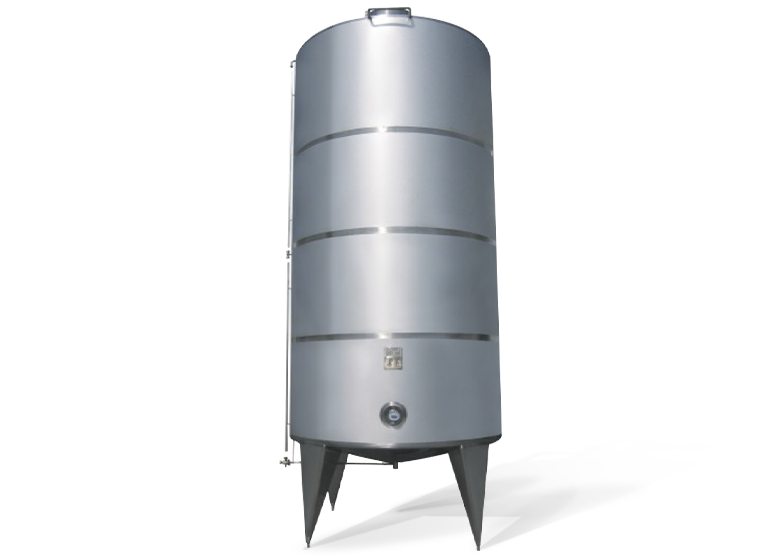
| Wetted Parts Material | Stainless Steel 304/316L throughout |
| Certification | CE, ISO 9001, food-grade sanitary design |
Key Features
- Precision ingredient dosing system accurately meters functional actives — caffeine, taurine, B-vitamins, glucuronolactone, and amino acids — at concentrations required by recipe formulation, eliminating batch-to-batch variation.
- Hot-fill option (85–92°C) achieves commercial sterility in the bottle without aseptic filling equipment, while medium-temperature fill (65–75°C) preserves heat-sensitive vitamin activity with an air-purified filling environment.
- Inline carbonation mixer delivers precise, adjustable CO2 volumes (2.5–4.0 vols) for consistently effervescent products, with pressure-controlled buffer tanks preventing de-carbonation before filling.
- Multi-stage RO water treatment removes dissolved solids, chlorine, and microorganisms, providing a neutral-taste water base that protects functional ingredient stability throughout shelf life.
- Full PLC/SCADA automation logs every critical process parameter — temperature, flow rate, CO2 level, ingredient dosing weight — providing complete batch traceability for regulatory compliance.
Process Flow
- Water Treatment: Source water passes through multi-stage sediment filtration, activated carbon filtration, reverse osmosis (RO) membranes, UV sterilization, and vacuum degassing to produce clean, flavor-neutral, microorganism-free process water — the essential foundation for a consistent and stable energy drink product.
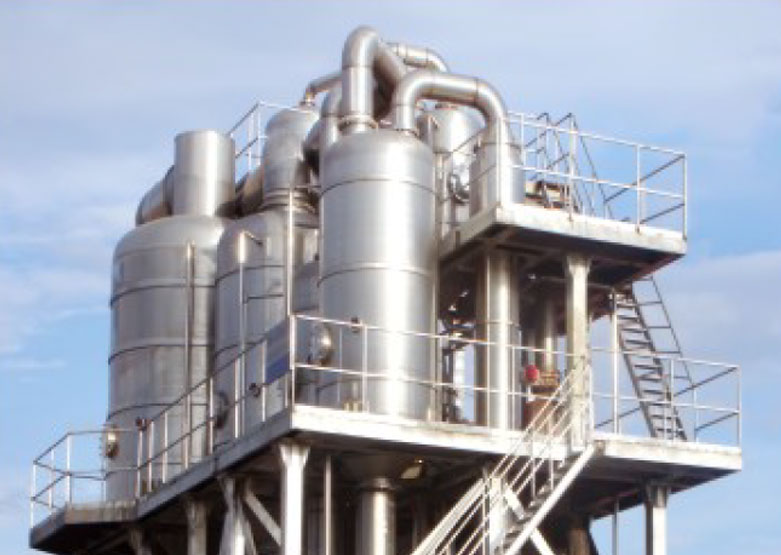
- Sugar Dissolving & Syrup Preparation: Granulated sugar or alternative sweeteners (sucralose, acesulfame-K, stevia extracts) are dissolved in hot filtered water via a continuous hot-dissolving system with inline filtration, then cooled before functional ingredient addition to prevent heat degradation.
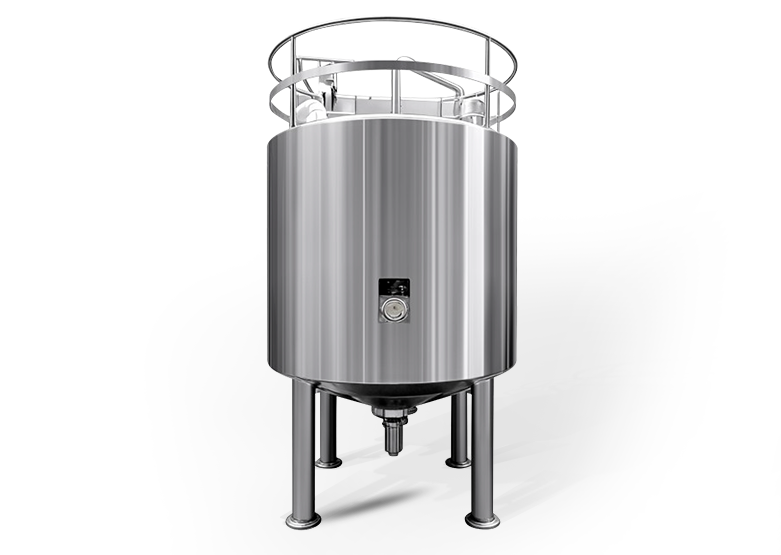
- Functional Ingredient Batching & Blending: Active ingredients — caffeine, taurine, glucuronolactone, B-vitamins (B3, B5, B6, B12), amino acids, herbal extracts, and flavor concentrates — are precisely weighed and dosed into the cooled syrup base via load-cell-controlled dosing pumps, then blended to homogeneity in temperature-controlled mixing vessels.
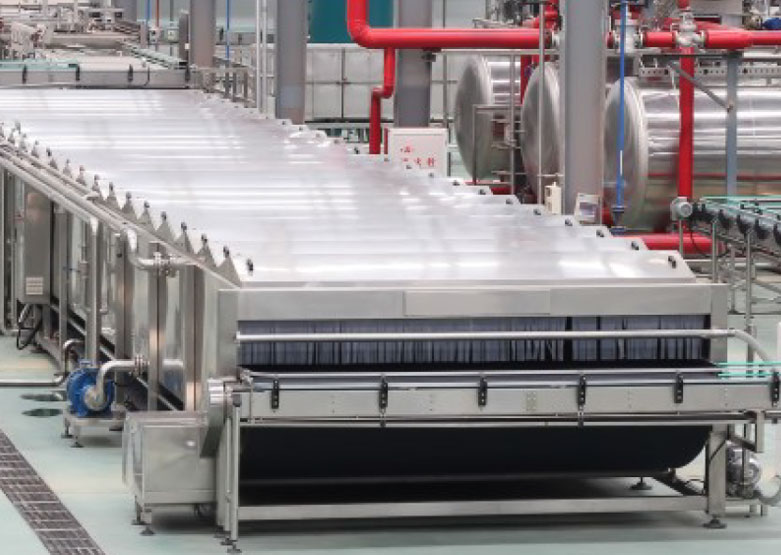
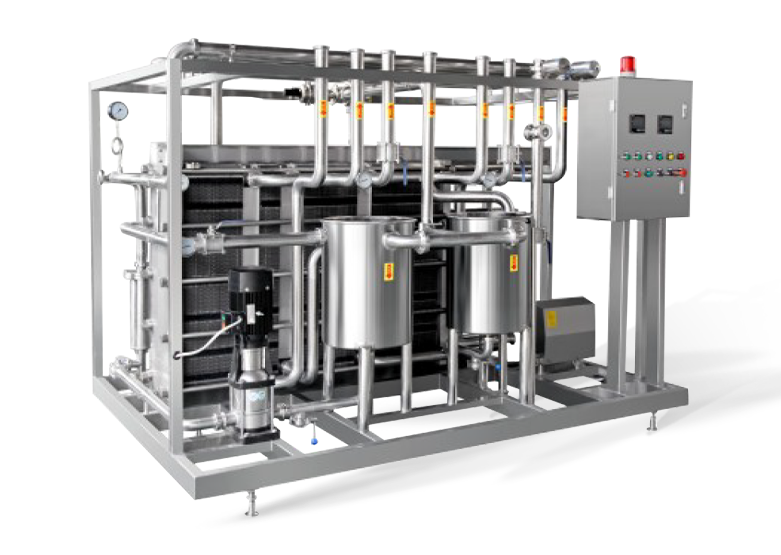
- Pasteurization: The blended beverage base is pasteurized via a plate heat exchanger at 85–90°C for 30 seconds, destroying spoilage yeasts, molds, and bacteria while minimizing the thermal degradation of heat-sensitive active ingredients. Hot-fill (85–92°C) or medium-temperature fill (65–75°C) options are available depending on product formulation sensitivity.
- Carbonation (Carbonated Variants): For sparkling or carbonated energy drinks, the de-aerated and chilled beverage base is combined with food-grade CO2 in an inline carbonation mixer at controlled pressure and temperature to achieve the target carbonation volume (2.5–4.0 vols CO2).
- Filling & Packaging: The finished beverage is filled at the specified temperature into PET bottles, aluminum cans, or glass bottles, sealed under positive pressure, labeled, date-coded, and packed for distribution to retail, foodservice, or export markets.
Competitive Benefits
- Active Ingredient Integrity: Precision low-shear mixing and optimized pasteurization temperature-time profiles protect heat-sensitive B-vitamins, amino acids, and botanical extracts from thermal degradation, ensuring that the finished product delivers the full label-declared functional potency to the consumer.
- Multi-Format Production Flexibility: The same processing system handles still, carbonated, lightly sparkling, hot-fill, and cold-fill energy beverage variants from a single equipment platform — maximizing SKU range and production flexibility without additional capital investment in separate lines.
- High-Speed Output Capability: Integrated high-speed filling technology supports production rates up to 36,000 cans per hour (330 ml format), meeting the high-volume demands of established retail brands and contract manufacturers supplying national and export markets.
- Scalable for Start-Up to Scale-Up: Entry-level line configurations from 1,000 L/h allow brand owners and contract manufacturers to launch new energy drink SKUs with a controlled initial capital outlay, with clearly defined upgrade paths to 5,000, 10,000, and 20,000 L/h as market volume grows.
- Regulatory-Ready Batch Documentation: Full batch traceability reports, temperature-time logs, ingredient dosing records, and CIP verification reports are automatically generated by the PLC/SCADA system for every production run, supporting FDA, EU food safety, and SFDA regulatory submissions without manual record reconstruction.